Sunken barge near Zimnicea. Ammonium concentrations have increased in the area, Apele Romanian Waters announces

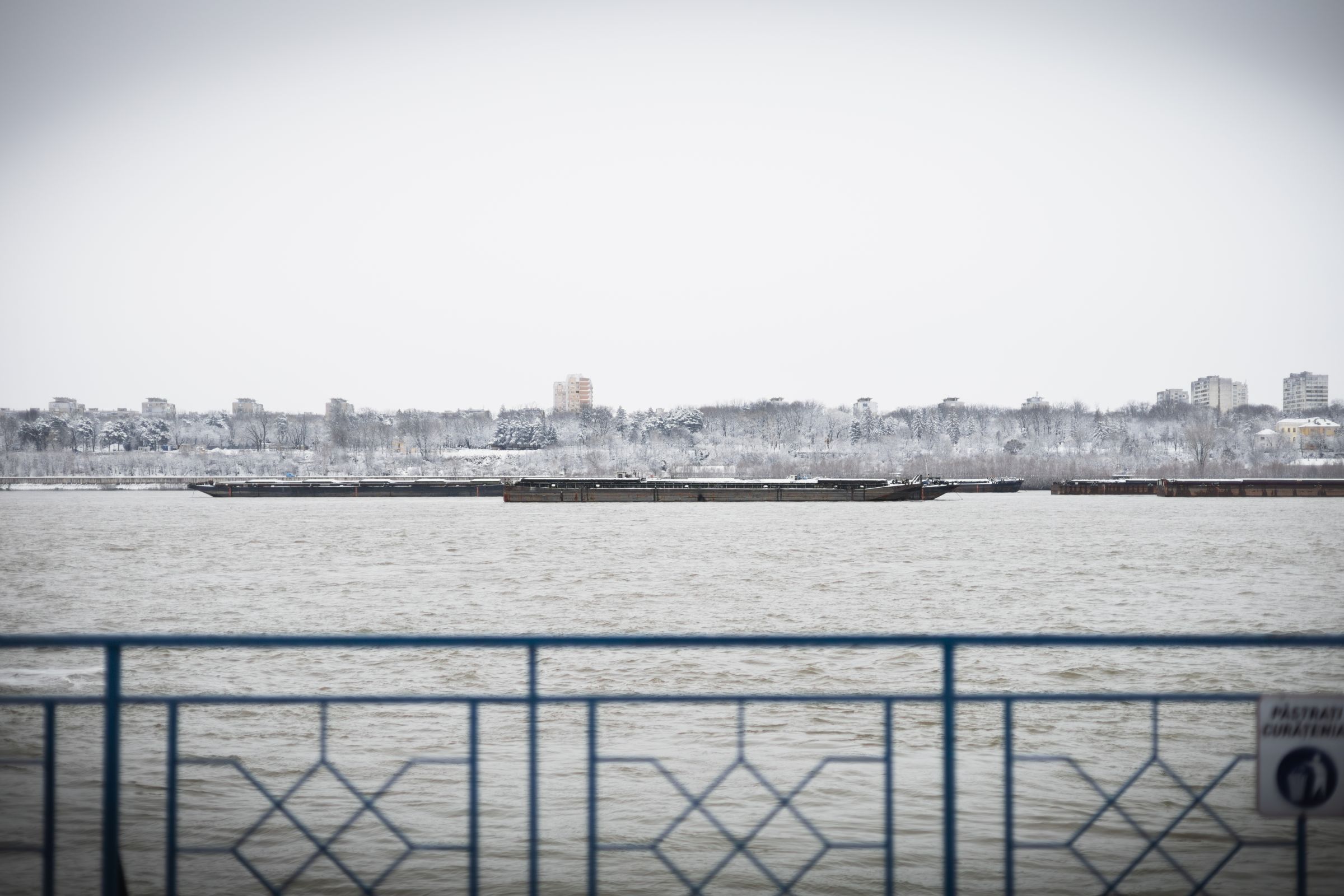
Barges on the Danube (photo source Unquintu, Dreamstime.com)
Ammonium concentrations in the area of the barge with chemical fertilizers sunk on January 9 near Zimnicea increased within two days, announces the National Administration “Romanian Waters”. These concentrations are diluted after a few kilometers, the release also says. Romanian Waters also notes that “water quality is not affected in the catchment area downstream”.
We remind you that two barges sank in the Danube on January 9, and one of them, loaded with 1,100 tons of nitrogen-based chemical fertilizers, sank halfway between the port of Zimnicea and the Bulgarian port of Svistov. Another barge, carrying potassium chloride, met a similar fate near Giurgiu.
Both ships were transporting common agricultural fertilizers, not industrially toxic substances, said those from Apele Române.
“Romanian waters continue to monitor water quality, and during the period 12-14 January, the results of the analyzes revealed increases in ammonium concentrations in the area of the sunken ship from Zimnicea (1.57 mg/l N-NH₄ on 12.01.2026) and downstream of it (2.64 mg/l N-NH₄ at 200 m, on 14.01.2026)”. said in a statement issued on Thursday.
“These concentrations are diluted after a few kilometers, as a result of the natural processes of dilution and dispersion, the flows of the Danube river ensuring a sufficient dilution”, say those from the administration.
Romanian Waters also notes that “water quality is not affected in the catchment area downstream, the first water catchment for drinking water being located more than 100 km downstream, in the Chiciu area, Călărași County. The monitoring carried out in this area has not revealed any changes in water quality to date. No fish mortality has been reported”.
The Lower Danube River Administration coordinates the procedure for removing the barges from the water. “This involves bringing the wrecks back to the surface by sealing the damage, evacuating the water from the interior and using special lifting systems. If refloating is not possible under safe conditions, the wrecks will be cut up in a controlled manner on the spot and transported to shipyards,” says the ANAR statement.