
Growing climate risks – What's most worrying after a year 2025 full of extreme weather events


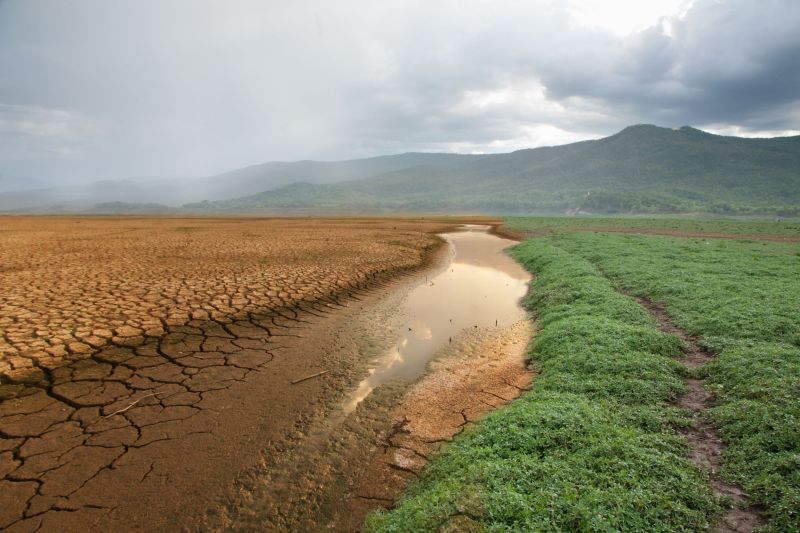
Climate crisis (photo Nitsuki, Dreamstime.com)
The year 2025 was the third warmest year on record, and the last 11 years were all among the warmest on record. Last year was marked by extreme events in many regions: record heat waves, severe storms in Europe, Asia and North America and wildfires in Spain, Canada and Southern California, according to an InfoClima.ro analysis based on Copernicus data.
A year marked by severe heat stress
More worrying is, the analysis notes, that for the first time the average temperature of the last three years has exceeded the critical threshold of 1.5°C, the limit established by the Paris Agreement. If this pace continues, the global average temperature will permanently exceed 1.5°C by 2030, much faster than expected.
January 2025 was the warmest January on record globally. Every month of the year except February and December was warmer than the corresponding month in any year prior to 2023.
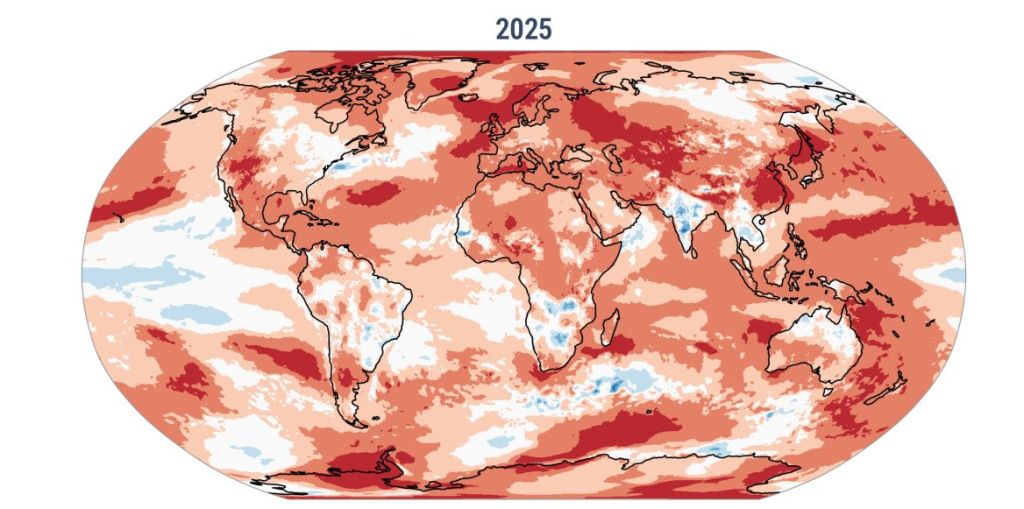
In 2025, about 50% of the global land area experienced an above-average number of days with severe heat stress, defined as a “felt” temperature of at least 32°C. The extension of this phenomenon has direct implications on public health and the functioning of infrastructures, thermal stress being the main cause of mortality associated with extreme weather phenomena, explains Bogdan Antonescu, expert in extreme weather phenomena.
Warmer and drier conditions have favored the occurrence and intensity of wildfires in several regions, including Europe and North America. Fire episodes have generated significant increases in air pollution due to the production of carbon, toxic air pollutants such as particulate matter and ozone.
Records in the coldest places in the world
In 2025, average annual temperatures reached an all-time high in Antarctica and the second highest in the Arctic.
As for sea ice, in February 2025 the combined extent of sea ice in the Arctic and Antarctic fell to the lowest level recorded since satellite observations began in the late 1970s.
The conclusion is that the acceleration of warming continues, and several factors lead to the intensification of climate risks.
“The ensemble of these developments indicates an intensification of climate risks on a global scale. The most recent eleven years represent, in all, the eleventh warmest years in the history of measurements. However, this new context of accelerated warming coupled with rising temperatures, expansion of thermal stress, negative records of sea ice and warming of the oceans reflects the intensification of climate risks on a global scale, with a systemic impact on the natural environment and human societies”, says the InfoClima.ro analysis.
Photo source: Dreamstime.com


