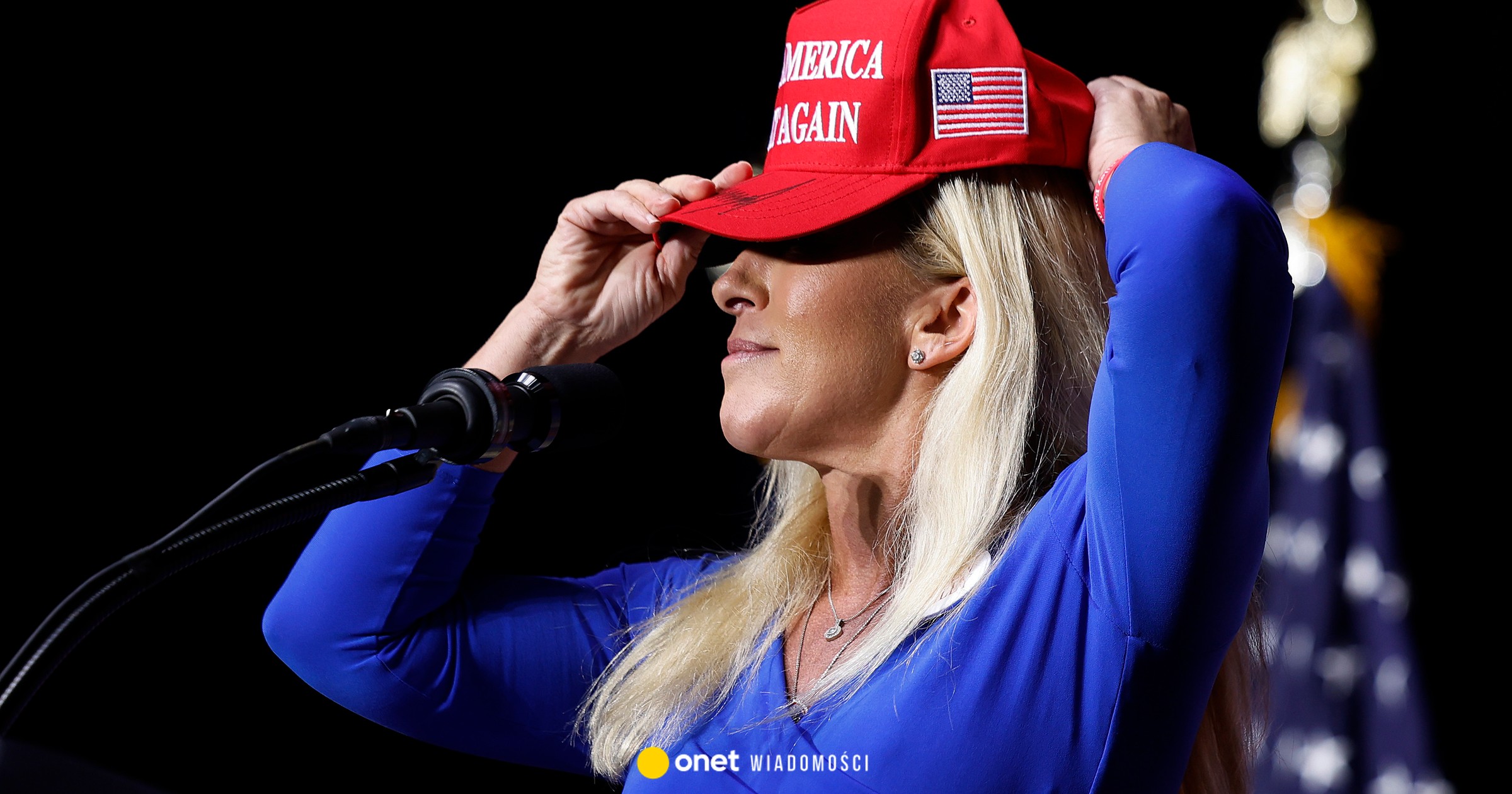
Trump is playing with red lines. But Congress is showing its claws and setting limits. Europe is waiting for the verdict


With the Trump administration's recurring rhetoric about Greenland echoing in European capitals, US lawmakers want to cut off all avenues – both political and financial – that could lead Washington into open conflict with its own allies.
On Tuesday, January 13, Senator Jeanne Shaheen, a leading representative of the Democratic Party on the Senate Foreign Relations Committee, and Senator Lisa Murkowski introduced a bill called the NATO Unity Protection Act [pol. Ustawa o ochronie jedności NATO].
Congress brings out heavy artillery: the bill is intended to block any scenario of attacking an ally. In the background, the White House and nervous glances from Europe.
The bill is one of the most explicit and sharp rebukes from Congress to recent statements by the Trump administration suggesting that the US could try to take control of Greenland, an autonomous territory of Denmark, a NATO member.
— To this Congress replies: absolutely not – said one of the high-ranking Senate advisers involved in the preparation of the bill, quoted on condition of anonymity.
Invading allies is not something to joke about. And you certainly don't spend taxpayer money preparing for something like this
– he added.
Lawmakers of both parties present this initiative as a defensive action – only not against external enemies, but against the risk that loose and irresponsible statements will turn into real politics and they will break up the most powerful military alliance in the world.
A visit to the White House is just around the corner
The moment is not accidental. Secretary of State Marco Rubio is scheduled to meet on Wednesday, January 14, with the Minister of Foreign Affairs of Denmark, Lars Lokke Rasmussen, and the Minister of Foreign Affairs of Greenland, Vivian Motzfeldt. European diplomats emphasize that the talks will be closely watched.
A senior U.S. official said the meeting would take place at the White House, with Vice President JD Vance also expected to attend — a signal of the administration's commitment, but also a source of growing anxiety in Congress.
This is one of those moments when allies analyze every word and every gesture. The Congress wanted to get ahead of the situation and make the matter clear
said the Senate aide.
NATO red line
At the heart of lawmakers' concerns is the fundamental principle on which NATO was built: that member states respect each other's sovereignty and unite against external threats — not turn their power against each other.
“NATO's strength is based on unity, trust and respect for the sovereignty of each member state,” Shaheen said in a statement.
Any suggestion that the United States could use its power to seize or control the territory of a NATO ally would directly undermine the foundations of the alliance that protects Americans and play into the hands of our adversaries.
– she added.
These opponents – as parliamentarians emphasize – include, among others: Russia and China, which are closely monitoring the situation. Any crack in NATO would be in their strategic interest — which is explicitly stated in the justification for the project.
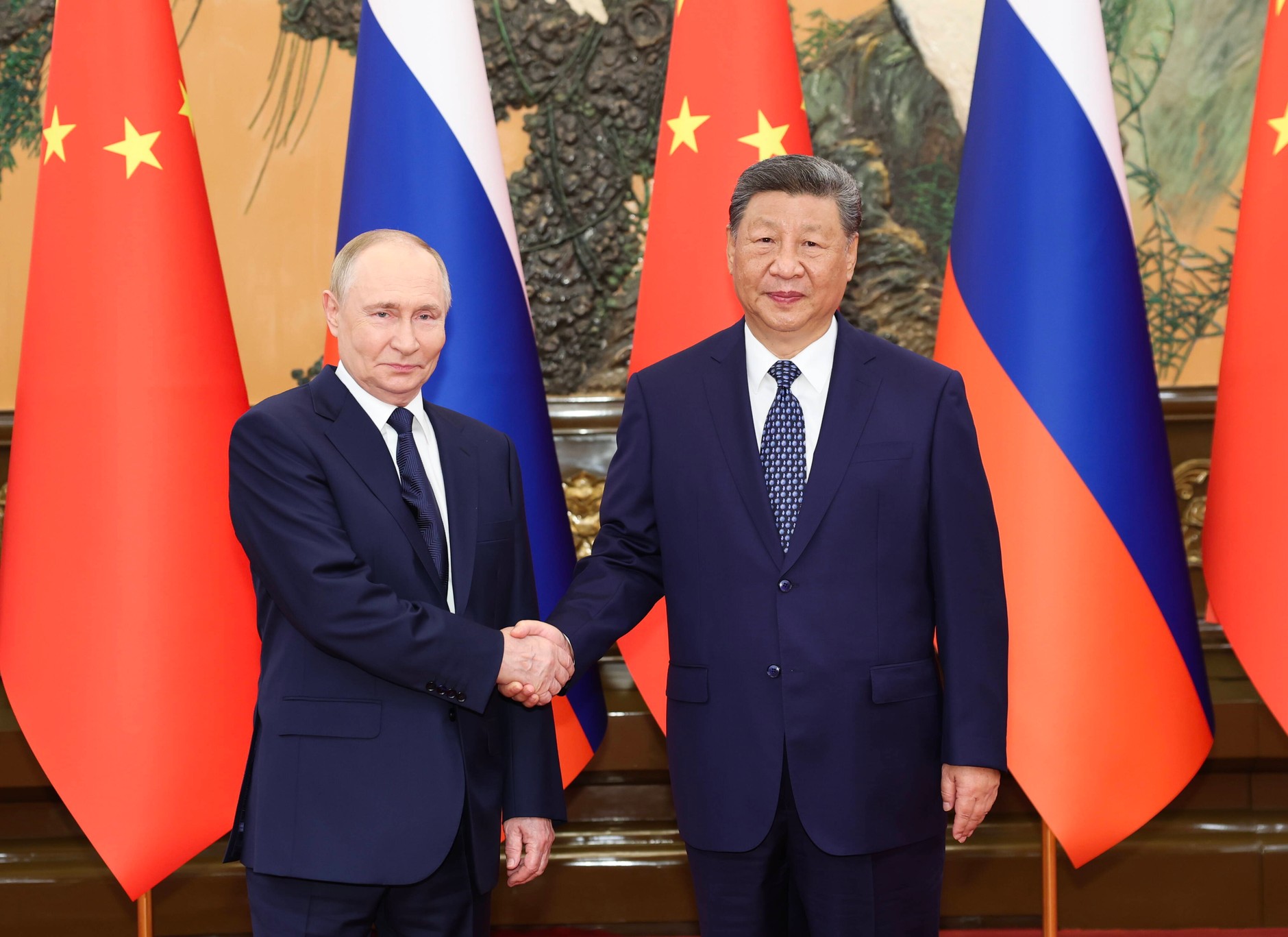
Russian President Vladimir Putin and Chinese leader Xi Jinping at the Great Hall of the People in Beijing, China, September 2, 2025.XINHUA / Huang Jingwen / PAP
The Act as a “firewall” against escalation
Documents reviewed by the Kyiv Post editorial team show that the new regulations are to constitute a kind of legislative “firewall”.
Act:
- Reaffirms NATO's key role in US national security,
- Recognizes that the occupation or takeover of an ally's territory would violate both the Charter of the United Nations and the North Atlantic Treaty,
- prohibits the expenditure of Department of Defense money for a blockade, occupation, annexation, or any military operation against a NATO country without the consent of that country or the authorization of the North Atlantic Council.
A parallel provision cuts funding to the Department of State for developing or implementing plans related to such activities.
The act also provides for a precise exception: nothing in its content limits the ability of the US or an ally to defend itself against an armed attack or a direct, imminent threat. This is a response to concerns that the new regulations could restrict the president's powers too much in a real crisis.
“Deeply disturbing”
Murkowski presented the project as a necessary course correction.
“NATO alliances are what separates the United States from our adversaries,” she said.
The very thought that America could use its vast resources against its allies is deeply disturbing and must be completely rejected by Congress through legislation.
– added the congresswoman.
Behind the scenes, advisers say plainly: the rhetoric around Greenland has crossed the line.
“There was a sense that it stopped being fringe talk and started sounding like something that allies actually cared about,” another Senate aide said. — And when that happens, Congress has an obligation to respond.
The House of Representatives is also in play
The sense of urgency is also evident in the House of Representatives.
Congressman Don Bacon, chairman of the Cybersecurity and Technology Subcommittee, joined forces with Congressman Bill Keating, ranking member of the Europe Subcommittee. The initiative was also joined by the co-chair of the Danish working group in the Congress, Steny Hoyer, and the delegate to the NATO Parliamentary Assembly, Brendan Boyle. Together they presented the No Funds for NATO Invasion Act project [pol. Ustawa o zakazie finansowania inwazji na państwa NATO].
The proposed law would prohibit any federal funds from being used to invade a NATO country or territory protected under Article 5 of the North Atlantic Treaty — and would prohibit U.S. officials from taking actions that would lead to such an invasion.
“For nearly 80 years, NATO has been the foundation of peace and cooperation between the United States and our European allies,” the lawmakers said in a joint statement. They also called for an end to “inflammatory rhetoric” and for… refocusing on real threats.
The project gathered a long list of democratic co-authors, including: Jason Crow, Eric Swalwell, Brad Sherman and Marcy Kaptur. This highlights broad support among Democrats for limiting the administration's freedom in pursuing policy towards the alliance.
Washington's red lines
Taken together, the Senate and House bills constitute a bipartisan warning shot — delivered just as Rubio, Vance and other senior officials are preparing for talks with the leaders of Denmark and Greenland.
“Europe will be listening very carefully to what comes out of this meeting,” said one Senate aide.
But Congress wanted to make it clear: regardless of what is said behind closed doors, there are hard limits written in law
– he added.
For now, these limitations serve as a reminder: Rhetoric can shake the trust of allies overnight, but rebuilding faith in American leadership often takes something heavier — and harder to ignore — than words alone.