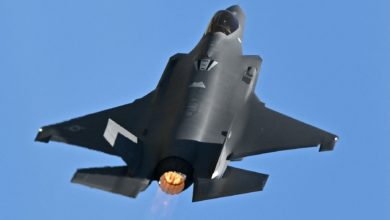
The US withdraws part of its troops from the bases in the Middle East, Iran threatens to retaliate in the event of an attack / A military intervention, increasingly likely


The United States is withdrawing some personnel from military bases in the Middle East, a US official told Reuters news agency on Wednesday, after a senior Iranian official said Tehran had warned neighboring countries that it would strike US bases in the region if Washington launched an attack.
As Iran's leadership tries to quell the worst domestic unrest the Islamic Republic has ever faced, Tehran is trying to fend off US President Donald Trump's repeated threats to intervene on behalf of anti-government protesters.
A US official, who spoke on condition of anonymity, said the United States was withdrawing some personnel from key bases in the region as a precaution given heightened regional tensions.
Two European officials said US military intervention appeared likely, with one saying it could happen within the next 24 hours. An Israeli official also said it appears Trump has made the decision to intervene, although the extent and timing of the intervention have yet to be clarified.
Meanwhile, Qatar announced that the withdrawal of personnel from Al Udeid Air Base, the largest US base in the region, “is taking place in response to current regional tensions”.
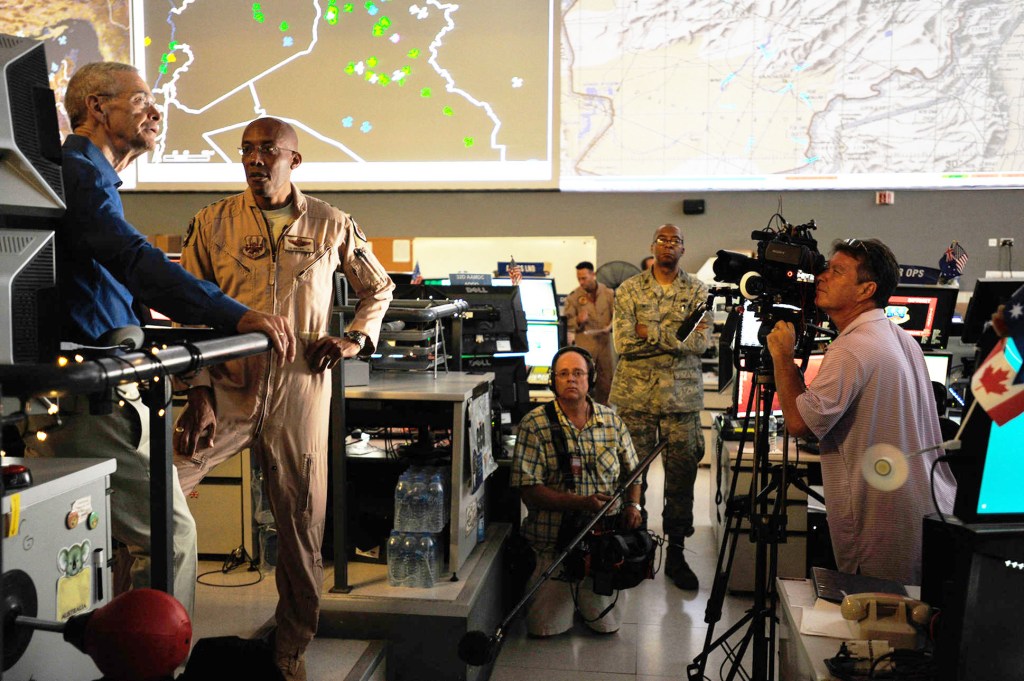 The US has recommended evacuations at the largest military base in the Middle East, just as it did before last year's attack on Iran
Three diplomats said some personnel had been asked to leave the base, although there were no immediate signs that large numbers of soldiers had been bused to a soccer stadium and a shopping mall, as happened hours before last year's missile attack by the US military on Iran.
Trump has repeatedly threatened to intervene in support of protesters in Iran, where thousands have been killed in a violent crackdown on protests against the clerical regime.
Iran and its Western opponents have described the riots, which began two weeks ago as demonstrations against difficult economic conditions and have escalated rapidly in recent days, as the most violent since the Islamic Revolution (1979), which installed a clerical system in Iran.
An Iranian official said more than 2,000 people had died. An organization campaigning for the defense of human rights estimated the number of victims at more than 2,600.
Iran has “never faced such a volume of destruction,” Armed Forces Chief of Staff Abdolrahim Mousavi said Wednesday, blaming foreign enemies. French Foreign Minister Jean-Noel Barrot described “the most violent repression in Iran's contemporary history”.
Iranian authorities have accused the United States and Israel of inciting the unrest by what they call “armed terrorists.”
Iran has called on states in the region to prevent a US attack
Trump has openly threatened to intervene in Iran, without elaborating. In an interview with CBS News on Tuesday, he promised “very tough measures” if Iran starts executing protesters. He also urged Iranians to continue the protests and take control of institutions, saying “help is on the way”.
The senior Iranian official, who spoke on condition of anonymity, said Tehran had asked US allies in the region to prevent Washington from attacking Iran.
“Tehran has informed countries in the region, from Saudi Arabia and the United Arab Emirates to Turkey, that US bases in those countries will be attacked” if the US targets Iran, the official said.
Direct contacts between Iranian Foreign Minister Abbas Araqchi and US special envoy Steve Witkoff have been suspended, the official added.
The United States has military forces throughout the region, including the Central Command's advanced headquarters at Al Udeid in Qatar and the US Navy's 5th Fleet headquarters in Bahrain.
The regime in Tehran does not seem to be on the brink
The flow of information inside Iran is hampered by an internet outage.
The US-based human rights group HRANA said it had verified the deaths of 2,403 protesters and 147 government-affiliated people so far, far exceeding the death toll from previous waves of protests repressed by Iranian authorities in 2022 and 2009.
The government's prestige was badly damaged last year by a 12-day Israeli bombing campaign in June – joined by the US – that followed setbacks for Iran's regional allies in Lebanon and Syria. European countries have triggered the reinstatement of UN sanctions on Iran's nuclear program, exacerbating the economic crisis.
The riots on such a scale have caught the authorities by surprise at a vulnerable time, but the government does not appear to be facing an imminent collapse and its security apparatus is still in control, a Western official said.
The authorities have tried to project images that show they still enjoy public support. Iranian state television broadcast images of large funeral processions for those killed in the unrest in Tehran, Isfahan and Bushehr, as well as other cities.
People waved flags and photos of Supreme Leader Ayatollah Ali Khamenei and held placards with anti-revolt slogans.
President Masoud Pezeshkian, an elected figure whose power is subordinate to Khamenei's, told a cabinet meeting that as long as the government enjoys popular support, “all the efforts of the enemies against the country will be in vain.”
State media reported that the head of Iran's top security body, Ali Larijani, spoke with Qatar's foreign minister, while Araqchi spoke with his counterparts in the United Arab Emirates and Turkey. Araqchi told UAE Foreign Minister Sheikh Abdullah bin Zayed that at the moment “calm has prevailed”.
During a visit to a prison in Tehran where arrested protesters are being held, the president of Iran's Supreme Court said speedy trial and punishment of those “who beheaded or burned people” is essential to ensure such events do not happen again.
HRANA has reported 18,137 arrests to date.
Hengaw, an Iranian organization that campaigns for Kurdish rights, announced that a 26-year-old man, Erfan Soltani, arrested in connection with the protests in the city of Karaj, was to be executed on Wednesday. The organization said on Wednesday that it could not confirm whether the sentence had been carried out.