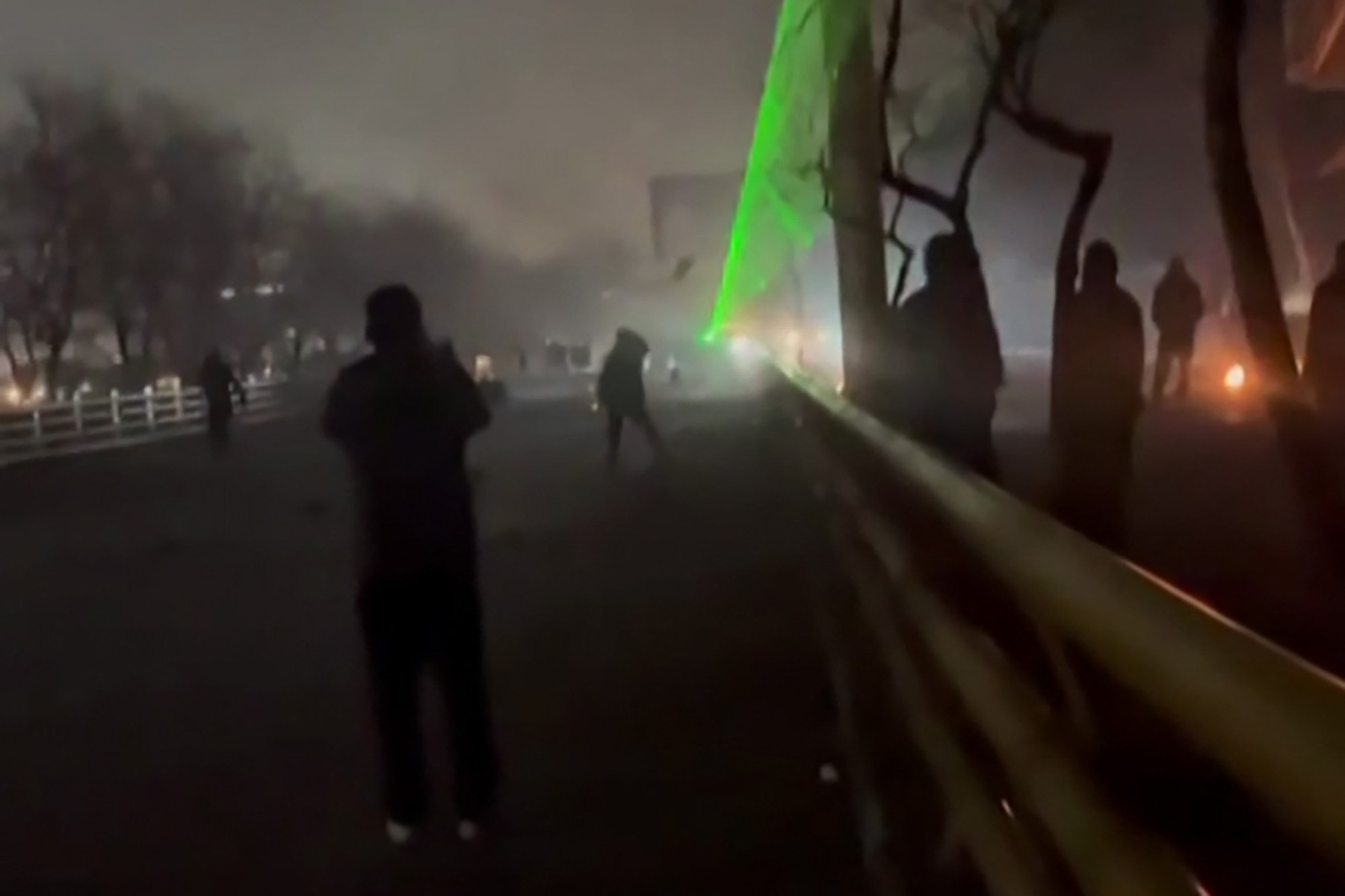
Clashes in Mashhad, between protesters and law enforcement, in northeastern Iran. Video capture made from images published on social media on January 10, 2026. Illustrative image. PHOTO: AFP / AFP / Profimedia
Anti-regime protests in the Iranian capital Tehran have divided the city in recent days, a resident told CNN on Tuesday, adding that some people are fleeing the bloody unrest while others are rushing home after work to change before hitting the streets.
This resident, who requested anonymity for security reasons, told the US television station that “the day is strangely quiet” before the protests resumed at night.
“If you talk to the people who work in the coffee shops, they will tell you that they finish their shift at six o'clock, then they go home, change and go out into the street,” he said.
Even though the protests have eased since the weekend, the situation in the city remains dire, he said, adding that some hospitals are working at capacity and cemeteries are refusing to carry out burials due to overcrowding.
“The first two nights of big protests – Thursday and Friday – were huge,” the resident said. “People of all ages came out – young people with their parents, from all walks of life, from all parts of the city.”
“On Saturday it got really, really violent, and then a lot of people were seen going home and stopped going out,” the resident said.
“Life is too expensive”
Fed up with the regime's status quo, some people participate alone in anti-government protests so that they can more easily run away from the authorities without fearing for the safety of friends or family members, the person from Tehran said.
“There are people who are armed with knives and other types of weapons,” according to the resident.
The demonstrations appear to have some level of coordination, he said, and “at the forefront of the protests are organizers and leaders who coordinate the locations, the start times, the way the roads are blocked, and appear to be driving some of the acts of vandalism and violence.”
Meanwhile, other protesters question whether the violence is fueled by the Iranian regime itself or by foreign powers, the resident added.
But most people are simply fed up with the domestic situation in Iran, he pointed out.
“The situation is really serious; people are hungry and angry. Life is too expensive for the rich, let alone the poor and lower social classes,” added this resident.
For more than two weeks, the Islamic Republic has faced one of the largest protest movements since its proclamation in 1979. But despite the massive wave of protests and external pressure from US President Donald Trump, there are no signs of defections among Iran's security elite. Although weakened, the regime is still holding on, Reuters news agency noted on Tuesday.
About 2,000 people, including members of the security forces, have been killed in protests in Iran, an Iranian official told the same news agency on Tuesday, marking the first time authorities have acknowledged the high number of casualties caused by the intense repression unleashed by the Tehran regime.
The protests, which began in Tehran on December 28, were initially sparked by the collapse of Iran's currency – the rial – and quickly turned into nationwide anti-regime demonstrations, with people also outraged by social and political restrictions imposed by the government.