Europe's strategic mistake. This is how she “gave” the enormous wealth of Greenland to Trump

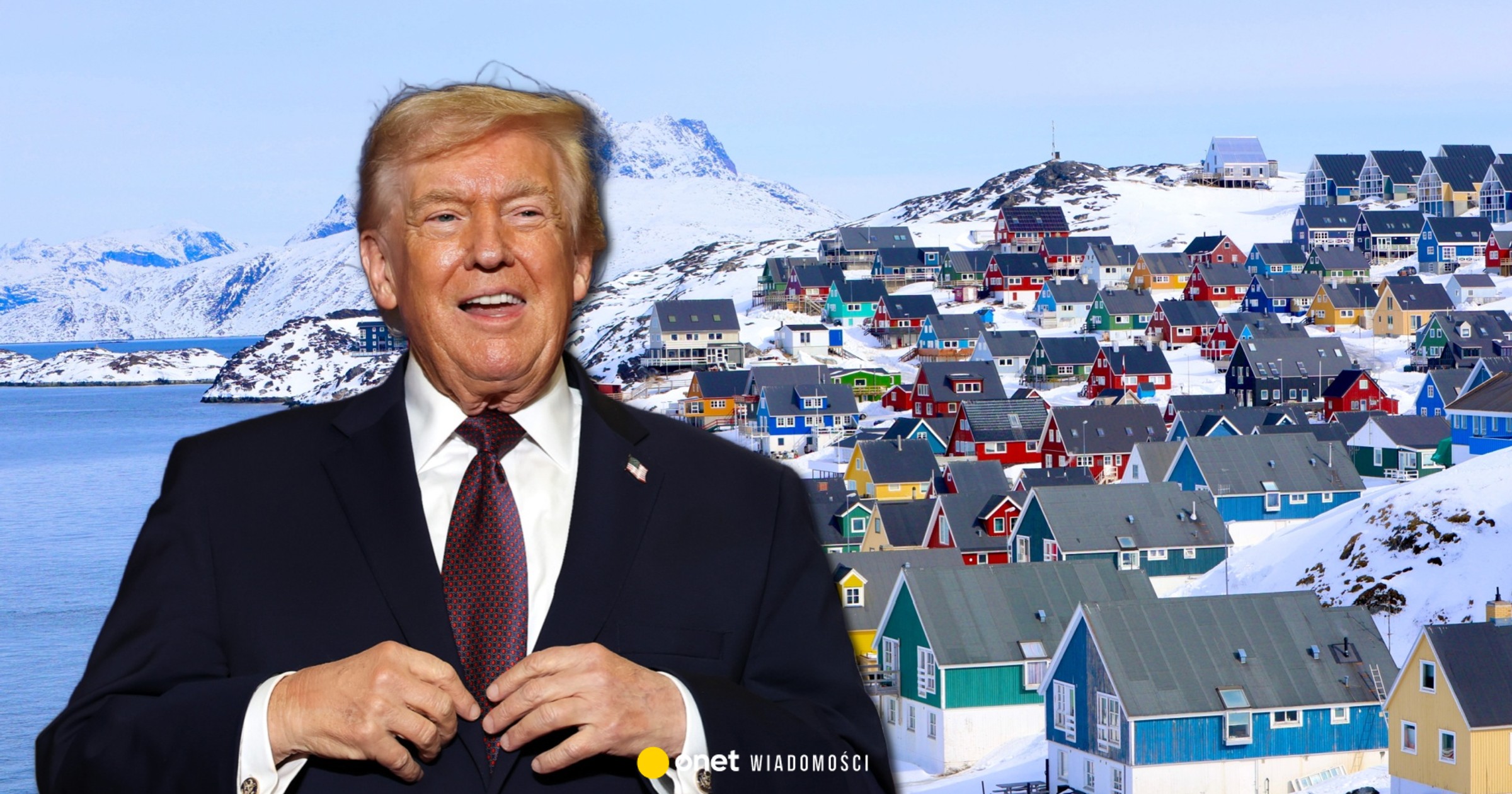
On the southern tip of Greenland, surrounded by snowy peaks and deep fjords, lies Kvanefjeld, a mining project that shows that this huge island is more than just a desirable location for a military base.
Beneath the icy surface there are large deposits of neodymium and praseodymium, rare earth elements used to produce magnets necessary to build wind turbines, electric vehicles and high-tech military equipment.
If the project is successfully implemented, Greenland, a semi-autonomous part of Denmark, it would become the first European territory to produce these key strategic metals. Energy Transition Minerals, an Australian mining company backed by China, is ready to start work. The same cannot be said for European entities.
Neither Copenhagen, Brussels nor the Greenlandic government mobilized their state forces to implement this project. In 2009, Denmark gave the people of Greenland control of their natural resources, but 12 years later its government blocked the mine because rare earth elements are mixed with radioactive uranium.
Since then, the project has remained in limbo and generated many legal disputes.
— Kvanefjeld shows how political and regulatory uncertainty — combined with geopolitics and high capital requirements — makes it difficult to implement even strategically important projects, Jeppe Kofod, former Danish foreign minister and now strategic advisor to Energy Transition Minerals, tells POLITICO.
Strategic mistake
Kvanefjeld's problems are emblematic of Greenland's broader problems. Although it has enough resources of some rare earth elements to satisfy as much as 25 percent. world demand — not to mention oil and gas reserves almost as large as those in the United States, and many other potential clean energy metals, including copper, graphite and nickel — these resources are almost completely unused.
There are only two small mines in Greenland, extracting gold and a niche mineral called feldspar, used to produce glass and ceramics. Until recently, neither Denmark nor the European Union showed much interest in changing this situation.
Before 2023, the EU signed a memorandum of understanding with the Government of Greenland on cooperation on mining projects. The EU Critical Raw Materials Act, proposed the same year, is an attempt to clear the backlog by building new mines both inside and outside the EU. Last month, the European Commission committed to financing the Malmbjerg molybdenum mine in Greenland to ensure the supply of the metal to the EU's defense sector.
In the face of Donald Trump's threats to take over Greenland by force and the unlikely likelihood of granting the island's inhabitants a veto over mining projects in such a scenario, one thing is clear – Europe may be late in taking action.
— For many years, the EU has had limited involvement in the extraction of key raw materials from Greenland. Today, there is a risk that Europe is late, because the United States and China have also increased their interest in these raw materials, says Kofod.
In a world shaped by Trump's increasingly aggressive foreign policy and China's hyperactive development of clean technologies and mineral supply chains, Europe's neglect of Greenland's natural resources increasingly resembles strategic mistake.
Hostile land
This does not mean that building mines in Greenland, which is covered with a kilometer of ice, will be an easy task.
— Of all the places in the world where critical raw materials can be mined, [Grenlandia] it is very remote and difficult to access, says Ditte Brasso Sorensen, senior analyst for EU climate and industrial policy at Think Tank Europa. He also mentions the “very difficult environmental conditions” in the territory.
Greenland's small population of less than 60,000. inhabitants – and lack of infrastructure also make it difficult to build mines. “It's a logistical issue,” says Eldur Olafsson, CEO of Amaroq, a gold mining company that operates one of two operating mines in Greenland and is also exploring options for mining rare earths and copper. — How are mines built? Of course, you need capital, equipment, but also people. And you have to build all the infrastructure around them, because they can't just be people from Greenland, he adds.
Greenland also has strict environmental laws — including a landmark 2021 uranium mining ban — that restrict the extraction of raw materials due to their impact on nature and the environment. According to Per Kalvig, professor emeritus at the Danish Geological Survey and Greenland, Denmark's government research organization, its current government, elected last year, shows no signs of changing its position on the uranium mining ban.
Uranium is usually found together with rare earth elements, which means that a ban could destroy Greenland's huge potential as a producer of rare earth elements.
The situation is similar in the case of fossil fuels. Despite a 2007 US assessment that the equivalent of more than 30 billion barrels of oil and natural gas lies beneath the surface of Greenland and its territorial waters – almost the same as US reserves – 30 years of oil exploration by Chevron, Italy's ENI and Shell have yielded no results.
In 2021, the then left-wing government of Greenland banned further oil exploration on environmental grounds. Danish geologist Flemming Christiansen, who was deputy director of the Geological Survey of Denmark-Greenland until 2020, said the failure had nothing to do with Greenland's actual potential as an oil producer.
The collapse of oil prices in 2014, combined with the high costs of drilling in the Arctic, made the project unprofitable, in his opinion. Public opposition only complicated matters.
The impact of climate change
Christiansen sees firsthand the dramatic effects of climate change – in the form of vast areas of clean water. Rising temperatures are melting the ice caps that have made exploration of this territory a cold, expensive and dangerous endeavor for centuries.
— When I fly over the waters of West Greenland, I see changes. (…) Climate change is opening up this frozen land, he says.
Greenland has the largest area of ice outside Antarctica, but its ice is melting at an alarming rate. New research suggests the ice sheet could cease to exist by the end of the century, raising sea levels by up to seven meters. The loss of permanent ice cover several hundred meters thick “is gradually improving the profitability of extracting both fossil fuels and key raw materials,” says Jakob Dreyer, a researcher at the University of Copenhagen.
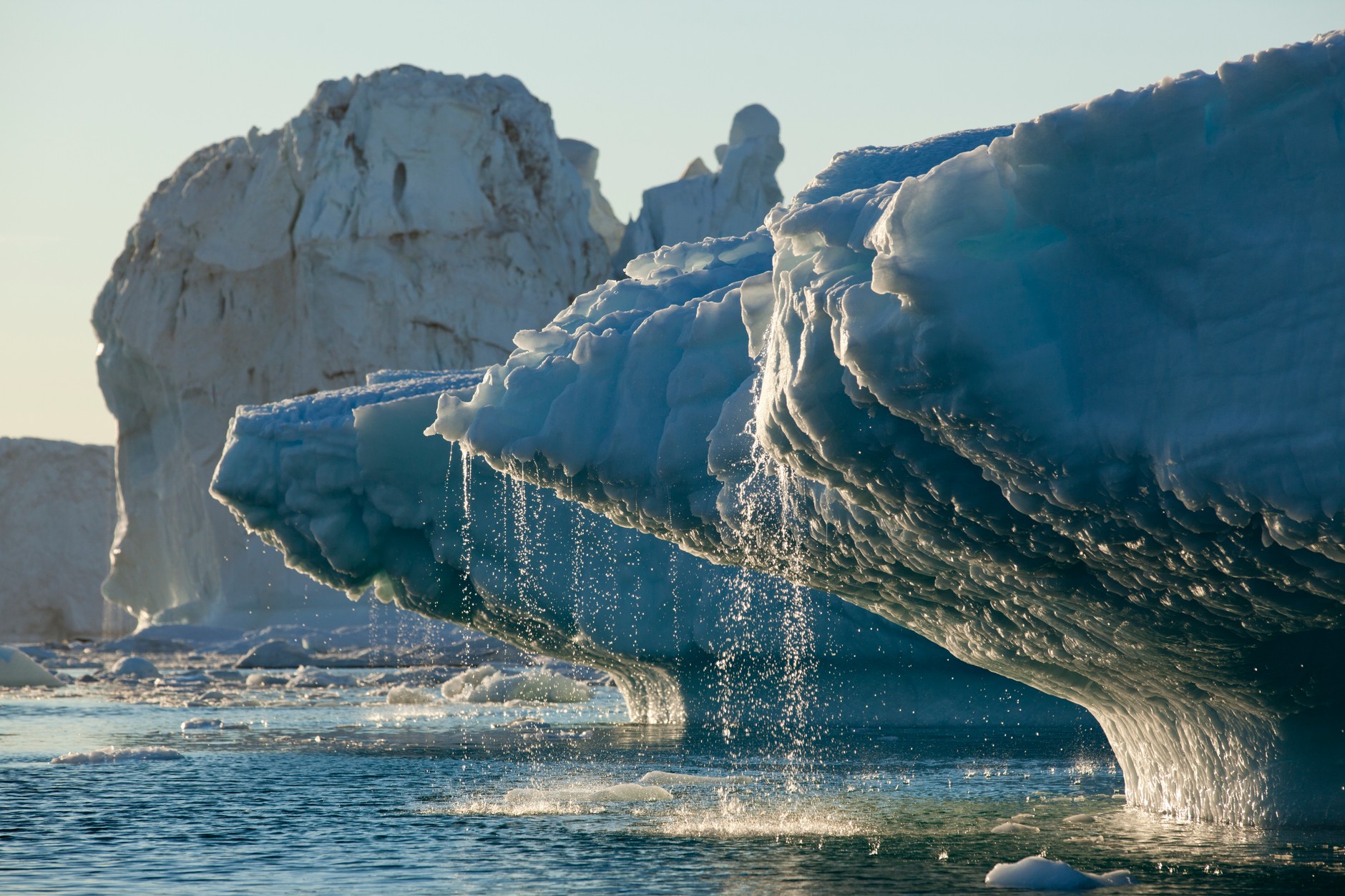
Melting icebergs from Jakobshavn glacier, Ilulissat, GreenlandPaul Souders/Getty Images
However, the exploitation of Greenland's resources does not depend on catastrophic levels of global warming. Kalvig from the Danish Geological Survey and Greenland says that even without advanced climate change, the coast of Greenland is not much different from the coast of Norway, where oil has been found and many mining projects are underway.
“You can't get as far inland as that [w Norwegii]but once you get there, many sites are exploited year-round, Kalvig says. — In this sense, mining in Greenland is no more difficult than in many parts of Norway, Canada, or other countries — or Russia, for that matter. This had been done before, in years when the conditions were right.
Trump's vision
A European Commission spokesman said the EU was currently working with the Greenland government to develop its resources. He added that “Greenland's democratically elected authorities have long advocated partnership with the EU to implement mutually beneficial projects.”
However, he emphasized that “the fate of Greenland's mineral resources depends on the people of Greenland and their representatives.”
The United States may be less generous. Washington's recent military operation in Venezuela showed that Trump is serious about building an empire based on natural resources and is willing to use force and break international norms to achieve this goal. Greenland, with its vast deposits of oil and rare earth metals, may be a perfect fit for his vision.
It is less clear what place the Greenlanders themselves occupy in it.