Math takes no prisoners. The plug-in Panamera is proof that a hybrid is an economic, not ecological, choice

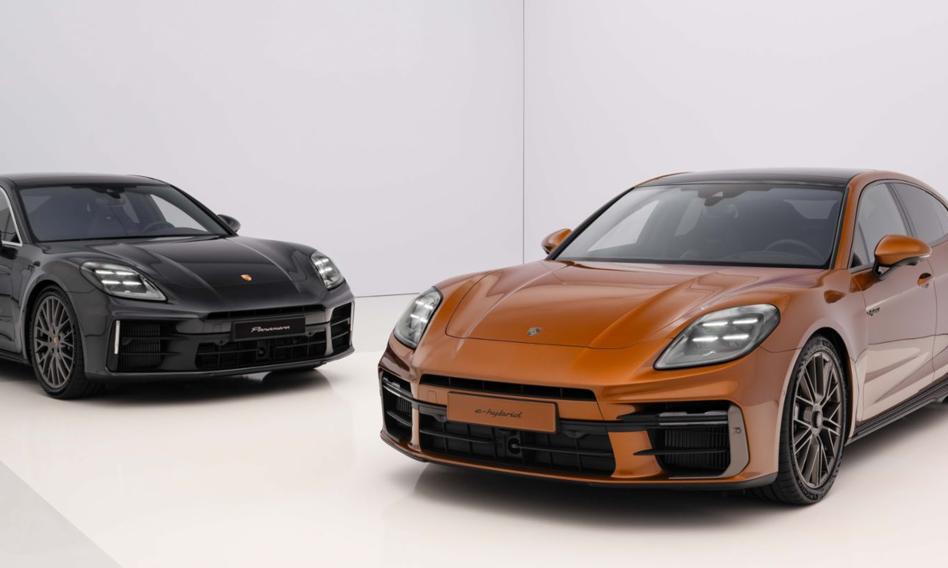
If you put the new Panamera next to the previous one, even an experienced eye might have trouble identifying which one just left the showroom. Although Porsche proudly announces the arrival of the third generation with the code 972, in fact we are dealing here with a masterful recycling of proven ideas. The car looks fresh, slimmer and definitely breaks away from the image of a sluggish “1”, but you won't find any revolution here. The revolution is hidden elsewhere.
The tested, base model will serve as a background for a question that is asked more and more often in the premium segment: is there still room for sentiment towards clean gasoline in the world of luxury limousines, or is it better to trust the calculator and choose a hybrid?
Digital harvesting and quality in question
But before I start complaining about screens, I must give back to Caesar what is Caesar's. It's a really comfortable car. I found it extremely comfortable both on the road and in the city. The seats are great and offer great comfort even in the basic version.
The rest of the interior, however, is a signal that the analog era at Porsche is coming to an end. The central tachometer disappeared from the dashboard, replaced by a fully digital display – a sign of the times, but also of accounting Excel; screens are just much cheaper today. Although it must be admitted that the spirit of the brand has survived in the digital version and the classic clock layout can still be accessed with one click on the menu.
Air conditioning control is much more controversial. While there are physical temperature buttons, we control the air flow direction… on the touch screen. Instead of simply moving the grid with your hand, we have to click through the menu, which is a bit of a style over substance. Another blow to traditionalists is the starter. Instead of the characteristic knob on the left side, which imitated a key, we now have a regular button. A detail, but it takes away some of the unique character of the interior.
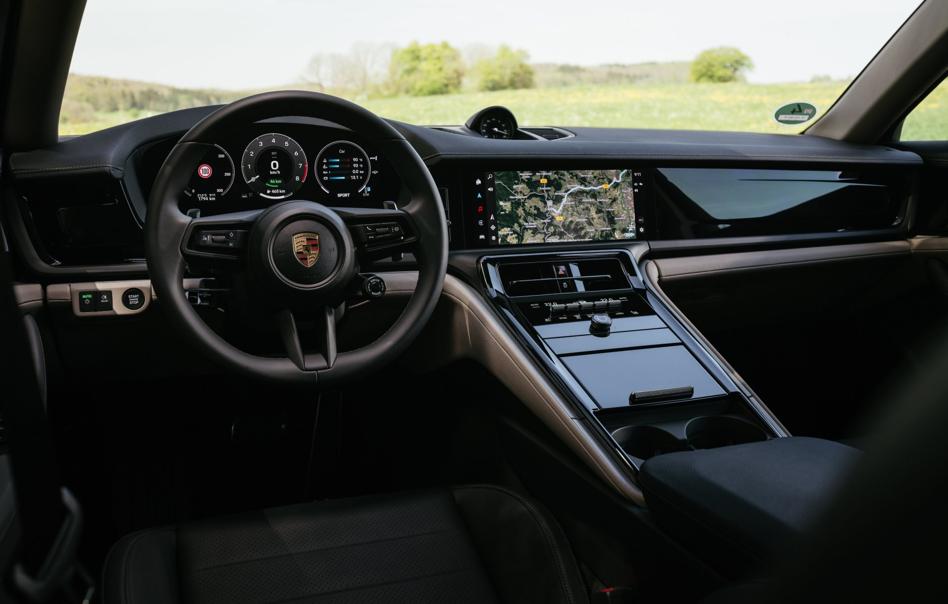
The gear lever, in turn, moved to the dashboard in the form of a small switch, giving way to the center tunnel. This new void, however, is clearly visible. Maybe it's just my orthodox approach, but filling this space with a large sheet of Piano Black is not the best solution here. The tested copy had 20,000. km of mileage and the fatigue of this material – scratches and dullness – was already painfully visible.
The driving “jewel in the crown” and the reality at the pump
Despite its quality stumbles, overall the Panamera stands up to what has always been its strongest point – driving characteristics. Air suspension is now standard, and I deserve a medal for pairing it with GPS and remembering potholes or, in my case, a residential road with speed bumps and a high sidewalk in my driveway. Especially if you have nice rims. In addition, a rear steering axle is available as an option, which makes this 5-meter-long limousine behave surprisingly agile in corners, as I discovered in the company's underground garage, which is my testing ground.
Under the hood of the tested car was a hybrid set (Panamera 4 E-Hybrid). It is a combination of a 2.9-liter V6 with an electric motor, which gives a total system output of 470 HP. According to the manufacturer, this configuration allows you to catapult to the first hundred in 4.2 seconds.
This brings us to energy efficiency. The engineers from Zuffenhausen should be praised, because on the main Wrocław-Warsaw route, with a quiet highway drive and charged batteries (yes, I wanted to achieve this result), I managed to get down to 9.0 liters per hundred, and this is a very good result for such performance and such a car. If I tried a little less, I would get about 10.5-11 liters, and this is still a good result. We can compare this to my BMW F20 120i, which consumes about 8.5 liters on this route.
Hybrid paradox in the price list: Everyday logistics
However, the most interesting maneuver can be seen where emotions end and hard mathematics and everyday use begin. The hybrid works very well when you fully charge it and drive to work peacefully. My route from home to the editorial office is about 35 kilometers on the national road and highway, and in fact the entire route can be covered only with an electric car, which is a significant saving when you travel about 70 kilometers every day.
When we compare this with the price list, the situation becomes clear. The basic Panamera 4 (gasoline) costs PLN 571,000. Meanwhile, the tested Panamera 4 E-Hybrid, although more powerful and faster, is about PLN 3,000 cheaper than the weaker petrol version.
Sure, something for something. Choosing a hybrid, of course, involves some compromises – the trunk shrinks by 64 liters, the fuel tank is 10 liters smaller, and the curb weight increases by 300 kg, but this is not a major problem. I was able to easily fold and put my nephew's stroller or transport boxes of equipment inside. It's enough for everyday use, after all, we don't carry an IKEA wardrobe every day, but mainly ourselves and the air, and in the face of lower price, much better performance and the possibility of running on electricity, purchasing the basic “pure” combustion version no longer makes economic sense.
Just count it. ANDIn the city, the car needed at least 12 liters of fuel, and on the road at higher speeds about 9 liters, we can safely assume average fuel consumption in the mixed cycle at 10-11 liters.
In today's reality, the Panamera is still a great car, but it's only profitable if we let it be a hybrid