Latin American imports inflame society. How did Romanians react to Nicușor Dan's explanations

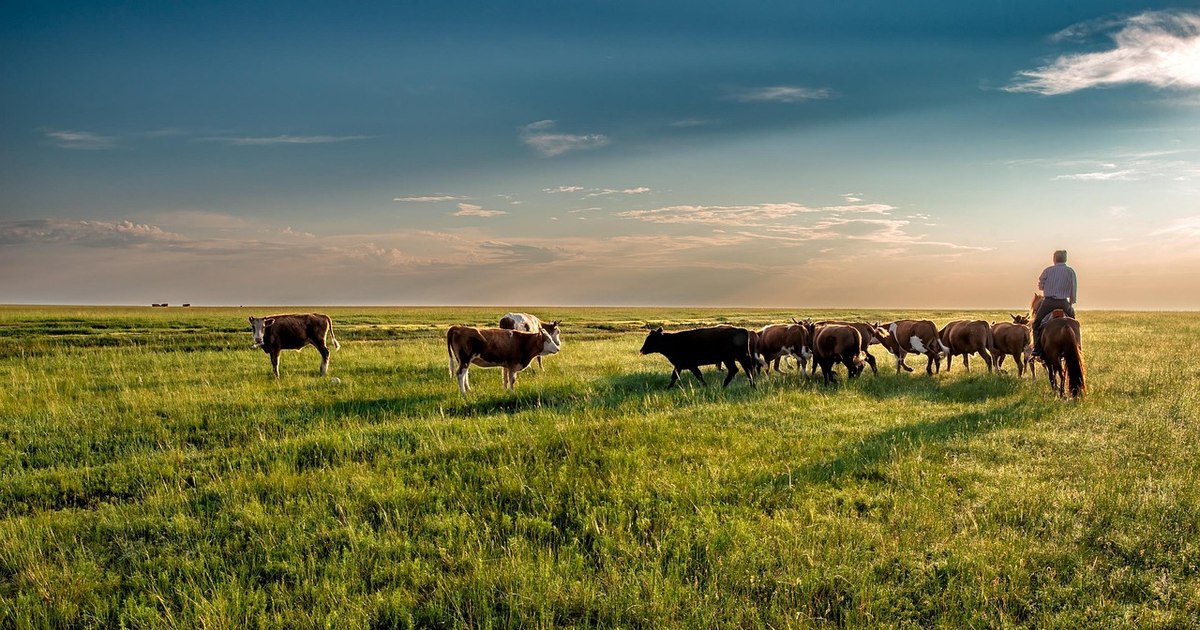
The possibility of tax-free import of agri-food products from Latin America, provided for in the EU-Mercosur agreement, has sparked heated reactions in the online space, after President Nicușor Dan responded to the fears expressed by Romanians regarding the impact on local producers.
1.5% of EU beef production will come from Mercosur duty-free. PHOTO: Pixabay
The European Union approved the free trade agreement with the South American bloc Mercosur, made up of Brazil, Argentina, Paraguay and Uruguay, marking a historic moment after more than 25 years of difficult negotiations.
The decision was taken despite strong opposition from some member states, notably France, Poland, Austria and Ireland, who cited major risks for the European agricultural sector. In Romania, the agreement was harshly criticized by PSD and AUR.
The President of Romania, Nicușor Dan, explained why our country voted for the agreement:
– Romania will thus have the opportunity to export products exempt from the high customs duties that were applied until now.
– The agreement with Mercosur provides for the elimination of customs duties for 91% of all products imported from the EU, and Romania will be able to advantageously export products from important sectors such as transport equipment, especially car components, mechanical and electrical appliances and devices, metal products, textile materials.
– the new Agreement will also generate an increase in service exports from Romania to Mercosur and will increase our country's access to critical raw materials, an essential aspect from a strategic perspective, because it thus reduces dependence on other sources that can use this dependence as a tool of political pressure.
– The considerable decrease in customs duties on imports also offers opportunities to the Romanian agri-food sector. Among the European geographical indications that will be protected on the Mercosur markets, 15 are Romanian agricultural products.
– Limitations of liberalization are foreseen, by limiting the quantities that can be imported at reduced customs tariffs – for beef a maximum of 1.5% of the annual EU production, for poultry 1.3%, and everything that exceeds these quantities will be imported at the customs tariffs in force today.
– At the same time, an additional measure of protection was included by introducing the bilateral safeguard clause, which actually works as a handbrake that can be activated whenever imports of a product suddenly increase and endanger domestic producers.
Dan emphasized that in addition to developing trade, there will also be protection where appropriate, including by enforcing compliance with EU production standards for imported agri-food products. “In terms of pesticides or other substances, everything has to be produced to the EU's high standards in order to be imported here.” Dan points out.
“In conclusion, by lowering customs duties, Romania will gain new markets for exports, and our agriculture is protected. This Agreement negotiated by the EU is an opportunity for Romania“, he concluded.
“That is, if I produce 100 kg of beef in my country, you are not allowed to sell me more than 1.5% tax-free”
The signing of the free trade agreement between the European Union and the South American bloc Mercosur sparked one of the most extensive online debates in recent months, and Reddit quickly became the place where supporters and critics of the decision entered into a harsh but reasoned dialogue. The post of the President of Romania, Nicușor Dan, in which he explained the reasons why the representative of Romania voted in favor of the agreement, acted as a catalyst for hundreds of comments, many of them extremely detailed.
A significant part of users welcomed the introduction of quantitative limits for agricultural imports, seen as a guarantee that the European market will not be flooded with South American products. “That's right. It provides for import limitations based on the percentage of domestic production. That is, if I produce 100 kg of beef in my country, you are not allowed to sell me more than 1.5% tax-free. So as not to oversaturate my market and leave my producers without an outlet. Which is correct”, write a user. The same commentator recalls that the initial form of the agreement did not contain these clauses: “Let's not forget that the treaty, in its early form, did not provide for these restrictions. Everything has to be negotiated.”
“French farmers were also against Romania's accession to the EU”
French farmers, at the forefront of European protests, are viewed with much skepticism by part of the community. “French farmers were also against Romania joining the EU. They were afraid that we would conquer them with telemeau. Some sad idiots”notes one commentator, in an ironic tone, supplemented by another: “We have already conquered grains. We still need 100 years for cheese and wines.”
A common argument in the discussion is that of seasonality. Several users dispute the idea that agricultural products from Mercosur could compete directly with European ones. “The only crops we could compete with wouldn't compete with ours to begin with. They grow them in the southern hemisphere, right when they're not in season here. What kind of competition is that?”, asks a participant.
Irony sometimes becomes a means of social criticism: “Our banana farmers and emu farms will suffer. And Romanian orange juice producers”one writes, playing down fears about the impact on local agriculture.
Others go further and pose the problem from the consumer's perspective: “It is good for the consumer to have as many options as possible. The ones who complain are the ones who get subsidies and don't want competition.”
“When there are slave labor outside on a bowl of rice a day, naturally what comes from outside is cheaper”
On the other hand, there are also voices that warn of the risks of dependence on imports. “When slaves are working outside on a bowl of rice a day, naturally what comes from outside is cheaper. We close domestic production and in a few years they tell us: 'look, they depend on us, let's raise prices'”warns one user, drawing a parallel with the pandemic mask crisis: “You have to think with the critical areas.”
Supporters of the agreement respond with numbers. “It's the 1% market import limit on many agricultural products. ONE PERCENT,” someone punctuates. Another commenter goes into detail: “1.3% of the EU's chicken meat production. By the numbers: 14 million tons of annual consumption, 180 thousand imported. Does this put the Romanian farmer at risk? If your sales decrease by 1%, do you close?”
“The small farmer sprays as much as he wants. The supermarket has controls, the market does not”
The discussion also extends to product quality and safety standards. Some users are more critical of local production than imports. “There were cases last year in our markets where pesticides were found above the limits. So I'm not ashamed of some of our farmers either”someone writes. Another explains the structural problem: “The small farmer sprays as much as he wants. The supermarket has controls, the market doesn't.”
Finally, the debate shifts from agriculture to the economy as a whole. “Any free market is to be gained in the long run. Opportunities are created that would not have existed in a closed market,” states one user, also emphasizing the geopolitical stakes: “Any new market reduces dependence on China and the US.” Others add the importance of access to resources: “Through the agreement we have access to Brazil's huge mineral deposits.”
The question that keeps coming back is a simple one: “How does it actually benefit us?” The answers listed by the community include the fact that Romania exports machinery, industrial equipment, auto parts, metal products, furniture and services to the Mercosur countries, areas in which Romania is already competitive.
The Reddit debate shows more than just polarization. It reveals a society trying to weigh lucidly between the protection of agriculture, the advantages of free trade and the lessons of recent crises. The EU-Mercosur agreement is perceived neither as an imminent disaster nor as a miraculous solution, but as a complex compromise, which, as one user summarizes, “it's neither bau-bau, nor philanthropy, but mathematics, negotiations and interests”.