
What compensations did the Romanians have to pay to the USSR. Romanians, also taxed for the years in which they did not participate in the war


At the end of the Second World War, Romania was good at paying, with the largest reparations going to the Soviets. Our country was obliged to pay the Russians more than 380 million dollars. To this sum were added other huge expenses, in money and raw materials.
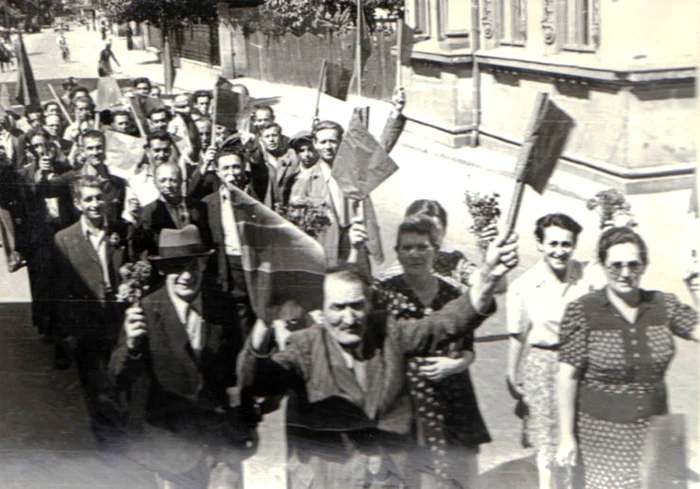
Romanians welcoming the Red Army PHOTO Online photo library of Romanian communism
Romania would pay very dearly for its participation in the Second World War. In addition to the loss of human lives, but also the important material damage suffered between June 22, 1941 and August 23, 1944, when it actually participated in battles on the side of Nazi Germany, our country was also made to pay after the end of the biggest global conflict in the history of humanity. Romanians were forced to pay huge war reparations to the Soviet Union, given that Romania participated in Operation Barbarossa on the territory of the USSR. However, the expenses were much higher than the established amount of damages, eventually reaching billions of dollars.
Romania, made to pay for the years in which it did not fight
The whole story began with an armistice convention signed on the night of September 12 to 13, 1944, in Moscow, when Romania ended the war with the Russians. Romanians have been asking for this since August 23, 1944, when they decided to turn their arms against their former ally and join the alliance with France, England, the USA and the USSR. However, the Russians dragged out the peace negotiations and managed to mess around on Romanian territory for almost a month.
Once the armistice was signed, Romania was made to pay after, together with the Germans, it invaded the territory of the USSR in 1941 as part of Operation Barbarossa and caused damage. In this context, Romania was obliged to pay compensation to the Soviet Union in the amount of 300 million dollars, staggered over six years. Payment was to be made in money and commodities, i.e. oil, grain, timber, sea and river vessels and many others.
Romanians were made to pay more than that from the beginning. Intentionally, the amount was calculated at the value of the dollar in 1938. The devaluation of the dollar during the war brought the actual amount to $384 million. In addition, the Romanian resources that were supposed to reach the Soviets were undervalued. In other words, the real compensations that the Romanians had to offer were much higher. Not to mention the fact that the damage caused by the Red Army from August 23 until the date of the signing of the armistice was not even taken into account. Through the same armistice, the Romanians recognized the loss of Bessarabia and Northern Bucovina. In addition, the Russians were not obliged to withdraw their troops from Romanian territory. The representatives of the USA and Great Britain fully agreed with the provisions of the armistice.
“The armistice convention, signed on the night of September 12/13, 1944, provided for the recognition of the Soviet annexations of June 28, 1940, compensation of 300 million dollars, payable within six years in goods, the assurance of freedom of movement for Soviet troops on Romanian territory, the arrest and punishment of persons accused of war crimes, the nullity of the Vienna arbitration and the restitution of Transylvania or the largest part of it to Romania, the liberation of which will be done through the joint struggle of the Soviet and Romanian armed forces. During the discussions, two situations announced a dark future: the refusal of the Soviet Union, supported by the ambassadors of Great Britain and the USA, to include in the armistice convention the withdrawal of Soviet troops from the territory of Romania at the conclusion of the peace and the automatic approval given by A. Harriman and Sir Archibald Clark Kerr – reduced to embarrassment situation of being two puppets handled by Molotov — of all Soviet positions”stated Florin Constantiniu in “A sincere history of the Romanian people”.
A cruel mockery of Romania followed. The armistice decisions were confirmed by the Paris Peace Treaty of February 10, 1947. Russian troops remained on Romanian territory to maintain communication lines with the Austrian occupation zone. Then, although it fought alongside the Allies until the end of the war, Romania did not receive the status of a co-belligerent. With the agreement of the great Western powers, Romania was effectively looted. In short, she was also made to pay for the years in which she did not participate in the war, i.e. 1939 and 1940, but also for the period in which she had already returned her arms and had reached the Allied camp.
“The Treaty in its final wording includes many heavy clauses and many unfair clauses. First of all, the preamble of the Treaty is unfair, which does not grant Romania the status of a co-belligerent(…) Also, Romania considers unfair, in the area of obligations for restitution and reparations, the provisions of Article 24, which provide for September 1, 1939 as the date for the beginning of the execution of obligations to restitution of the rights and interests of the United Nations, when it is known that Romania entered the war only on June 22, 1941. By the same provisions, reparations are also due for the period after August 23, 1944, when the damage to the citizens was caused by the German and Hungarian armies”stated Gheorghe Tătărăscu in the Romanian Parliament.
The country depleted of resources and forced to maintain an army of occupation
Immediately after Romania came under the control of the communists, an extensive process of Stalinization began, doubled by a systematic robbery of national resources. While the Western states benefited from the Marshall Plan, a program designed to support the reconstruction of Europe after the war, Romania was obliged to continue paying contributions to the Soviet Union. Moreover, all the states that reached beyond the Iron Curtain were forced to renounce the Marshall Plan, considered by communist propaganda as an initiative of the “imperialists”.
Thus, while Western aid was rejected, Soviet presence and claims had to be accepted without reservation. A simple analysis of the resources requested by the USSR through the Soviet-Romanian Convention of January 16, 1945 is enough to illustrate the magnitude of the burden imposed on Romania. Only in the oil field, within two years, the Romanian state was obliged to deliver over 3 million tons of oil. To these were added huge quantities of agricultural products: over 277,000 tons of corn at $22 per ton, 370,000 tons of wheat at $24.75 per ton, and 35,000 tons of barley at $21 per ton. In addition, Romania had to surrender hundreds of thousands of animals – pigs, sheep, oxen and horses – along with numerous other resources, all assessed at prices far below their real value. The impact on the national economy was devastating.
These data appear in the transcripts of the meetings of the Council of Ministers during the Nicolae Radescu government period and were later published in the work Army, espionage and economy in Romania (1945–1991), signed by the military historian Petre Opriș. In addition to these deliveries, Romania was obliged to bear considerable expenses for the maintenance of the Soviet army stationed on its territory. According to Petre Opriș, these costs even exceeded the value of the war reparations established by the armistice of September 1944.
Added to all this were the so-called sovroms, Romanian-Soviet joint companies through which Romania's resources were transferred to the Soviet Union at ridiculous prices. The agreement regarding their establishment was signed in Moscow on May 8, 1945, the official purpose being the recovery of Romania's debts to the USSR. In reality, sovroms represented an effective tool of economic exploitation. It is estimated that, through these structures, Romania sent goods to the Soviet Union worth approximately 2 billion dollars, an amount that far exceeded the official reparations imposed.
The trade situation has also become deeply unbalanced. Until 1952, approximately 80% of Romanian exports were directed to the Soviet Union. Academician Onisifor Ghibu described this reality in a memorandum addressed to Prime Minister Petru Groza: “Under this benign name go to Russia the most important riches of all kinds of our country, at derisory prices, while in our markets the most necessary articles are missing or we are forced to pay ten times more for them than the Soviets pay for them”.
If these losses were calculated at the current dollar value, the result would indicate the loss of assets estimated at approximately $30 billion. The last sovrom was abolished in 1956, after the death of Stalin. Paradoxically, the Soviet Union also demanded compensation for the liquidation of these companies, citing the capital invested in them. Romania was thus obliged to pay approximately 5 billion dollars, amounts paid until 1970.


