US military intervention in Venezuela is reshaping global energy flows. Who loses and who wins


The US military intervention in Venezuela is much more than a regional security operation, marking an escalation of Washington's efforts to reassert its strategic dominance in the Western Hemisphere, reshape global energy flows and counter China's expanding economic and geopolitical influence.
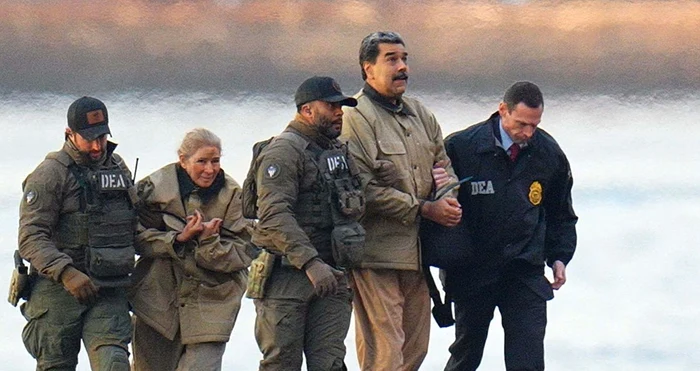
The financial impact of the situation in Venezuela. Photo: Profimedia
Although the financial markets have so far absorbed the shock in a relatively calm manner, the medium and long-term implications for oil markets, China's economy and the global sense of risk are substantial, XTB analyst Radu Puiu told “Adevărul”.
“From an energy and investment perspective, Venezuela has the largest oil reserves in the world. Thus, the fact that the US can handle such a large volume of raw material is an asset. However, a significant increase in Venezuelan production is unlikely to happen quickly. Years of mismanagement, chronic underinvestment and the nationalization of oil operations in the 2000s led to a sharp drop in production and the withdrawal of foreign companies. Even under a US-backed restructuring, rebuilding infrastructure, raising capital and rebuilding operational capacity will take years“, points out the analyst.
How did the market perceive the action in Venezuela?
According to him, geopolitical tensions did not affect the attitude of investors. Markets were closed during the US trade, the first trading day of the year started with Wall Street higher and the US dollar appreciating against a basket of major currencies. This reaction is consistent with a familiar pattern: markets become more risk-averse often ahead of an anticipated conflict, but risk appetite quickly returns. The momentum was supported by the broader context: US and global stocks ended 2025 near all-time highs after a volatile year marked by “tariff wars”, cycles of central bank monetary policy easing and persistent geopolitical tensions.
“The fastest economic effects are being felt in China. Chinese refiners, effectively cut off from Venezuelan crude as the US positions itself to control access to these reserves, are now looking to alternative sources of supply, particularly from Canada, at significantly higher prices.”
China has been the biggest buyer of Venezuelan oil in recent years, benefiting from heavily discounted shipments. These flows were facilitated by oil-for-loan deals, stakes in oil fields, spot purchases settled in yuan, and the use of so-called “dark fleet” tankers to avoid US restrictions.
Starting in 2026, higher oil prices are a significant drag on China's economy. Unlike the US, where oil demand is dominated by private vehicle use, almost half of China's oil consumption is industrial. Rising crude oil prices directly increase production costs in the manufacturing, chemical and plastics industries, while driving up transport and logistics expenses in an export-dependent economy“, said analyst Radu Puiu for “truth“.
What is the “Donroe Doctrine”
Geopolitically, the intervention underscores what the Trump administration has called “The Donroe Doctrine”a modern revival of the 19th century Monroe Doctrine, the analyst explained. Codified in the most recent US National Security Strategy, the policy asserts America's unilateral right to deny rival powers control over “vital strategic assets” from the Americas and explicitly calls for the removal of foreign companies from the regional infrastructure. Venezuela, the only country in Latin America that has a “permanent strategic partnership” with Beijing, it was a symbolic target.
China's economic footprint in Latin America has expanded dramatically over the past two decades. Trade in goods has grown more than forty-fold since 2000, reaching $518 billion in 2024. Direct investment projects have exceeded $180 billion by the third quarter of 2025, and China's economic influence now exceeds that of the US in 14 of the region's 33 countries. Beijing has also used this influence diplomatically, persuading several governments, including Honduras and Nicaragua, to recognize China instead of Taiwan.
“Recent history shows that China has not hesitated to use its own strategic influence. President Xi successfully used controls on rare metal exports to force Washington to drop tariffs of more than 100 percent on Chinese goods, culminating in a truce in late October.
Beijing has also rejected efforts to dilute Chinese control over key ports in the Panama Canal. In this context, the US intervention in Venezuela signals a more conflictual stage in the competition between the great powers. Remarkably, a high-ranking Chinese delegation met with President Nicolas Maduro in Caracas just hours before the US raid, highlighting the symbolism of the mission.
Financial markets reacted selectively. Global defense stocks rallied strongly, with the Stoxx Europe Aerospace and Defense index rising 1.1 percent after President Trump called for a $1.5 trillion defense budget for 2027, extending the year-to-date advance to 12 percent. Defense stocks appear to be benefiting from sustained geopolitical uncertainty, even if overall risk appetite does not appear to be greatly affected”the specialist added.
Where does Venezuela's oil money go?
According to him, “the economic mechanisms of the intervention are unprecedented”. President Trump said 30 to 50 million barrels of sanctioned Venezuelan oil would be transferred to US control and sold at market prices, with the proceeds overseen by the administration. According to the president's statements, the proceeds will be used for the benefit of both Venezuelans and Americans, being used exclusively for the purchase of agricultural products, medicines, medical devices and equipment from the US.
“Beyond Venezuela, this is just one episode in an extremely tense start to the year in international relations. Japan, which is heavily dependent on China for rare metals supplies, faces acute vulnerability if supply chains are disrupted.
Nomura estimates that a three-month embargo could cost Japan about $4.2 billion and hurt GDP by 0.11 percent. Separately, the White House's discussion of purchasing Greenland, including references to potential military options against a NATO-affiliated territory, adds another layer of strategic uncertainty.
For now, markets seem willing to overlook these risks. The events in Venezuela did not affect the positive momentum that carried global stocks into 2026. However, they were not ignored either. Investors are increasingly considering a world where military power is used more openly to secure strategic assets, where defense spending continues to rise, and where uncertainty is driving renewed demand for traditional “safe haven'' instruments like precious metals.”analyst Radu Puiu explained for “Adevărul”.