The most exclusive organization in the history of the world: it has only 50 members, admission is extremely strict and in the past it had an enviable influence


The most exclusive and prestigious organization in history is considered the Order of the Golden Fleece. Founded in the 15th century, it impressed with its pomp, ideals and, above all, with its extremely strict access conditions. It has only 50 seats available.
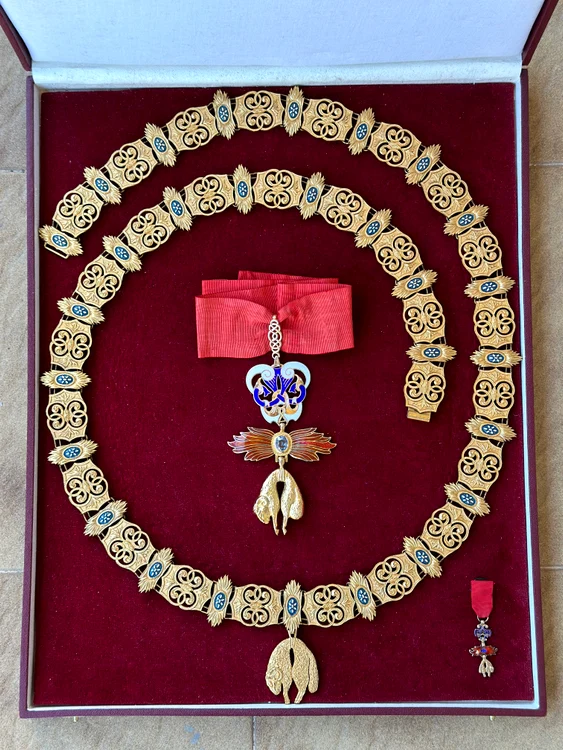
The necklace that confers the status of a member of the Order of the Golden Fleece PHOTO wikipedia
Over time, various professional, social, cultural or religious organizations have been established. Some became more famous than others and have remained known in history. Among the most prestigious and famous organizations were the knightly orders and secret brotherhoods. Of these, the most exclusive and wealthy organization ever founded in history was the Order of the Golden Fleece. It was a chivalric order that impressed with pomp, prestige and exclusivity. The extremely strict conditions for accessing this Order make it available only to a very limited category of people. It still operates today and has only 50 members, the maximum number allowed. In the past, the Order of the Golden Fleece constituted a forum with legal and consultative powers where extremely important decisions were made.
The magnificent order of the Burgundians and the “exclusive club” of the blue blooded
Medieval Europe was home to the most important chivalric and monastic-chivalric orders that were born throughout history. Who has not heard of the Templars, Hospitallers, Teutons or the famous Order of the Garter. Each order had its specifics, but by far the most exclusive and opulent was the order founded on January 10, 1430 by Philip the Good, Duke of Burgundy, on the last day of the party dedicated to his wedding with Isabella of Portugal. It was called the Order of the Golden Fleece and had some draconian conditions for accepting its members. However, we must specify that at that time Burgundy was an extremely powerful duchy with territories that stretched from Flanders to Switzerland. Ruled by dukes from the Valois family, such as Philip the Bold, John the Fearless, Philip the Good and Charles the Bold, Burgundy was a rich medieval European state, a trailblazer in terms of cultural trends, with extraordinary artistic personalities such as Jan van Eyck or Guillaume Dufay. At the same time, in Dijon, the capital of the duchy, there was an extravagant court life, flamboyant and opulent.
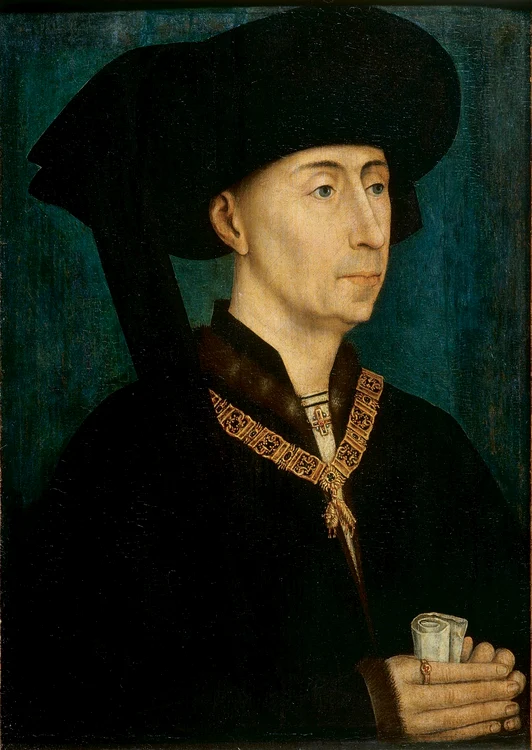
Philip the Good PHOTO wikipedia
The Duchy of Burgundy rivaled France in terms of culture, military and political power, but also international prestige. Here were some of the most important Western churches and monasteries, such as those at Cluny, Cîteaux and Vézelay. That is precisely why it was not surprising that a duke of Burgundy could found such a chivalric order. The order had only 24 places available and its grand master was the duke of Burgundy himself. Later, as there was a great demand for a place in this prestigious assembly, the number of members increased to 31 and then to 51. It never exceeded this number, being the maximum accepted. Only sovereigns or knights of extraordinary reputation and renowned feats of arms were admitted to the ranks of the order. Acceptance was also conditional on belonging to the Catholic Church. Those of other religions were not welcome. In other words, aristocratic origin, notoriety, outstanding deeds and religious affiliation were the main criteria for admission to the Order.
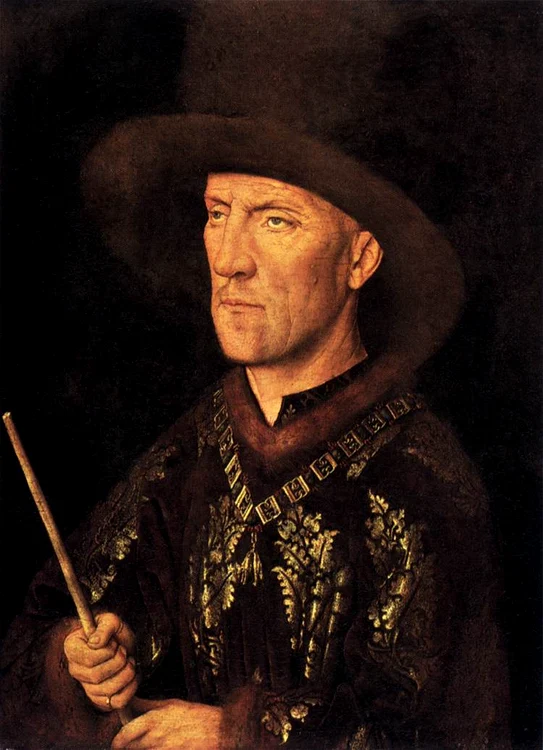
Badouin de Lanoi, one of the first accepted knights PHOTO wikipedia
The order, conceived in an ecclesiastical spirit where services and funerals were important and knights were seated in choir pews like canons, was explicitly forbidden to heretics and thus became an exclusively Catholic honor during the Reformation. The officers of the order were the chancellor, treasurer, registrar and godfather of arms. The first knight to receive the honor of entering the order, after the first Grand Master, Duke Philip the Good, was the knight Jean Le Fèvre de Saint-Remy. Obviously, the order had secret rituals but also extremely lavish and impressive public manifestations. From the beginning it turned into one of the most coveted medieval organizations. For many it meant the pinnacle of social, military and political becoming, a dream. “Under the reign of the fabulous Dukes of Burgundy, Philip the Good and Charles the Bold, the Order of the Golden Fleece became one of the most magnificent monarchical orders of chivalry of the 15th century. The assemblies, ceremonials, rituals and constitution were highly regarded in Europe and were taken as an example for other elite associations”say the specialists from the Austrian Academy of Sciences. Over the centuries this order received only people with “blue blood” and great personalities of the respective times in its ranks.
A show of power, a shield of Catholicism and monarchy
The Order of the Golden Fleece was not founded only for the sake of the worldly meetings of the era, but was created with the aim of becoming a shield of defense of the Catholic religion and the monarchy. More precisely, the order was founded to defend the Roman Catholic religion, to support chivalric customs and to increase the prestige of the Dukes of Burgundy, being dedicated to the Holy Virgin and Saint Andrew. “The order is founded to respect God and maintain our Christian faith but also to honor and elevate the noble ideals of chivalry and also to honor veteran knights. So that those who are at present still able and strong in body and daily doing chivalrous deeds may have reason to go on from good to good. And so that those knights and gentlemen who shall see them wearing the order may honor those who wear it and be encouraged to engage in noble deeds”stated Filip the Good at the foundation of the order. The Order of the Golden Fleece was not something formal but had increased privileges, unusual for a chivalric order of the time. The sovereign undertook to consult the order before declaring war, all disputes between knights were to be settled by the order, the deeds of each knight were reviewed, the guilty being warned or even punished. The king was obliged to obey the decision of the council of the order.
Knights could rightfully claim to be tried by their peers on charges of rebellion, heresy and treason, and Charles V gave the order exclusive jurisdiction over all crimes committed by knights. The arrest of the criminal had to be made by a warrant signed by at least six knights, and during the process of accusation and trial he did not remain in prison, but in the custody of the other knights. Obviously, political matters were discussed at the meetings and decisions were made, including military actions and aid expeditions, if one of the members needed it. The meetings were extremely lavish and marked by discipline. The first meetings took place in Lille and from 1432 the seat of the order was fixed in Dijon, the capital of the duchy of Burgundy. The name of the order caused some controversy, given that one goal was the defense of Catholicism, but a pagan symbol was used, the Golden Fleece from Colchis taken by Jason, the famous hero of Greek myths.
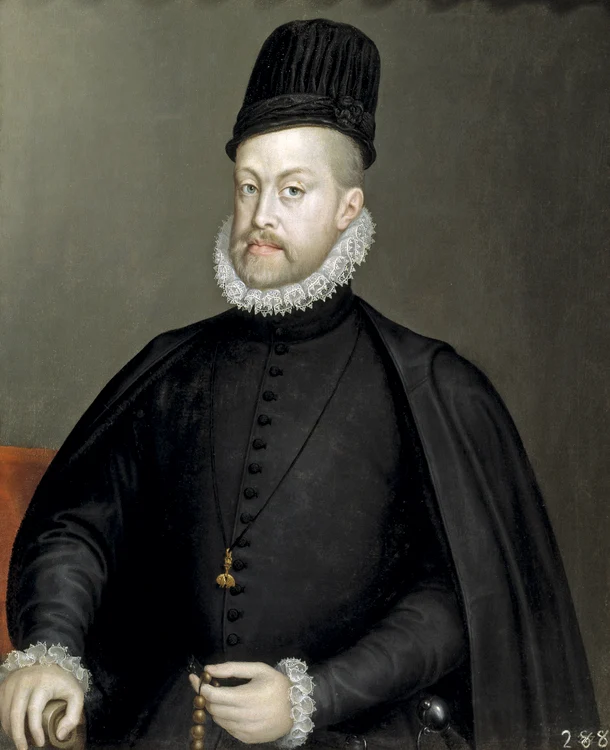
Philip II of Spain PHOTO wikipedia
The bishop of Châlons, chancellor of the order, instead identified it with Gideon's fleece, which he received from God, thus fitting it into Christian symbolism. Each member received a solid gold necklace with the insignia of the order, shaped like a sheepskin. The mottos Pretium Laborum Non Vile (“no small reward for labor”) were engraved on the front of the central link, and the motto of Philip Non Aliud (“I will have no other”) on the back. Knights who belonged to the Order of the Golden Fleece were forbidden to belong to any other knightly order. The value of such a jewel is particularly high, especially if it also has a historical charge. The order was also concerned with anti-Ottoman struggles. The aid given to the Byzantine Empire or the rejection of the Ottomans from the Danube was repeatedly promoted by the Burgundian dukes in connection with the percepts of the order. Even the Burgundian fleet crossed the Aegean Sea to Rhodes and tried to enter the Black Sea, but the plans were no longer implemented, after the death of the Burgundian dukes.
Centuries of tradition and exclusivity
The last duke of Burgundy died without male issue, so through the marriage of Mary of Burgundy with the Austrian archduke Maximilian, in 1477 the Order of the Golden Fleece passed into the care of the House of Habsburg. The Holy Roman Emperor Charles V, who granted the order exclusive jurisdiction over all crimes that might be committed by its members, left the Order in the care of his son, Philip II of Spain, whose succession was confirmed by Pope Clement VIII in 1600. After the death of the last member of the Habsburg dynasty on the throne of Spain in 1700, the succession was contested by the kings of the dynasty Bourbon. Under these conditions, the Order of the Golden Fleece was divided into two branches, the “Spanish” one, of the monarchs of Spain belonging to the French Bourbon dynasty, and the Austrian one, of the Habsburgs.
After Charles VI established the Order in Vienna in 1713, it continued to be reserved exclusively for “blue-blooded” Roman Catholics and the highest ranks of the nobility. There have also been controversial appointments within the Order. For example, the inclusion of Napoleon and his brother. Both were later expelled after the restoration of the Bourbon dynasty. At the same time, illegally, the symbol of the Order was also offered to the dictator Franco, who refused it. The Order of the Golden Fleece still operates today, with meetings on November 30, Saint Andrew, the patron saint of the Order. Among its members are King Juan Carlos I of Spain, Margaret II of Denmark, Nicolas Sarkozy, Beatrix of the Netherlands, Albert II of Belgium, Akihito-Emperor of Japan or Felipe VI of Spain.
.