Will we have four more seasons? Climatologist: “The current change does not affect the existence of the seasons, it only changes their climatic characteristics”


In recent years, we have increasingly noticed unusual changes in the rhythm of the seasons. On January 7, the Epiphany, the traditional frost was absent, and December often looked more like an autumn month than classic winter. Instead, the snowfall is more abundant in spring, in March. Do all these things influence the classical structure of the seasons? Climatologist Roxana Bojariu answered this question.
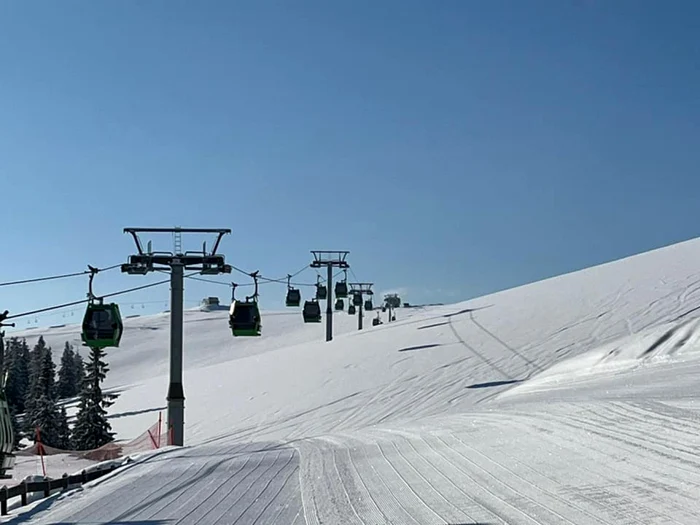
Snow in mid-March on the slopes PHOTO Transalpina ski area
“All seasons have a warming trend”
Although snow occurs, including spring, the reality is that all seasons have a warming tendency, says climatologist Roxana Bojariu:
“The data in the archive shows changes in the relative length of the seasons. Statistically, spring starts earlier, even though limited episodes of winter may occur in March or even April. However, these episodes are rare and do not influence the overall trend. All seasons have a warming trend, more pronounced in summer and winter. In the transition seasons, spring and autumn, natural temperature variability is greater, so the warming associated with the change climate change is less obvious.”
Do the four seasons remain?
Even in the context of climate change, Romania will continue to have the four seasons, says the climatologist.
“Their presence is related to the country's latitude and the tilt of the Earth's axis of rotation relative to the plane of its orbit around the Sun. Variations in these orbital parameters determine the summer-winter contrast, but they occur on time scales of tens and hundreds of thousands of years. Current climate change, with a time scale of the order of hundreds of years, does not affect the existence of seasons, but only changes their climatic characteristics.” explains Roxana Bojariu.
The change, irreversible
Even if the seasons remain unchanged for now, a return to past temperatures is impossible. However, there are actions that can help, states the climatologist:
“Reducing greenhouse gas emissions can slow global warming and associated changes in extreme event statistics. However, a return to pre-industrial conditions is not possible. Slowing down and limiting global warming, however, helps us to adapt more easily to the new conditions, with lower costs for society.“
What the seasons will look like in the near future
According to the climatologist, all seasons will be characterized by higher temperatures. Springs will start earlier and summers will extend into autumn.
“Summers will be marked by a greater frequency, intensity and duration of heat waves. These heat waves — which will also favor episodes of drought or wildfires — can be interrupted by intense storms, characterized by large amounts of precipitation falling in a short period of time.”
Winters, on the other hand, will be poorer in snow.
“Rains will gradually replace the snow in the plains and, in general, in the lower altitude areas. In this way, the annual cycle of water resources will also change,” says Roxana Bojariu.