From January to November, China reduced purchases of Russian oil by 7.6%. — up to 91.5 million tons. However, in monetary terms, its exports decreased even more, by as much as 20 percent, which was caused by falling prices and discounts, write experts from the Gaidar Institute, citing data from the Chinese customs services.
Imports of Russian petroleum products by China decreased by 3%. in the case of light distillates and by 33 percent. in case of severe ones. At the same time, the value of deliveries decreased by 33%. and 40 percent However, the problems of the Russian economy do not end there.
Coal exports from Russia to China fell by 11%. in physical terms (up to 72.4 million tons) and by 29 percent in monetary terms (up to USD 6.9 billion, PLN 25 billion). Wood supplies decreased by 10 percent respectively. and 8.7 percent Purchases of ferrous metals also dropped sharply – by 63%, to 245,000. tone. Exports of liquefied natural gas to China increased by 12% in physical terms, but in monetary terms they decreased by 1.8%. However, imports of gas sent to China via the Power of Siberia pipeline increased, as well as non-ferrous metals: aluminum by 95% and nickel by 52%.
For the first time since the beginning of the war
Simultaneously For the first time since the outbreak of the war in Ukraine, deliveries of Chinese goods to Russia began to decline — in the period from January to November last year, they decreased by 11.8%, to USD 91.7 billion. (PLN 331.8 billion). Imports of cars from China fell by half, and other categories of machinery and equipment – by 10%.
In the first year of the war, Russian-Chinese trade increased by 30 percent, the same in 2023. In 2024, the growth rate decreased to only 2 percent, and in 2025 there was a decline. As a result, the share of the Russian market in Chinese exports decreased from 3.2%. to 2.7 percent, and Russia dropped to ninth place on the list of main recipients of Chinese goods.
The article continues below the video
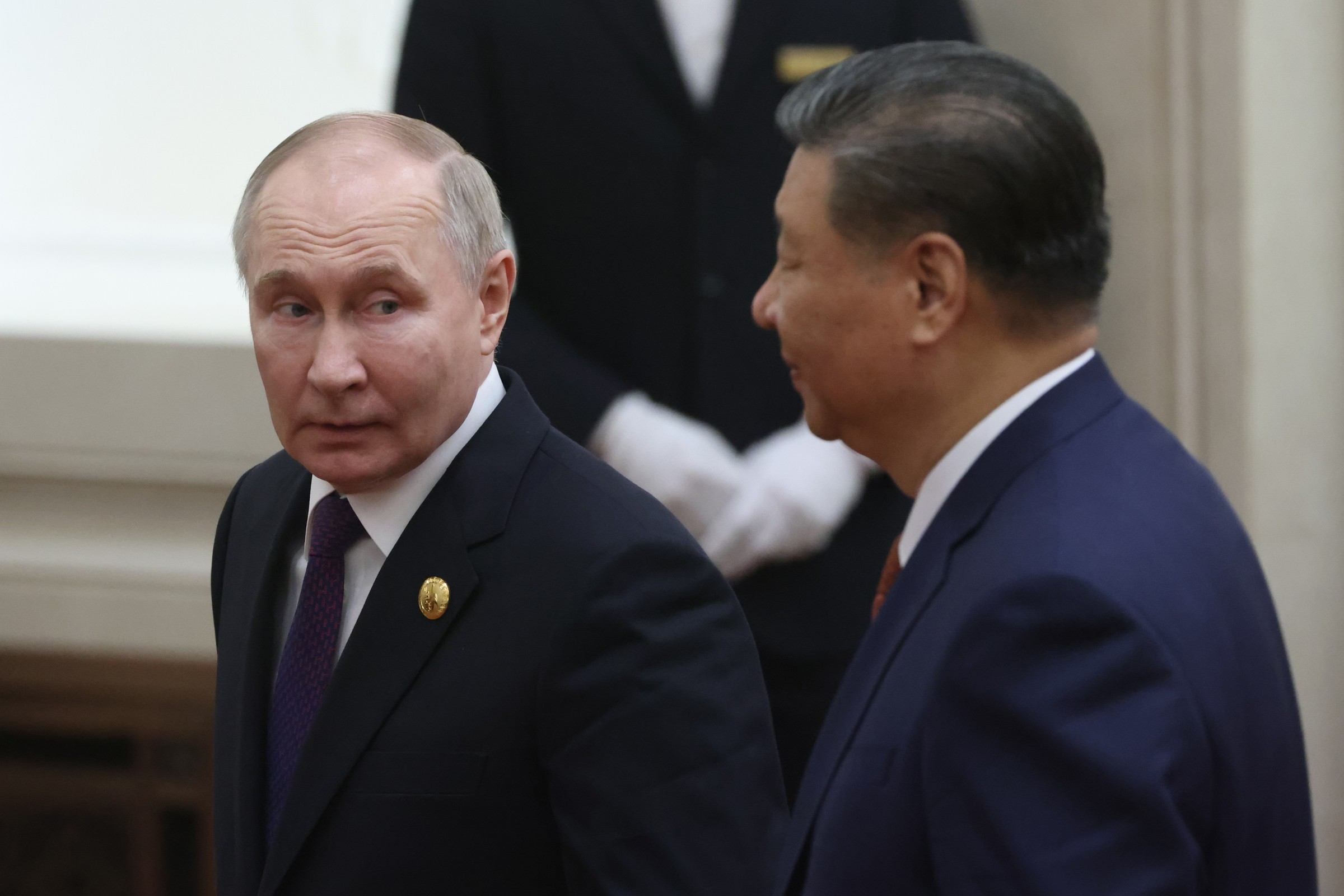
The decline in trade with China is continuing – despite Vladimir Putin's appeals, which, according to Reuters, he addressed to the Chinese authorities in August during his four-day visit to Beijing. According to the agency's sources, the decline in trade with China caused anxiety of the Russian government – it began to fear that the overall condition of the economy would deteriorate. After two years of a boom fueled by military production, it practically stopped growing – in November, Russia's GDP increased by only 0.1 percent.
Moscow's dependence on Beijing has reached such a scale that if the Chinese economy sneezes, the Russian economy risks catching a cold. For example, calculations by experts from the Institute of Developing Economies of the Bank of Finland show that a decline in total demand in China by 1%. will cause Russia's GDP to decline by 0.1%. Purchases of Russian oil by China and India decreased by 30%. will cause Russia's economy to decline by 1.6%.
Although the Kremlin calls relations with China strategic and often talks about a borderless partnership, in reality they are deeply asymmetric, notes Elina Rybakova, senior researcher at the Peterson Institute for International Economics. For Russia, China is the largest sales market for raw materials, primarily oil and gas. However, for China, Russia is a small export market – its share of the Chinese market is comparable to that of Mexico.
Rybakova also notes that while in the 2000s Russia sold goods with high added value to China, it now only exports raw materials to China.
I’m Ashley Davis as an editor, I’m committed to upholding the highest standards of integrity and accuracy in every piece we publish. My work is driven by curiosity, a passion for truth, and a belief that journalism plays a crucial role in shaping public discourse. I strive to tell stories that not only inform but also inspire action and conversation.