Brussels before the big vote. The agreement with Mercosur is causing a political storm in the EU

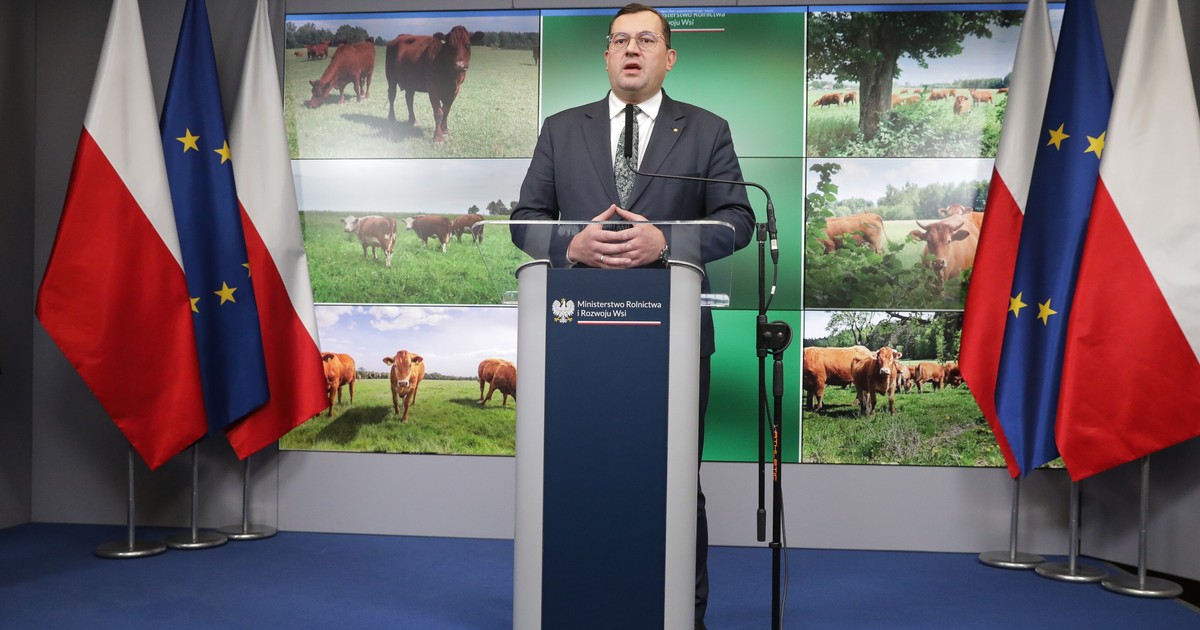
On Friday at 9.30 The EU Council meets in Brussels at the level of Coreper, i.e. ambassadors (permanent representatives) of member states to the EU. He has to take key decisions on the trade agreement between the EU and the South American trading bloc Mercosur.
Read also: Poland threatens a veto in the EU. There are rumors of an unfair solution
Points regarding Mercosur will probably be considered around 11 – First, the permanent representatives to the EU will deal with the so-called safeguard clauses – safeguards that are intended to protect EU agriculture against excessive price declines after the agreement enters into force.
The next item on the agenda will be the Council's decision on the signing on behalf of the European Union and provisional application of the agreement with Mercosur. The agreement is scheduled to be signed by the head of the European Commission, Ursula von der Leyen, on Monday, January 12, in Paraguay, which currently holds the presidency of Mercosur.
As far as protective clauses are concerned, according to Krajewski, Coreper should be expected to reject the results of the December trilogue on this matter, which softened the shape of the fuses voted by the European Parliament. According to the Minister of Agriculture Warsaw will strive for the protection clauses to be the same as those agreed by the European Parliament. The idea is, among other things, that fuses will be used in a situation in which so-called sensitive products in the EU (beef, poultry, dairy products, sugar, ethanol) will increase by 5%, not 8%.
According to the announcements during the EU Council regarding consent to sign the agreement, Poland is to vote against it. On Thursday a similar position was confirmed by Budapest, Dublin and Paris. Although for the European Commission it is very difficult for the European Commission to oppose the agreement from such a large country as France, which is also the largest agricultural country in the EU.
The Minister of Agriculture, Stefan Krajewski, among the tough opponents of the agreement mentions in one breath: Poland, France and Hungary. As he adds, “we are waiting for Italy's position.” However, our sources in Brussels have no doubt that Rome will vote in favor. This will mean the lack of a blocking minority necessary to torpedo the agreement.
In this situation – as Krajewski says – “we must prepare appropriate protective clauses, but also fight for a large budget for the CAP after 2027.“He argues that a lot of money is needed in the EU coffers in connection with trade agreements – not only with Mercosur, but also, for example, Ukraine, as well as for investments in agriculture or the development of rural areas. – I will fight for this in Brussels, because there is still time for it – he announces.
— Nobody says that this agreement will not affect Polish agriculture. This is why protective clauses exist to best prepare Polish agriculture and processing for these changes, emphasizes the Minister of Agriculture.
Read also: Why are farmers afraid of the agreement with Mercosur? “The devil is in the details”
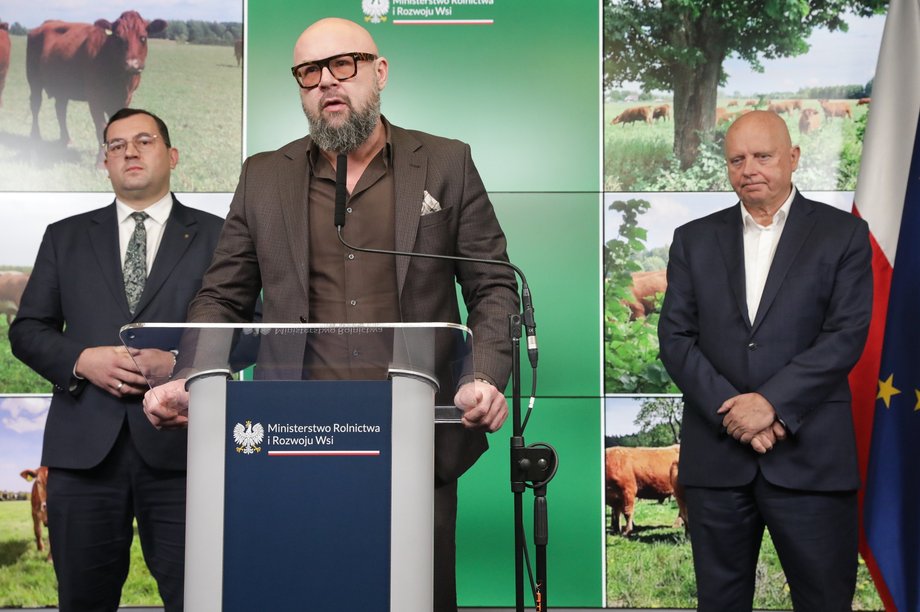
Minister of Agriculture and Rural Development Stefan Krajewski (left), chairman of the Beef Sector Council Jerzy Wierzbicki (right) and vice-president of the Polish Sustainable Beef Platform Jacek Zarzecki (center) at a press conference on the EU-Mercosur agreement, January 2026
|
PAP/Tomasz Gzell / PAP
The Minister of Agriculture is preparing a shield for beef producers
In order to mitigate the effects of the agreement with Mercosur for Polish beef producers, Krajewski announced new support instruments for this industry. He announced it at a press conference on Thursday.
Among the new solutions, he mentioned a new so-called eco-scheme, i.e. subsidies for beef producers to reduce CO2 emissions associated with breeding beef cattle. – This is the first such action in Europe – noted the Minister of Agriculture. Another form of support is an increase in subsidies for bulls from PLN 5,000 to PLN 7,000.
Beef production, along with poultry, is one of the industries most exposed to competition from Mercosur, especially from Brazil. As Krajewski argued, Poland is the fifth beef producer in the EU.
— We are the second exporter of beef in the EU, after Ireland, and we do not compete on price but on quality. The beef sector is the only one in the country that has its own strategy and is implementing it, added Jacek Zarzecki from the Sustainable Beef Platform during the conference.
— The agri-food sector accounts for almost 13%. Polish GDP. We are the ones who create the surplus, thanks to which Poland has a positive trade balance. We are aware that sooner or later this agreement will enter into force, but we expect protective clauses in the form adopted by the European Parliament (EP). There will be a decision tomorrow at Coreper. We expect them to be finalized tomorrow at Coreper tough rules of protective clauses in the form adopted by the EP – said Zarzecki.
Jerzy Wierzbicki from the Coreper Beef Sector Council emphasized: – We will be most affected by the agreement, we compete with Brazilian beef on the European market. The European Commission is seeking an agreement on the basis that it invites us to dinner, which we will not consume, but we will pay the bill.
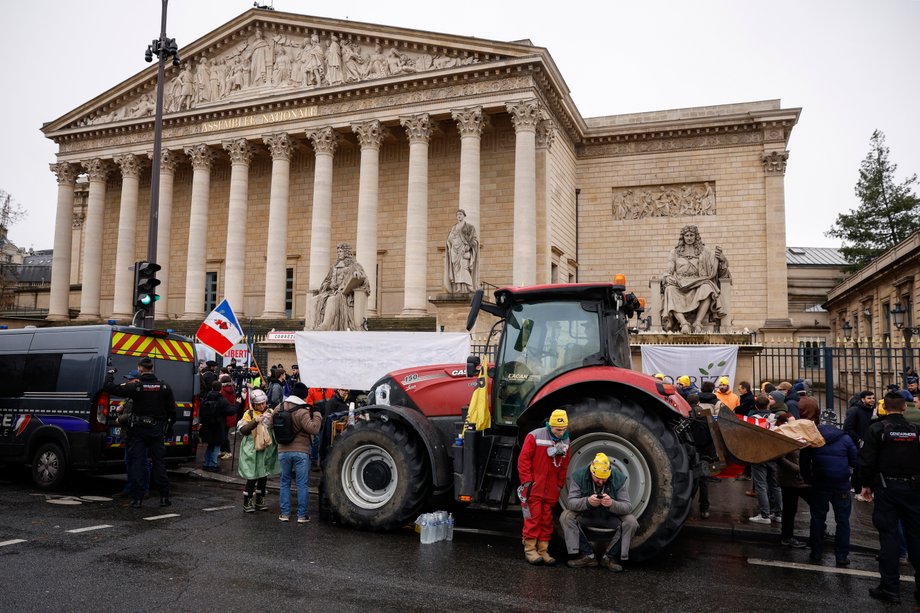
French farmers protest against the EU-Mercosur agreement in Paris, January 8, 2026
|
EPA/YOAN VALAT / PAP
On Friday, farmers are to protest in Warsaw, among other things, against the agreement with Mercosur. On Thursday, an agricultural protest on this matter took place in France. Krajewski appeals to farmers to be cautious. – In these difficult weather conditions, only a wisely organized strike will bring positive results – he points out.
President Karol Nawrocki is to meet with the leaders of agricultural organizations participating in the protest.
Will there be no surprises this time?
The European Commission originally planned to sign the agreement with Mercosur on December 20. At that time, it did not take place due to Italy's unexpected revolt. Rome – officially supporting the signing of the agreement since September – expressed expectations for better protection of farmers' interests. This time it's like this surprises are not expectedbut taking into account the importance of the agreement and the extent to which it is used politically, not only in Poland, various scenarios are possible.