How Maduro's trial will play out. Noriega's precedent: What the case of the Panamanian dictator captured by the US 36 years ago also for drug trafficking shows


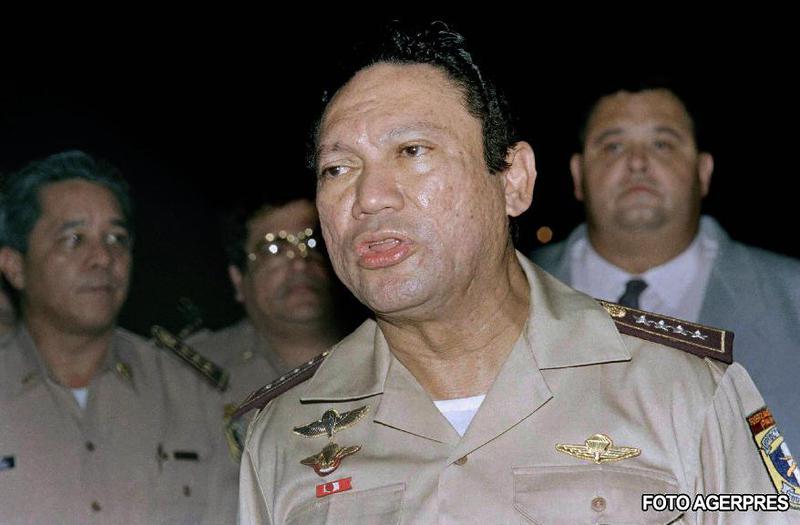
Former military dictator Manuel Noriega, like Nicolas Maduro, was accused of drug trafficking for accepting millions of dollars in bribes from drug traffickers and turning Panama into a capital of international cocaine trafficking. Captured on January 3, 1990 by the Americans, his trial offers important clues about the future of Nicolas Maduro, reports the American publications CNN, New York Times and ABC News.
In December 1989, President George HW Bush sent US troops to Panama with the goal of capturing Manuel Noriega, who had been the military ruler of Panama for six years. Noriega hid in the Vatican embassy in Panama City, where he was finally captured on January 3, 1990, taken to the United States, tried and convicted.
Exactly 36 years later, Venezuelan President Nicolas Maduro was captured by US forces after a sting operation. At his first appearance before a judge on Monday, Madura pleaded “not guilty” to all charges and charged that he was “kidnapped” from his home in Caracas by the Americans.
The similarities between the two cases and the charges brought against the two South American dictators give us more clues about how the trial in New York will play out.
Legality of arrest outside US territory
Maduro's lawyers are expected to challenge the legality of his arrest, arguing that he enjoys immunity from prosecution as a sovereign head of a foreign state, a fundamental principle of international and US law. At the first hearing, defense attorney Barry Pollack announced he was not seeking bail at this time” but that he might do so later.
Pollack also mentions that he may file motions regarding Maduro's role as a sovereign head of state, and adds that “there are questions about the legality of his military abduction.”
In 1990, Noriega's lawyers quickly mounted an aggressive defense accusing the Justice Department of violating both international law and due process protections by invading Panama and arresting him abroad.
Maduro “is likely to raise a number of significant objections to the impeachment,” similar to those attempted by Noriega, said Steve Vladeck, a legal analyst for CNN and a professor at the Georgetown University Law Center.
The case will involve “unprecedented constitutional and international law arguments” that could attract high-profile criminal defense lawyers, CNN senior legal analyst Elie Honig said Saturday. “I've seen very few cases like this.”
The manner in which the defendant is brought does not influence the trial
Noriega's arguments were unsuccessful. He was tried and convicted in 1991 and received a 40-year prison sentence. A decisive factor in the failure of the defense was that American courts “refused to consider the legality of the invasion itself.”
“Federal courts have ruled that the manner in which a defendant is brought before an American court — even by force, even from foreign territory — does not waive criminal jurisdiction,” explains Clark Neily, a fellow at the libertarian think tank Cato Institute.
Supreme Court decisions dating back to the 19th century also attest to the jurisdiction of the United States to prosecute foreign nationals, regardless of whether their presence in the United States was lawful or not.
If Maduro tries to argue that he was brought to the US illegally, there is case law that explains why defendants can still be tried even if they were brought there illegally. Prosecutors can cite a 1989 memo by William Barr, then at the Justice Department's Office of Legal Counsel, that says a president has “inherent constitutional authority” to order the FBI to arrest people in foreign countries, even if doing so violates international law.
Barr, who became attorney general in the Bush Jr. administration after the Noriega case. and in the first Trump administration, dismissed in an interview on Sunday criticism that the US was pursuing regime change in Venezuela instead of enforcing domestic laws.
“Going after and breaking up the group inherently involves regime change,” Barr said in an interview on “Fox News Sunday.” “The goal here is not just to catch Maduro. We've indicted a whole bunch of his lieutenants. The goal is to clean that place of this criminal organization.”
As attorney general during the first Trump administration, Barr oversaw the impeachment of Maduro.
Presidential immunity
“The most difficult issue for prosecutors will be Maduro's argument that he is entitled to some kind of immunity,” Vladeck said, “either because he was the 'head of state' of Venezuela, or because, even if he wasn't, all of his alleged crimes stem from official acts performed with government authority.”
In the Noriega case, the courts accepted the executive's decision that Noriega was not entitled to immunity and the “clearly illegal nature of the alleged acts.”
But Noriega never held the title of president during the six years he ruled Panama as a dictator, leaving a series of “puppets” to hold the position. Instead, Maduro claims to have won a popular mandate three times. However, the results of the 2024 election are not recognized by the US and the EU. The self-proclaimed victory was recognized by a few states including China, Russia and Egypt.
The first Trump administration closed the US embassy in Caracas, the capital of Venezuela, and severed diplomatic ties with Maduro's government in 2019 after he won election after banning most of his opponents. The administration then recognized the head of the opposition in the National Assembly as the legitimate leader of the country. The Biden administration has largely followed this policy.
It remains to be seen whether the courts will reconsider that precedent because of Maduro's status as president, although the Justice Department referred to him in the indictment released Saturday as the “de facto but illegitimate ruler” of Venezuela.
The United States has indicted other foreign leaders for corruption and drug trafficking that they committed while in office. Among the most notable is Juan Orlando Hernández, former president of Honduras, who was convicted in 2024 of drug and arms trafficking and received a 45-year prison sentence. He was pardoned at the end of last year by Donald Trump.
What happened to Noriega
After his conviction in 1992, a federal judge ruled that the former dictator was a prisoner of war and must be given certain rights in prison, although judges cannot assign people to specific prisons and their ability to enforce such rulings can be limited.
Noriega died in 2017 after nearly three decades in prison, first in the United States, then in France, and finally in Panama.