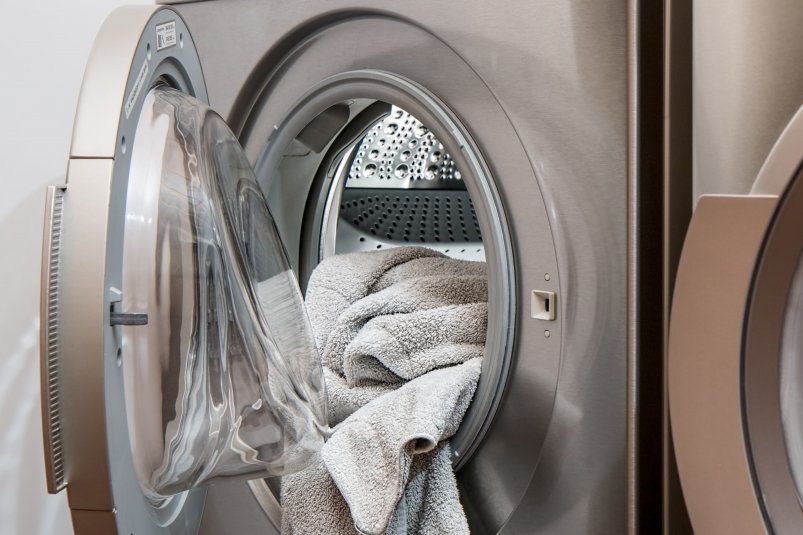
Over time, soap scum, water residues, fungus in the rubber band accumulate in the washing machine, and a musty, “mousy” smell appears that does not go away even after washing at 60 degrees. Expensive anti-raid pills often only mask the problem rather than solve it. But there is a simple, proven way.
This method cleans the heating element, dissolves plaque, kills mold and refreshes the drum in just one cycle.

How to clean the machine correctly:
1. Prevention once a month
- Pour 2 tbsp into the drum. l. citric acid.
- Run a single wash at 60°C.
- This will remove limescale from the heating element and prevent odor.
2. Deep cleaning of mold
- Mix 3 tbsp. l. baking soda with 1 tbsp. l. water to pasta.
- Apply to the rubber cuff, especially in the folds.
- Leave for 20 minutes, then wipe with a damp cloth.
- After this, run the cycle with citric acid as in step 1.
3. Drum freshness
- If the smell appears suddenly, add 1 tbsp. l. soda directly into the drum.
- Leave it overnight with the door open to allow the baking soda to absorb moisture and odor.
- In the morning, run a short cycle at 40°C.
Important:
- Do not mix citric acid and baking soda in the same cycle, they will neutralize each other.
- Always leave the door ajar after washing. This is the main prevention of mold.
- Do not use boiling water, it is not necessary, and the high temperature without laundry can damage the rubber.
Question and answer:
Is it possible to clean the machine with vinegar instead of citric acid?
You can, but vinegar is more aggressive and can damage rubber and seals. Citric acid is softer and safer for equipment.
Why does my washing machine smell like mold?
Due to residual water in the rubber cuff, low temperature washing and closed door. The fungus grows in warm, moist environments.
Do I need to clean the machine if I only wash at 60 degrees?
Yes. Even at high temperatures, moisture remains in the rubber band, and detergent residues form a deposit on the heating element.