On Saturday, the president Venezuela Nicolás Maduro was captured and deported from the country following a large-scale US attack on Caracas. The US is talking about fighting “narco-terrorism” and migrant smuggling. The regime in Caracas claimed that Washington's goal was to take control of the country's oil deposits, which are the largest in the world (reaching 300 billion barrels compared to almost 270 million in Saudi Arabia).
However, there is a difference between “proven resources” and “recoverable resources”. It should be emphasized that Venezuela is not among the largest producers (approximately 1.5 million barrels per year compared to 11 million produced by the USA, the leader in the ranking). The reason for low production is the lack of investment in infrastructure (foreign companies were thrown out), many years of international sanctions and political instability.
Most of Venezuela's resources are concentrated in the so-called Orinoco Belt (Faja del Orinoco). This is an area with a huge saturation of raw materials, but unlike Middle Eastern deposits, the local oil is very heavy and sticky (bituminous). It requires advanced technologies, huge amounts of energy and mixing with lighter fractions to make it flow through pipelines at all. Its refining is also more expensive.
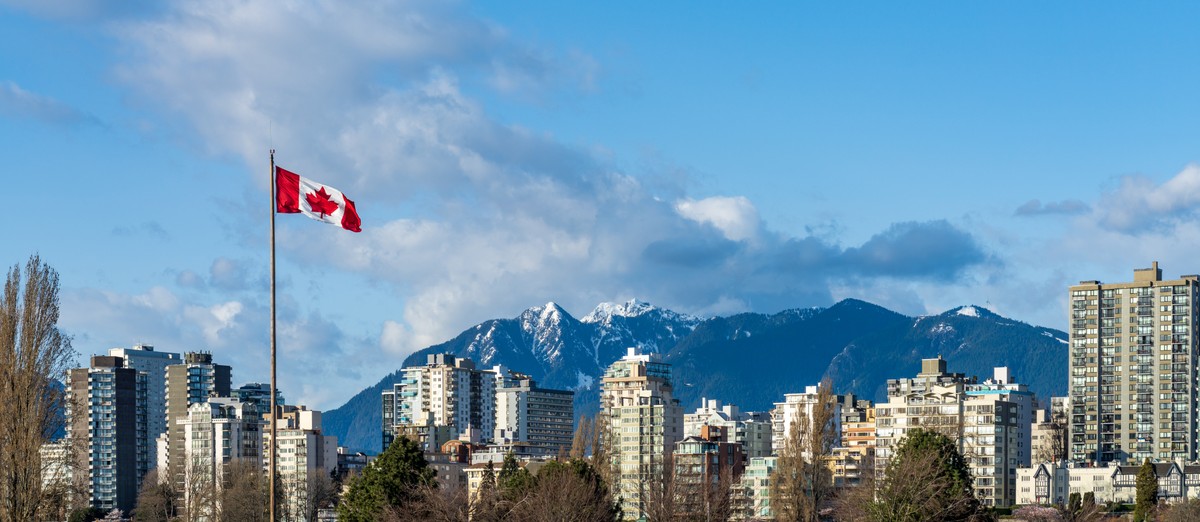
Canadian media have pointed out in recent weeks that if Venezuelan oil returned to world markets, it could seriously affect Canadian oil producers, whose main market is the United States.
Public broadcaster CBC, in a recent analysis, quoted experts pointing out that crude oil from Venezuela has the same chemical composition as oil from Alberta, Canada, but the conditions for its extraction are easier. However, since the coming to power of the leftist Hugo Chavez and strikes in the Venezuelan oil sector more than 20 years ago, it was crude oil from Canada that replaced supplies from Venezuela to the US.
See also: What does Putin envy Trump today? Gen. Polko on the action in Venezuela
“We will be heavily involved in the oil sector in Venezuela,” Donald Trump said in an interview on Fox News on Saturday. The US president thus answered the question about the future of the Venezuelan oil sector in the face of the current US blockade of Venezuela.
“We have the greatest oil companies in the world, the biggest, the best, and we will be very engaged,” Trump added.
Canadians about the American intervention in Venezuela
Ottawa did not recognize the Maduro regime and opposed the repression of Venezuelans, dissidents and opposition leaders, Foreign Minister Anita Anand said on Saturday.
Referring to the US military operation that removed Venezuelan dictator Nicolas Maduro from power, Anand also emphasized that Canada's position has always been related to support for the rule of law and democracy. “Canada asks all parties to respect international law. It also supports the Venezuelan people and their desire to live in a peaceful and democratic community,” added the Canadian Minister of Foreign Affairs.
See also: Will Venezuela breathe a sigh of relief after the US attack? Twice as rich as Poles 35 years ago, now they are living in poverty
Canadian Prime Minister Mark Carney wrote on Saturday evening on
Leaders of Canada's largest opposition parties have mixed assessments of events in Venezuela. Conservative leader Pierre Poilievre congratulated the US. The leader of the left-wing New Democratic Party, Don Davies, emphasized on X that the US attack on Venezuela is not an act of self-defense and US actions are illegal. And the leader of the Bloc Québécois, Yves-François Blanchet, wrote on social media that although, in his party's opinion, Maduro violated fundamental freedoms, it is disturbing that the US ascribes to itself the role of a “gendarme.”