Why Maduro does not appear for Romania as the president of Venezuela. States and leaders that our country does not officially recognize

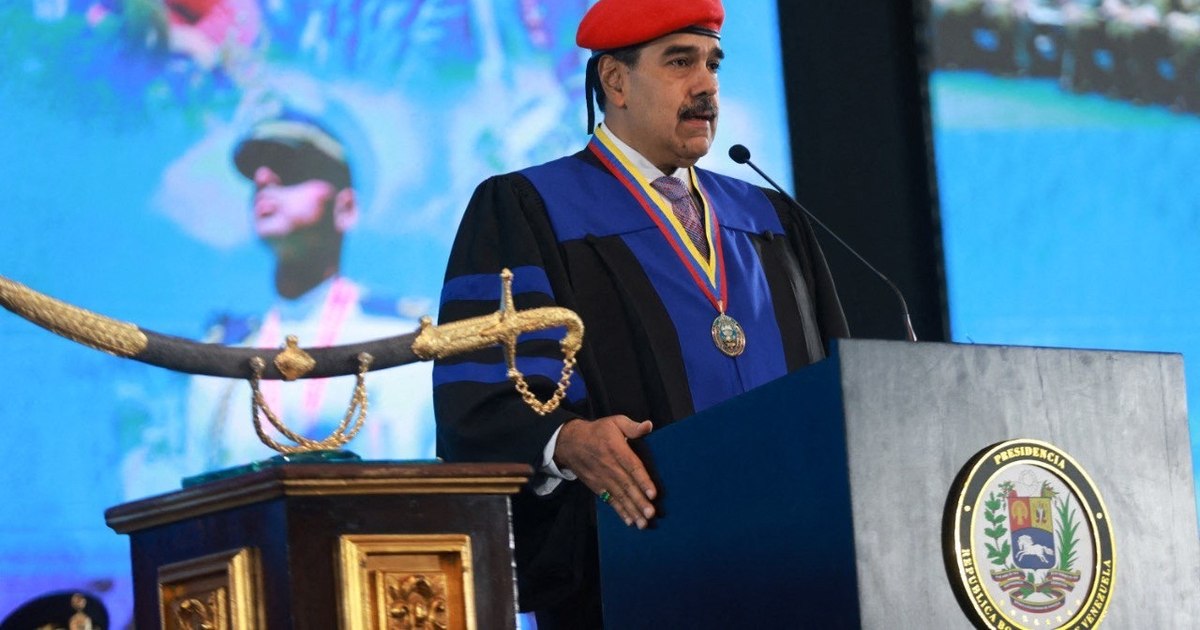
Romania did not recognize Nicolás Maduro as president of Venezuela and does not have an embassy in Caracas. This is not the only situation in which our country does not recognize a head of state. Aleksandr Lukashenko is the most famous example.
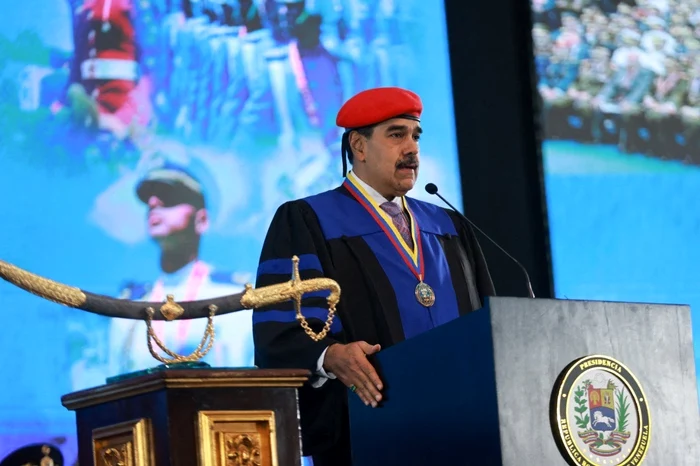
Romania did not recognize the legitimacy of the elections in Venezuela in 2024 PHOTO Profimedia
What rulers does Romania not recognize?
Romania, as a member of the European Union, does not recognize his presidency Nicolás Maduro in Venezuela as legitimate. Maduro took power in 2013 after the death of Hugo Chávez. Since then it has held a series of elections, the legitimacy of which has been questioned by both the opposition and the international community. It all culminated in the July 2024 elections, when Maduro was accused of falsifying the results and that in fact his opponent, Edmundo González Urrutia, would have won with more than 60% of the vote.
Several external observers could not fully validate or verify the electoral process. In addition to the suspicion of election fraud, the economic and social crisis, the lack of fundamental freedoms and the persecution of dissidents have made Maduro's regime considered illegitimate from a democratic point of view by the member states of the European Union, including Romania.
Internationally, the politician now captured by the US is recognized by Russia, China and other regions with a similar geopolitical orientation, who continue to treat him as the legitimate leader of Venezuela.
Like the other member states of the European Union, Romania does not recognize either Alexander Lukashenko as the legitimate leader of Belarus. International organizations and Western states have qualified the 2020 and 2025 elections as rigged and not in line with democratic standards, and the European Union has officially refused to recognize his mandates.
Lukashenko has been president of Belarus since 1994. In the last elections, in 2025, the Belarusian electoral commission announced that he won with a percentage of 86.8%. ,,The power apparatus decides on the names in advance”said political analyst Valeri Karbalevici. Globally, Russia remains one of Lukashenko's few supporters.
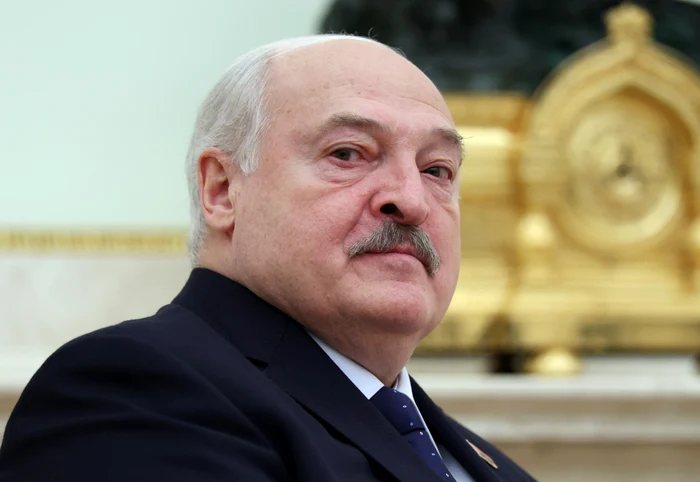
Aleksandr Lukashenko PHOTO EPA
At the same time, Romania does not recognize it the Taliban regime in Afghanistan, which took power in 2021 and closed its embassy in Kabul then. Human rights policies (in particular the rights of women, who are restricted in education, work and public life) are the main reason. The only state in the world that recognizes the Taliban regime is Russia. In 2025, the Russian Federation accepted the accreditation of a Taliban ambassador to Moscow.
Which territories does Romania not recognize?
Kosovo is the most famous name on the list.
“The Romanian Parliament does not recognize the unilateral declaration of independence of the province of Kosovo, considering that the conditions for recognizing the new entity are not met”it was stated in the declaration adopted by the Romanian Parliament on December 18, 2008, one day after Kosovo declared its independence from Serbia.
The Parliament's position was also firmly supported by the president at the time, Traian Băsescu. The main reason cited was that the self-proclamation did not respect the principles of international law, stipulated by the UN in 1999. In practice, Bucharest argued the position also by the risk of creating a precedent for ethnic minorities that could claim territories. In 2015, after he was no longer president, Traian Băsescu invoked, for example, the danger of recognizing Transnistria as an independent province. Foreign policy analysts have also talked, over time, about a precedent regarding the independence of the Szeklerland.
Currently, most European states recognize Kosovo's independence. There are only five exceptions: Romania, Spain, Greece, Slovakia and Cyprus.
In Romania, tensions have been felt most strongly over the years on the football field. The match in September 2023, between Romania and Kosovo, was stopped for 40 minutes after, in the stands, the ultras from “United under the tricolor” displayed the banner “Kosovo e Serbia”.
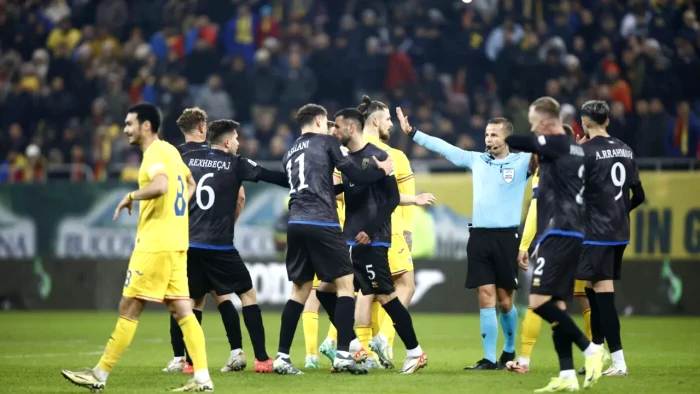
Image from one of the matches Romania – Kosovo PHOTO Prosport/ Mihai Pop
Romania does not have diplomatic relations with the state it does not recognize, but it has a Romanian Liaison Office in Kosovo, in Pristina.
Romania does not recognize either Taiwan as an independent state, respecting the “one China” policy adopted by most countries of the world, including the European Union. Worldwide, only a few states maintain official diplomatic relations with Taiwan, while most states—including Romania—maintain trade relations without formal recognition.
Transnistria. In 1990, amid the breakup of the Soviet Union, the majority Russian-speaking population of Transnistria rejected Chisinau's authority and declared independence. Since then, the region has operated as a separate state, supported economically and militarily mainly by Russia, with its own government, army and administration. Transnistria is not recognized as an independent country by any UN member state, and the legitimacy of the elections has been contested each time.
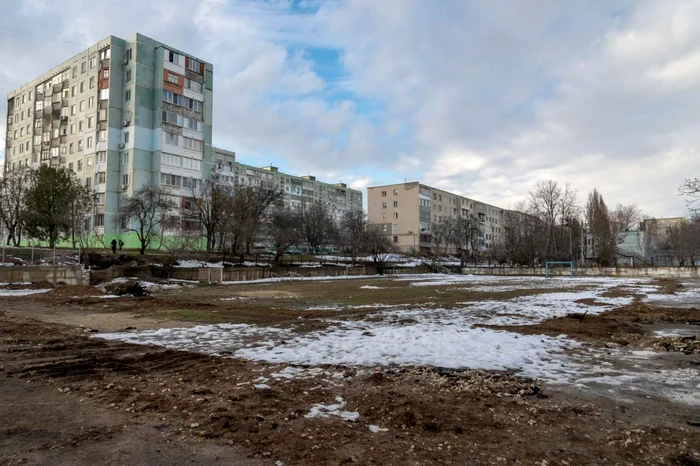
Blocks from Transnistria PHOTO Telegram
Northern Cyprus. Romania does not recognize the region that declared itself independent in 1983, after Turkey's intervention in the north of the island. In fact, Northern Cyprus is recognized as a state only by Turkey. Romania, in accordance with the international position and UN norms, recognizes the Republic of Cyprus as the only legitimate government of the entire island.