Article by Roxana Fleşeru – Published Sunday, December 14, 2025 20:19 / Updated Sunday, December 14, 2025 20:33
Lindsey Vonn (41) started the new season with two downhill podiums, 1st on Friday and 2nd on Saturday, and a fourth place finish in the Super-G on Sunday.
Lindsey Vonn has always loved snow and speed, but the scars of old injuries and a persistent knee pain forced her to retire in 2019. But her love of skiing and adrenaline made her return to the slopes in 2025.
The beginning of the new season, which has the Olympic Games in February, where the American has only one title won in 2010, gave wings to Lindsey Vonn. On Friday, she became the oldest winner of a World Cup stage, the men's record being 37 and the women's 34.
The victory came in the downhill at Saint-Moritz and was the 83rd of his career. Only her compatriot Mikaela Shiffrin (104) and the great Swedish skier Ingemar Stenmark (86) have won more Alpine Skiing World Cup races than Vonn.
On Saturday, she was also second in the downhill, and on Sunday she was fourth in the Super-G. “I can ski a lot cleaner and more dynamic, but I didn't do that on Sunday. I think I was a bit tired after Friday's win. It was very emotional and it was hard to get my energy back at the start, but I think overall it was a very good weekend.” Vonn said at the end of a busy weekend.
Lindsey Vonn and the small changes
The Athletic analyzed in an extensive material what changes Lindsey Vonn made to be so strong this season.
Lindsey Vonn has been generous with those who have joined her on this comeback journey over the past 18 months.
Among them are her longtime coach Chris Knight and her new coach and old friend Aksel Lund Svindal, who have helped her change her approach.
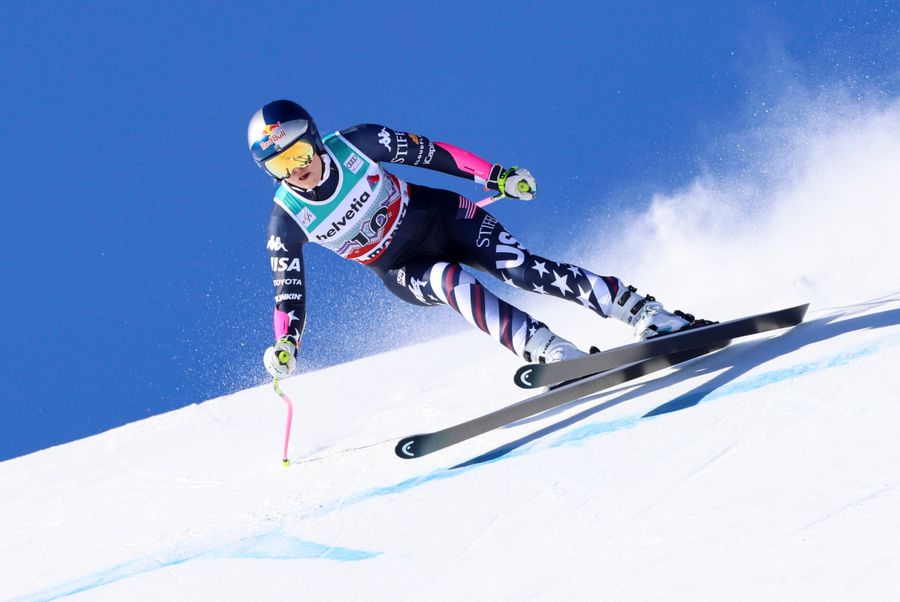
Lindsey Vonn on the slopes PHOTO Imago Images
She accepted new things:. “My biggest strength is the way I turn. On flat ground, when it's easy, I had a big problem. We weren't generating speed and we couldn't figure out what the problem was,” she said.
To solve this problem, she had to let go of some habits and equipment—some of which had accompanied her throughout her nearly two-decade career as a professional skier, and some of which were new. These habits made her the most successful skier in the sport until Mikaela Shiffrin, who specialized in slalom and giant slalom rather than speed events, came along and eclipsed her.
When Vonn underwent partial knee replacement surgery in 2024, the pain that accompanied her on and off the slopes disappeared. This allowed her to ski without compensating for pain, get her body in the right positions to help her slide faster, and use equipment that could now help her get into those positions.
This is where the addition of Svindal proved so useful. Vonn began talking to Svindal, the Norwegian 36-time world champion, recognized for years as arguably the best skier, as a friend and confidant, but then convinced him to become one of her coaches during the summer.
“It's like having a really good friend who is an extremely talented skier,” Vonn said Wednesday at a press conference in St. Moritz. Svindal provided a level of understanding and validation of what Vonn was feeling.
Head, her ever-present manufacturer, created a new pair of cleats during her five-year absence from the sport. All the Head skiers used them. They looked good. They felt good. But with the way Vonn skis, they weren't helping her go as fast as she felt she could.
The new boots have been replaced with the old ones. They were better, but she still felt something pulling her back. After a series of conversations with Svindal, he understood why. “Obviously, I can't race in the exact same gear as before because nothing is the same. My body is in a different position. The way I line up is different.”
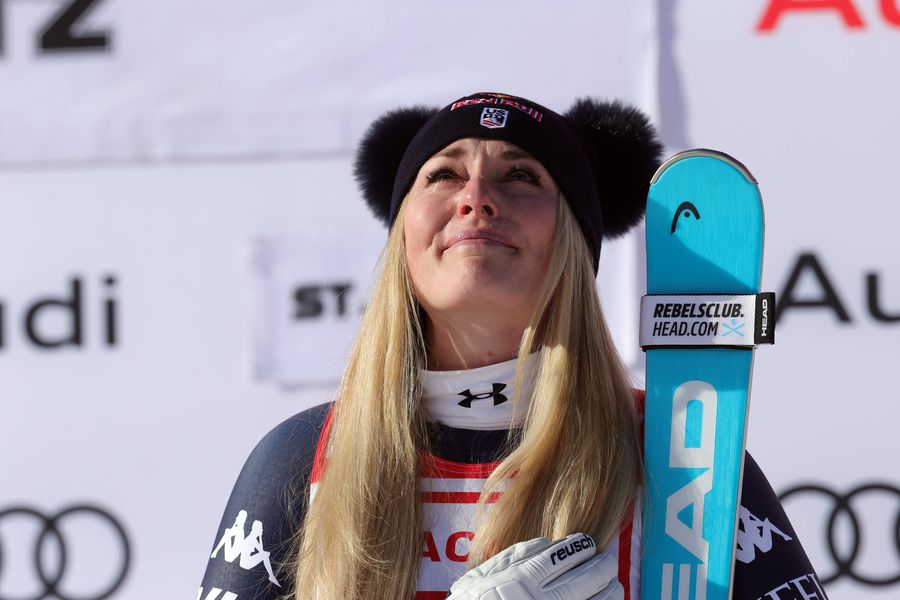
An emotional Lindsey Vonn on the podium at St. Moritz PHOTO Imago Images
It couldn't be otherwise, considering he has half a titanium knee. Her body is more flexible and less rigid, and she can get into a different, more efficient position when she slides. She was pretty sure that would make quite a difference. Svindal assured them that it would be.
This led to a deep and highly technical discussion about the construction of the boot and the different angles the boot can position the foot to help the rest of the body get where it wants to go.
Ultimately, Vonn and her coaching staff were looking for that magical sense of balance that only the best downhill skiers can feel when flying across an ice surface at 130 km/h. They decided the goal was to get his knees to move a few fractions of a degree outward and be more in line with the skis.
“It's very small changes, but they make a huge difference,” Svindal said in a recent interview. “It's like riding a roller coaster. And your alignment, how your knee is positioned over the ski, makes a huge difference.”
Vonn compared the change to the adjustments made to a Formula 1 car to make the driver feel comfortable and confident – only in this case, she's both the car and the driver. All the engineers work together to tweak a thousand other variables and combinations before arriving at the right one.
When Team Vonn found her, Lindsey knew right away. He was on his second summer trip to Chile – after a series of conversations with Head technicians in Europe and subsequent adjustments to his new/old boots. “The light went on and we were off to the races,” Vonn said.
She was finally in a natural, comfortable position with her knees exactly where she wanted them to be. “And when I'm comfortable, I can ski the way I'm supposed to ski,” Vonn said. How should Vonn ski? She knows only one way – at full speed.
Lindsey Vonn and the balance she needed
Throughout an accomplished career, Vonn has always done things her way. Nearing the end, the teachings of the coach who first believed in her are a source of inspiration.
For years, this was both her superpower and her kryptonite. The natural courage and aggression she channeled on her best days could get her into big trouble as her body deteriorated. It's one thing to race without thinking about anything when you're in top form. Another is when your body compensates for the pain. “Before she retired, she was trying really hard, but sometimes she wasn't always in the best position. I haven't seen her out of balance at all in the last 16 months that we've been skiing together,” Knight said.
Downhill and Super-G races are full of danger. The injury rate is 100%. Terrible things happen, and they can happen again at any moment. Vonn accepts this. She thrives on pushing herself to the limit.
But the odds of a catastrophe right now for Vonn, even if she's skiing as fast as any other woman in the world, suddenly seem a lot smaller. “You don't have those heart-stopping moments when you see her skiing anymore,” Knight said. Vonn has a full season ahead of her to enjoy the final stretch of her career.