Venezuela after Maduro. Donald Trump has an offer for American oil companies they can't refuse. “It looks like a shoot first, aim later” approach.


Administration representatives informed the management of oil companies that if they wanted to receive compensation for their oil platforms, pipelines and other confiscated property, they must be willing to return to Venezuela and invest significant resources in rebuilding the ruined oil industry, two people familiar with the administration's actions told POLITICO.
The future of Venezuela's ruined oil infrastructure is one of the main unknowns after the US military action that resulted in the capture of the country's leader, Nicolas Maduro.
But industry officials say the administration's announcement has left them wary of the difficulties of rebuilding damaged oil fields in a country whose future is uncertain.
“They say, 'If you want to use it and get a refund, you have to go in there,'” says one industry official familiar with the talks.
He adds that the offer has been valid for 10 days. “However, the current infrastructure is in such poor condition that none of these companies can adequately assess what is needed to rebuild it,” he notes.
President Donald Trump suggested in a speech on Saturday that he fully did expects American oil companies to invest large sums of money in Venezuela.
“Our very large American oil companies, the largest in the world, will go in there, spend billions of dollars, repair the badly damaged oil infrastructure and start making money for the country,” Trump said, celebrating Maduro's capture.
It has been 50 years since the Venezuelan government first nationalized its oil industry, and almost 20 years since former President Hugo Chavez expanded asset seizures. The country has some of the largest oil reserves in the world, but its oil infrastructure has been destroyed by years of mismanagement and meager investment.
Initial views from U.S. oil industry officials and market analysts POLITICO spoke to about a post-Maduro Venezuela focused more on questions than answers.
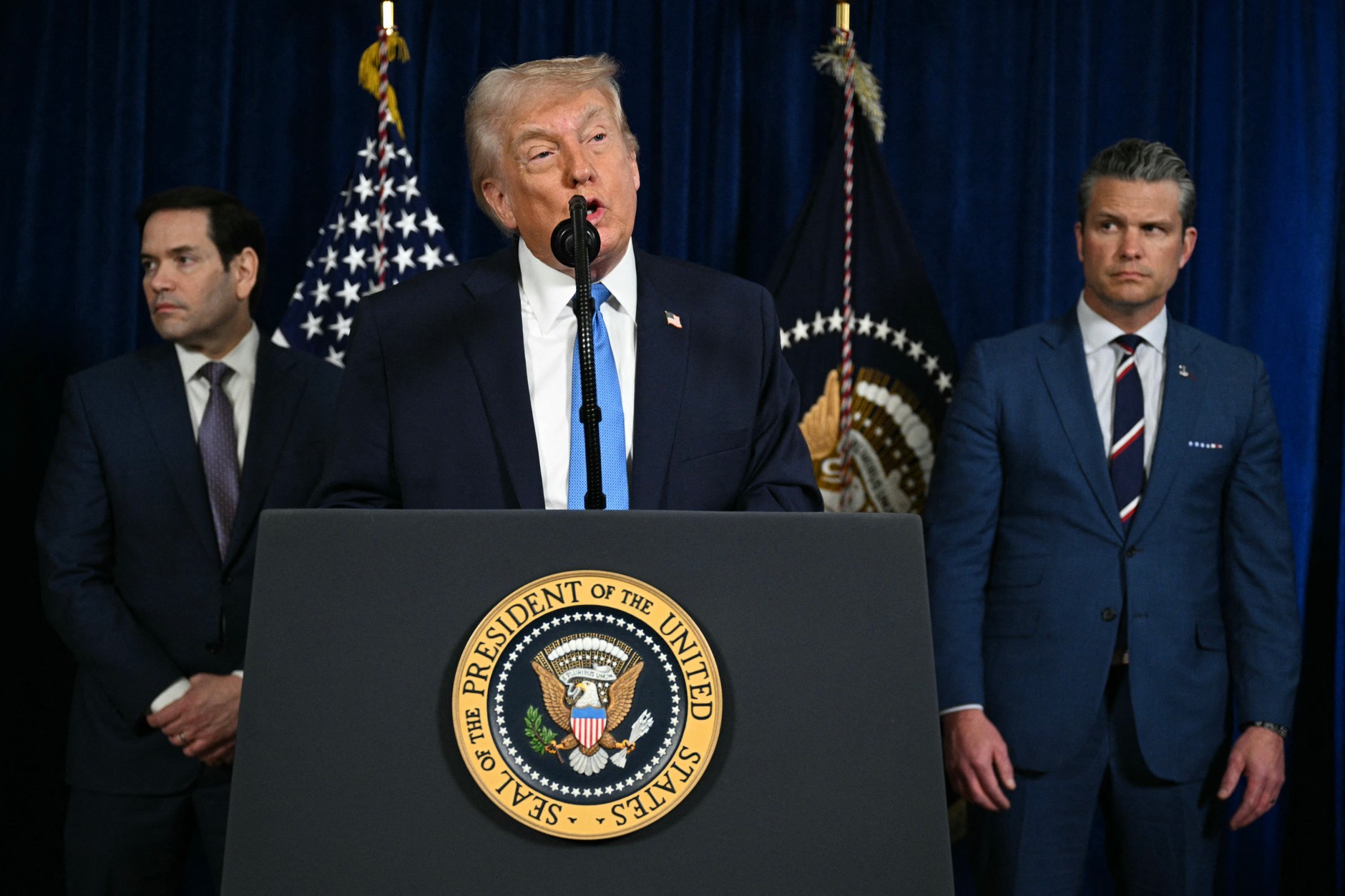
US President Donald Trump with Secretary of State Marco Rubio (left) and US Secretary of Defense Pete Hegseth (right) during a conference at Mar-a-Lago in Palm Beach, Florida, January 3, 2026.Jim Watson/AFP / AFP
— Administration has not yet presented its long-term planor even confirm whether such a plan exists, says Bob McNally, a former national security and energy adviser to President George W. Bush who now heads the energy and geopolitics consulting firm Rapidan Energy Group.
— It is unclear whether there is a concrete plan beyond the basic decision that in the post-Maduro period, consistent with Trump's policies, American companies – energy and others – will be at the top of the list to re-enter the country, emphasizes McNally, adding that “what the future system will look like, what the plans are to bring it about, have not yet been fully determined.”
A major concern for U.S. industry leaders is whether administration can guarantee the safety of employees and equipmentwhich companies would have to send to Venezuela, how companies would be paid, whether oil prices would rise enough to make Venezuelan oil profitable, and what the status of Venezuela's membership in the OPEC oil exporters' association would be.
On Friday, after the market closed, oil prices in the US were $57. (PLN 205) per barrel, which is the lowest level since the end of the pandemic.
The White House did not immediately respond to questions about its oil industry plans, but Trump said during a Saturday appearance at his Mar-a-Lago estate in Florida that he expected oil companies to make the initial investment.
— We intend to rebuild the oil infrastructurewhich requires billions of dollars that will be paid directly by oil companies, Trump said. “They will be reimbursed for their actions, and we will keep the oil flowing.”
“Shoot first, aim later” strategy
However, the administration's contacts with the management of American oil companies remain “at best in the initial phase,” emphasizes one industry representative familiar with the talks, who described talks with the president's team on condition of anonymity.
— Preliminary steps have been taken in preparation for regime change. However, they were sporadic and met with a relatively cool reception from the industry, the interlocutor admits. – It looks very like “shoot first, aim later” type of action.
Venezuela's oil production has fallen to less than a third of the 3.5 million barrels a day it produced in the 1970s, and the infrastructure used to extract 300 billion barrels of reserves has deteriorated over the past two decades.
The article continues below the video
— Will the United States be able to attract American companies providing services to the oil industry to Venezuela? – asks an industry representative. – Maybe. However, it would require service companies to be able to contract directly with the U.S. government.
Discussions with administration officials over the past few days also concerned the fate of the Venezuelan state oil company known as PDVSA.
— PDVSA will not be privatized or liquidated in any way, he explains. — There will certainly be a complete change of management, but at least at this stage there are no plans to privatize or sell this company. The best solution is to keep production there.
Chevron, the only major oil company still operating in Venezuela under a special license from the U.S. government, said Saturday it “remains focused on the safety and well-being of its employees, as well as the integrity of its assets.”
“We continue to operate in full compliance with all applicable laws and regulations,” Chevron spokesman Bill Turenne said in a statement.
“It's not just about getting rid of Maduro”
Evanan Romero, a Houston-based oil consultant involved in efforts to bring U.S. oil producers back to Venezuela, said in a message that Saturday's events created basis for the “very quick” return of American oil companies.
Romero is a member of a roughly 400-person committee, mostly made up of former employees of Venezuela's state oil company, Petroleos de Venezuela, that was formed about a year ago to develop a strategy to revitalize the country's oil industry under the new government.
The committee, which is not directly linked to opposition leader Maria Corina Machado's camp, is debating the role the new government should play in the oil sector. Some members support maintaining government control over the industry, while others argue that international oil companies will only return under a free-market system, Romero explains.
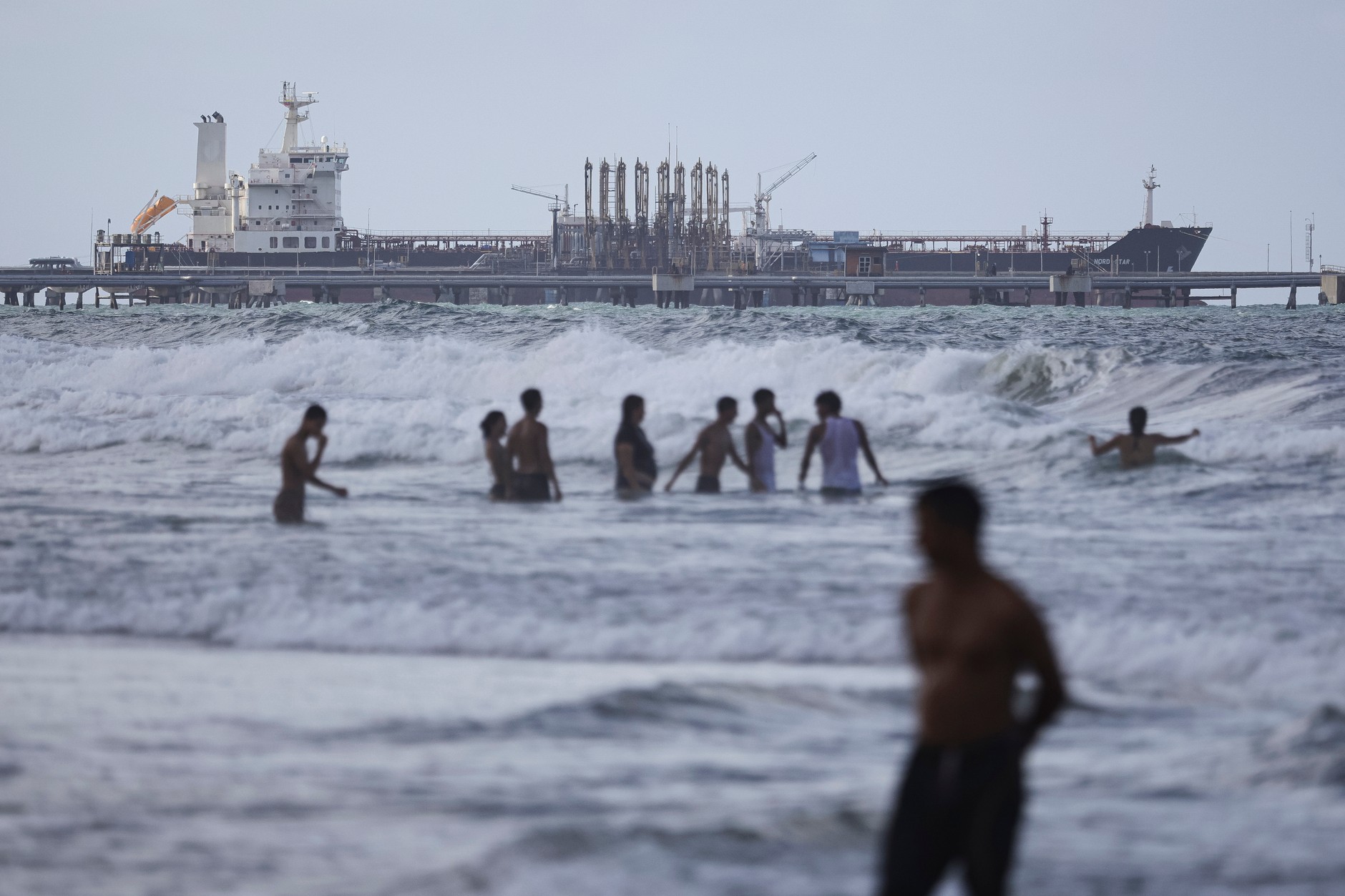
A tanker moored in the port at the El Palito refinery in Puerto Cabello, Venezuela, December 21, 2025.Jesus Vargas/Getty Images/Getty Images
— Ultimately, “sorting out” any changes will determine U.S. investment and re-entry into Venezuela, says Carrie Filipetti, who was deputy secretary of state for Cuba and Venezuela and deputy special representative for Venezuela at the State Department during Trump's first term.
“If the transition were to proceed in a disorderly manner, I think it would obviously be very difficult for U.S. companies that want to enter Venezuela,” emphasizes Filipetti, who is currently executive director of the nonpartisan foreign policy group The Vandenberg Coalition. — It's not just about getting rid of Maduro. It is also about ensuring that the legal opposition comes to power, he adds.
Richard Goldberg, who led the White House Energy Dominance Council until August, said the Trump administration could offer financial incentivesto get companies to return to Venezuela. This could include the Export-Import Bank and the U.S. International Development Finance Corporation, whose powers were expanded by Congress in December to guarantee investments that take into account political and security risks.
“Venezuela would be the jewel in the crown”
Promoting American investment in Venezuela would keep China, the main consumer of Venezuelan oil, out of the country and cut off the flow of cut-price crude oil that China buys through Venezuela's fleet of tankers that circumvent U.S. sanctions.
— Americans are motivated to get there first and ensure that American companies are at the forefront, not anyone else, notes Goldberg.
It's unclear to what extent the Trump administration could accelerate investment in Venezuela, according to Landon Derentz, an energy analyst at the Atlantic Council who worked in the Obama, Trump and Biden administrations.
Many consider Venezuela a long-term investment given the current low oil prices of $50. (PLN 180) per barrel and huge capital expenditure needed to modernize the infrastructure, notes Derentz. But as shale oil reserves in the U.S. regions that have made the country the world's leading oil producer are depleted, it will become increasingly profitable to export Venezuelan heavy crude to Gulf Coast refineries built specifically to process it.
— Venezuela would be the jewel in the crownif the risks related to the political situation were eliminated. Some companies say they will wait to see how the situation develops, said Derentz, who served on the National Security Council during Trump's first term. — For now, I don't see anything that would make me feel like this is a good deal.