In his actions against the rulers of Venezuela, which culminated in the capture in Caracas of President Nicolas Maduro and his wifeDonald Trump has repeatedly invoked the “oil, land and other assets” that this country allegedly “stole” from Americans and now wants back. Neither the US president nor others close to him were very specific, but if we go back in recent history we find that oil has always been in the middle of events in this country, to which Americans have never been strangers.
In 2008, in the Brazilian city of Campinas, I once met a local, whom I became friends with, and who definitely wanted to give me other perspectives on what is happening in Latin America. Other than those appearing in traditional international media.
“Fascist coup against Venezuela”
As a parenthesis, in South American countries it is very common to meet people who firmly believe that the international press only serves the interests of “American imperialism” and hides the truth about the poverty and problems that many of these countries face. Obviously not all people think alike, but those who declare themselves “anti-imperialist” are usually much more vocal and willing to convince outsiders that they really “don't know anything”.
My friend from Campinas gave me a book, which I kept as a souvenir, and which is called “The fascist coup against Venezuela”. The book collected English translations of the speeches of Hugo Chavez, the former president of Venezuela, after he survived the 2002 coup.
I just skimmed it then, but it stuck in my mind that Chavez talked a lot about Venezuelan oil and the state oil company PDVSA (Petróleos de Venezuela SA), responsible at the time for about 70% of the state's revenue.
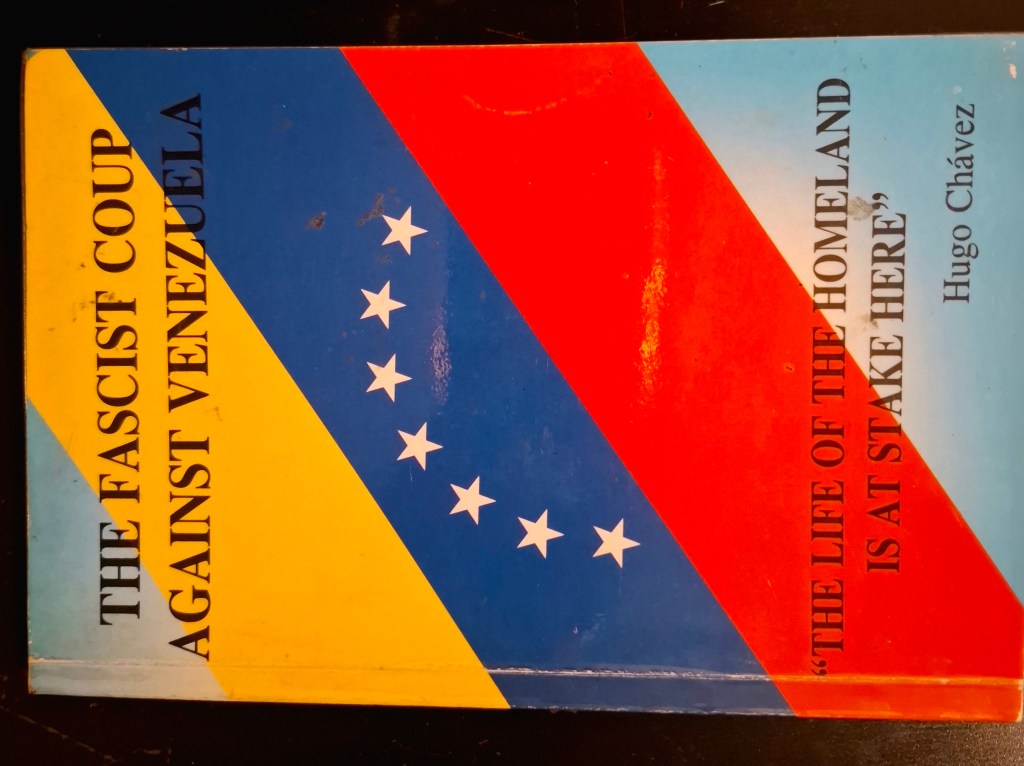
For example, in one of his speeches, Chavez accused company managers of having “sky-high” salaries while ordinary people live in poverty. He charged that PDVSA managers were, in fact, behind the plot to oust him from power.
The problems with the oil company in Venezuela
The historical reality is a little more complicated, because after coming to power democratically in 1999, Chavez began to copy the Cuban model, which displeased many social categories, from the military, church people, opposition politicians, to simple workers.
But Chavez was most afraid of the oil company, which at the time was operating completely autonomously, and which the Venezuelan leader desperately wanted to subordinate to his interests.
In fact, in early 2002, Chavez began to change the professional managers of PDVSA and replace them with his cronies from the Communist Party. Moreover, he did it in a way humiliating for them, bombastically, imitating in a TV show the gestures of a football referee who removes the players from the field.
The first to revolt against Chavez were the oil workers, who defended their managers. But the dictator and his supporters claim, according to the book “The fascist coup against Venezuela”, that in fact the managers forced the oil workers to strike.
How did the Americans relate to the coup against Chavez?
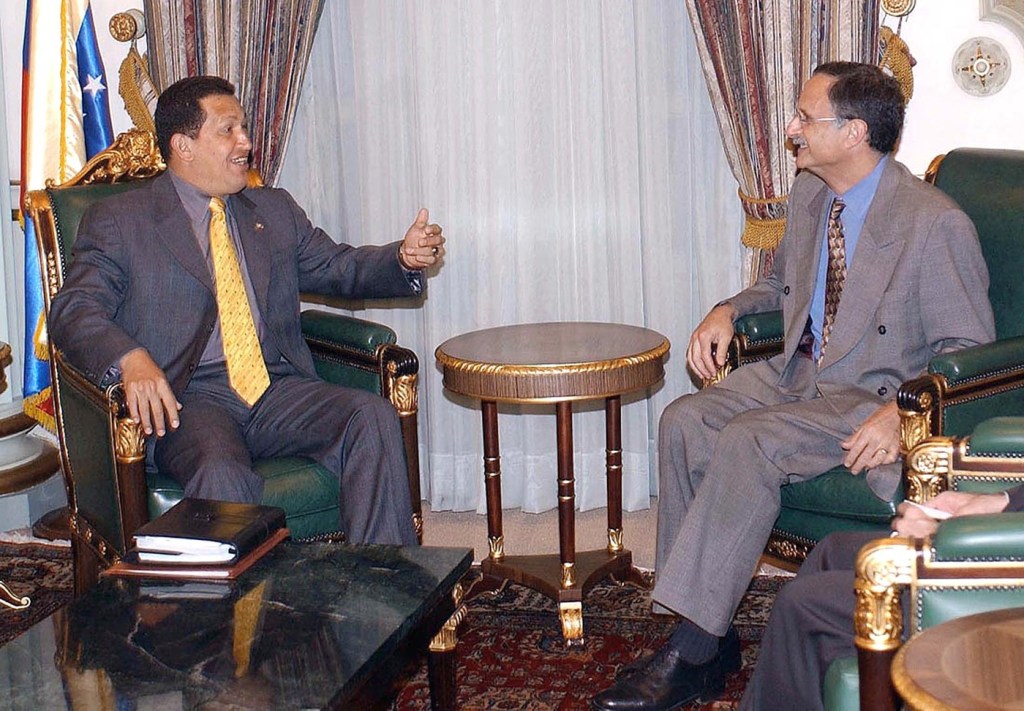
The generals who wanted to overthrow the Venezuelan dictator informed the Americans and even asked for their help. The US ambassador to Caracas at the time, Charles Shapiro, replied to the plotters, however, that the United States does not support such actions, and the change of government must take place only through elections.
Moreover, the American ambassador informed Chavez that there was a possibility of a coup against him, but he would have minimized the risks.
Further, however, just hours after Pedro Carmona, the leader of Venezuela's main employers' federation, declared himself the country's interim president, the US was quick to recognize him.
The coup d'état lasted 48 hours, between April 11 and 13, 2002, because Chavez was able to return to power while still having the support of a good part of the population.
In his post-event speeches, Chavez did not reproach the Americans for anything, and even thanked the American people for their support.
But that didn't stop him from implementing his plans to transform Venezuela after the Cuban model, especially with regard to the oil company PDVSA.
In 2007, with his people installed at the head of the PDVSA company, the Venezuelan dictator began the nationalization of major oil projects operated by foreign companies, such as the American ones, ExxonMobil and ConocoPhillips.
The latter had invested heavily in Venezuela in three large projects, Petrozuata, Hamaca and Corocoro, which were confiscated without any compensation.
“For those of us who worked in the industry at the time, it was an event that completely changed the way companies perceived business risks in Venezuela. What started as a corporate conflict turned into one of the largest outstanding claims of the United States against a foreign government,” engineer Robert Rappler, who in 2007 worked at ConocoPhilips, explained to Forbes.
Rappler also writes that the American firm has turned to international arbitration, and the latest decision of the arbitrators, from January 2025, says that Venezuela must pay 8.7 billion dollars in damages, plus interest. This money was never paid, says the former ConocoPhilips engineer.
Another American company, ExxonMobil, won in 2012, at the International Chamber of Commerce in Paris, compensation worth 908 million dollars, money that Venezuela also did not pay.
However, as the Washington Post writes, not all American companies have left this country. Chevron, for example, did not and still operates in Venezuela, and half of the oil extracted there still ends up in America.
Rightfully, however, the question arises whether Venezuela could have paid these compensations, even if it wanted to, given the economic blockade imposed by the US against this country.
If once upon a time, when PDVSA was not run by Chavez's politicians, this country produced around 3 million barrels per day, now the amount is below one million barrels per day (900,000), and most of it goes to China.
“The position of the Trump administration simply has no logic. It's something like: you owe me some money, we go to court, and the court decides: you have to pay me this amount. You start paying, then by imposing sanctions, I make it impossible for you to pay the debt. And then I accuse you of stealing from me,” explained Francisco Rodriguez, a Venezuelan economist at the University of Denver, quoted by the Washington Post. in an article last month.
It's hard to say what will happen in Venezuela from now on, after Trump shocked the world by declaring that the United States will rule the country, at least for a limited time.
What is obvious, however, is the interest in the oil of this country, which has the largest reserves in the world.
“We will rebuild the oil infrastructure” and “we will recover the oil, land and other assets that were stolen from us”, are the statements of the American president, some that leave no doubt about the true intentions of the coup given by the Americans in Caracas, on the third day of 2026.
This even if Maduro, Chavez's successor at the head of the country, was a president unrecognized by almost no one, being accused of falsifying the results of the last elections.