Billions of dollars in Venezuela: It is not clear who will finance the investments announced by Trump


US President Donald Trump's plans to revive Venezuela's energy sector with the help of US companies are raising questions as major oil groups appear reluctant to take major financial risks, Bloomberg reports.
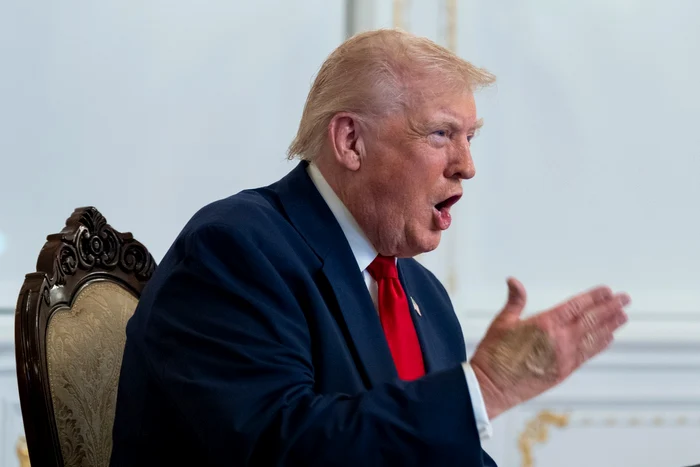
US President Donald Trump/PHOTO: Profimedia
In a press conference at his Mar-a-Lago residence, Donald Trump presented an ambitious strategy aimed at completely rebuilding Venezuela's dilapidated energy infrastructure. According to him, the big American corporations would invest billions of dollars to rehabilitate the oil sector, and later recover their costs from the revenues generated.
However, it is not clear who will actually finance these investments and under what conditions, and the availability of the private sector remains uncertain, Bloomberg analysts point out.
Why the big oil companies are hesitating
Although Venezuela has the largest proven oil reserves in the world, current production represents less than 1% of global output. The White House is hoping for the return of giants such as Exxon Mobil and ConocoPhillips, whose assets were nationalized during Hugo Chávez's presidency.
To date, the companies concerned have not provided public statements regarding a possible return to the Venezuelan market.
Experts point to several major obstacles:
-Legal uncertainty: investors are reluctant to allocate capital in a state where the legal and fiscal framework has not been clearly established by a new pro-Western government.
-Low oil prices: international quotations are around $60 per barrel, which reduces the attractiveness of expensive projects in unstable regions.
-Legacy of nationalizations: Exxon Mobil and ConocoPhillips are still demanding more than $10 billion in compensation for assets seized in the past.
The size of the challenge and Chevron's role
Bob McNally, an energy analyst at Rapidan Energy Group, says that just stabilizing current production levels would require billions of dollars in investment, particularly for repairs to power grids and export infrastructure.
Currently, Chevron is the only US company with a significant presence in Venezuela, operating under a special license and producing approximately 140,000 barrels per day. Even so, the company focused mainly on recovering existing debt, not on large-scale new investments.
Donald Trump has suggested that oil revenues could cover both companies' costs and the US government's involvement in Venezuela. Analysts, however, warn that, in the absence of political stability and clear legislative reforms, these plans risk remaining at the declarative level.
Tense political context
The economic announcements come amid a major escalation in tensions. The United States has confirmed the conduct of a military operation in Venezuela, as a result of which President Nicolás Maduro was captured and placed in custody in a prison in New York. He is due to appear before a judge on Monday. Washington has stated that he will be tried according to American law.
Donald Trump later said the United States would temporarily “administer” Venezuela until a “safe and responsible transition” is achieved, without providing clear details on what that involvement would look like. In response, authorities in Caracas instituted a nationwide state of emergency, accusing the United States of “unprecedented aggression.”
Analysts warn that, beyond the official rhetoric, Washington faces a complex reality, marked by military structures loyal to the former regime, armed groups, China's growing influence and the lack of a clear political alternative.
It remains to be seen whether Venezuela will become a strategic success for the Trump administration or a costly engagement with long-term implications for US foreign policy in Latin America.