“The sun remains a great unknown and we cannot control it.” Why space weather is becoming increasingly important to people on Earth

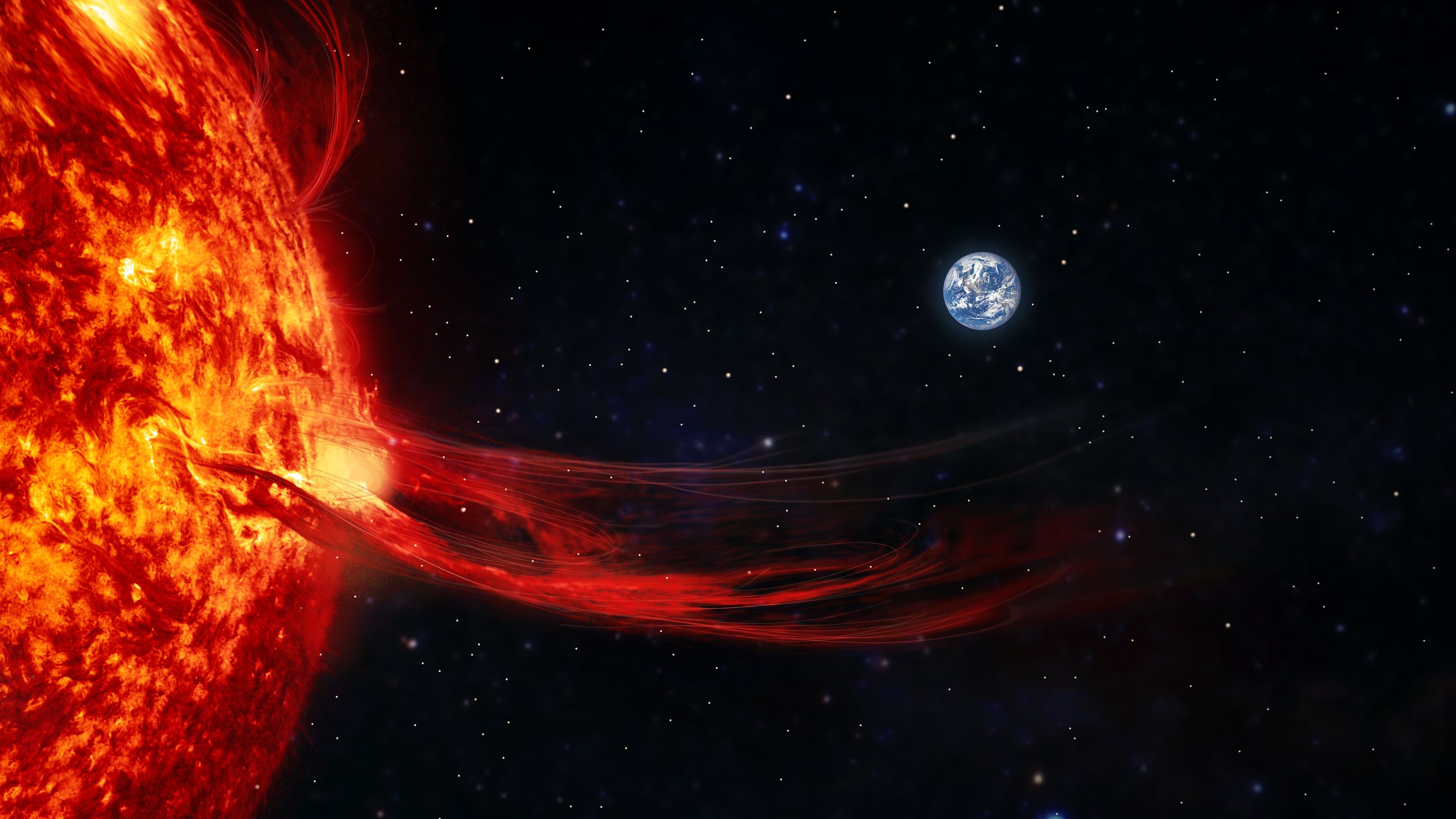
Space weather is no longer just a scientific topic, but a matter of technological and economic security. More and more countries are investing in the field, because severe weather events from space can have serious consequences on Earth as well. “Power cuts and problems with satellites in orbit are a possibility that we have to take into account,” physicist Claudiu Tănăselia told HotNews.
Why are we talking about space weather?
The term “space weather” began to be used in scientific and technical literature in the 50s of the last century by researchers involved in the study of the Earth's magnetosphere, solar activity and their influence on radio and satellite communications.
After the launch of the first satellites, and well into the Cold War, interest in how solar phenomena and charged particles affect radio communications, navigation and satellites grew rapidly. During the American and Soviet space programs, monitoring “space weather” became essential to the safety of astronauts and the operation of space technology.
There are more and more studies on this subject – NASA has launched a mission to study some aspects of space weather, China is working on a vast monitoring and warning network.
Recently, a study warned that a solar storm could knock out the planet's satellite system in just three days.
Why do we talk about weather in space, where there is no atmosphere? The answer depends on the Sun and how dynamic it is, physicist Claudiu Tănăselia, author of some astronomy volumes, explained to HotNews.
“We don't have an atmosphere in space, but we have the Sun at the center of the solar system, which is not only huge (and that in astronomical terms), but is also a very dynamic astronomical object. If we can talk about solar storms or geomagnetic storms, then, by extension, we can also talk about weather in space, because the Sun, through the geomagnetic storms it causes, can influence our activity here on Earth to the same extent that it does regular weather,” says the physicist.
He adds that especially now that we are so dependent on electronic devices, here, near us, or in orbit, during a solar storm navigation satellites can be affected, “If you are waiting for a courier with a quick order or if you are navigating through an unfamiliar city, you may have problems until the solar storm passes,” says the expert.
An eruption in the summer of 1859, named the “Carrington event” after the astronomer who observed it, is considered the most powerful solar flare ever recorded. It severely disrupted telegraphic telecommunications and several telegraphs caught fire. It was fortunate that the world 166 years ago did not depend on technology.
“We know there will be solar flares, but we don't know when they will hit us“
If another extreme solar event were to occur, could it be predicted with great accuracy? Claudiu Tănăselia says that it is impossible to accurately forecast such an event and we would only have a few hours.
He also draws a parallel with earthquakes:
“What we do know is that the sun has an 11-year cycle, in which intense activity alternates with years of less activity. In years of increased activity, the chances of a solar flare heading straight for Earth increase, but these flares cannot be predicted with precision. The timing of their impact with Earth can be estimated by observing where and when they occurred, so we have a window of a few hours between their occurrence and when the effects are felt here on Earth. It's kind of like when you live in an area with a lot of earthquakes: when the sun has intense activity, we know that there will be solar flares, but we don't know when they will hit us, and we can't predict them. We have to learn to live with this risk and take all the necessary precautions so that a future Carrington event does not affect us very strongly.”

However, people did not wait for nothing, explains Claudiu Tănăselia: there are several interplanetary probes, placed in orbit around the Sun, which carry out continuous observations and which help us detect the magnitude of a solar storm or a solar eruption.
“But these probes can only help us observe what is happening and improve our existing models, because, paradoxically, the Sun is still a great unknown, we don't know a lot about it, and in no way can we control it. Fires caused directly by solar storms I think are unlikely, but power outages and problems with satellites in orbit – which are even more exposed – are a possibility that we have to consider,” he says the physicist.
He also gives an example, In February 2022, SpaceX lost dozens of newly launched satellites to the effects of a solar storm. “It's hard to say what will happen, because never before has our civilization been so dependent on communications and electronic components.”
The worst solar storm to affect Earth in the last 20 years was that of May 2024. Northern lights were visible to extremely low latitudes, there were disruptions to radio communications, GPS and various telecom networks. There were negative effects on power grids, and authorities in the US, Europe and Australia activated special procedures to protect the energy infrastructure.
Photo source: Dreamstime.com