The failure of Romania's favorite child. The journey of the dream prince of the Royal House: from young hope to great disappointment


One hundred years ago, on January 4, the Romanian Parliament voted to exclude Prince Carol, the future Carol II, from the succession. Because of his love affairs, Romania entered a deep dynastic crisis, which eventually led to the weakening of democracy.
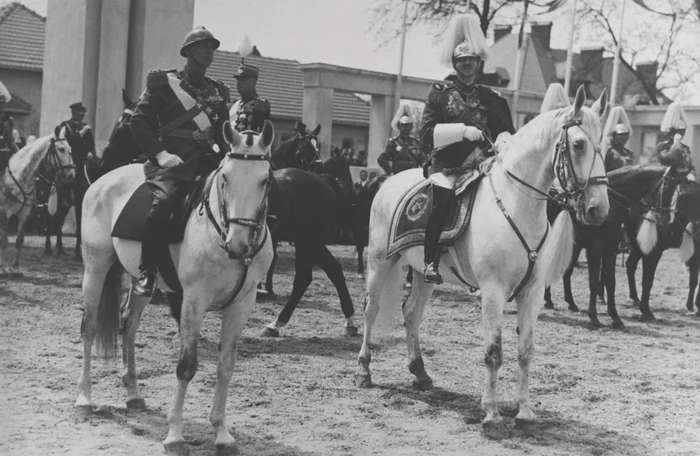
Carol II PHOTO getty images
On January 4, 1926, the Kingdom of Romania entered an unprecedented dynastic crisis that would completely change its destiny. In short, the Romanian Parliament voted to remove Prince Carol (not the one who would become King Carol II) from the succession. That is, he became a person like any other, with the name of Carol Caraiman, without being able to issue claims to the throne of Romania. The one who took his place in the dynastic line was Prince Mihai, a child of only 5 years. The death of King Ferdinand the following year, against the backdrop of the removal of Crown Prince Carol II, plunged Romania into a dynastic crisis. Later Carol would pull the strings to return to the throne. The actions and adventures, considered absolutely irresponsible by some, of Carol II, would cost Romanian democracy dearly, but also the image of the Royal House.
Romania's favorite child. Fat, military and with despotism in his blood
Charles II was the son of Ferdinand I and Queen Maria. He was born on October 15, 1893, in Sinaia, on the domains of the Royal House. Carol's birth represented enormous joy for Romanians. And this under the conditions in which this was a guarantee of the continuity and stability of the Romanian monarchy. He was the first prince of the Hohenzollern family born on Romanian soil and raised exclusively in the law and traditions of the country. He was the first born and implicitly a child very fondled by everyone. What's more, the Romanians' favorite child.
“As a small child, Carol was quite chubby, happy and very obedient. Being the first born, he was obviously pampered by everyone, old and young, and everything he wanted was laid at his feet. He was the much-desired heir, therefore everyone's favorite child. When he got a little older, he became calm and very serious.” wrote Queen Maria.
The fat and pampered child came into the hands of tutors and governesses under the strict supervision of his uncle Carol I. The latter imposed his principles and authority on the nephew, wanting to make him one of the best sovereigns of Romania. Under the influence of his uncle and military tutors, Charles II became passionate about weapons, the army, order and discipline. He is said to terrorize his sisters by always trying to impose his will.
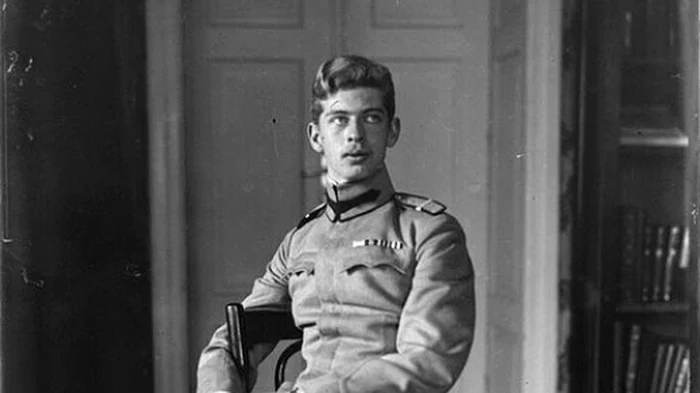
Charles II in his youth PHOTO the truth
“The little boy shared his father's and uncle's passions for military things. He loved everything military, adored the uniforms and the idea of discipline and command. (…) In any case, this child preoccupied with the army, was a torment for his sisters; a future autocrat slept well hidden inside him. The toys he came up with followed the rules and patterns of the political and military institutions, and that really upset the girls. Carol wanted order and precision and had an enormous and impetuous desire to dominate, subjugate and impose restrictions.” added Queen Mary.
Basically, the parents, Ferdinand and Maria, had no say in young Carol's education. Rather, the uncle and aunt, i.e. Charles I and Elizabeth of Wied, decided on the educational principles according to which the little prince should be guided. It is quite possible that by trying to transform him into a great politician and a capable military man, the opposite effect was reached.
The strict education must not have been too oppressive for the young prince. In any case, as a teenager and then a young military man, Carol II seemed like a great hope for Romania. He was very popular, appreciated, considered an ambitious, hardworking and honest young man. A real German. After the death of Charles I in 1914 and the ascension to the throne of Ferdinand I, Charles II became the crown prince. In this context, he established the Scout Corps, an extraordinarily well-organized institution, as well as the 2nd “Queen Elisabeta” Hunter Regiment, an elite regiment.
He was very close to the soldiers and the young officers, being in turn highly respected. What's more, he seemed like the dream heir to the throne of the Kingdom of Romania. “Nthis time he didn't bother us, his parents, he is obedient and malleable. He is hardworking and knows how to organize himself, but he has a certain naive confidence in his own powers, he looks solemnly and pompously at everything he does, but when he gets down to something, he does it thoroughly, systematically, even if it is not important.” added Queen Mary.
In fact, during the war, on January 17, 1917, Carol went on a diplomatic mission with Ion IC Brătianu, to Petrograd in Russia. At the official table, Carol preferred to sit with the young officers than at the head of the table with the Tsar and Brătianu. On the unset table, however, a cruel disappointment would follow. Crown Prince Carol was going to do something that would shake the entire public opinion.
From the hope of the Romanian monarchy to a cruel disappointment.
The dream prince turned into the nightmare heir after falling in love. It seems that the young prince had an unusual passion for women but also a disease that forced him to satisfy his sexual desires as often as possible. More precisely, he suffered from priapism, a condition that caused painful and constant erections, often linked to his exaggerated sexual appetite. In the end it was a very solvable problem, very discreet, especially for a crown prince. Grave was the way he loved Charles II. I mean passionate, totally losing his head for the women he fell in love with. Duties and status always paled in front of love.
He fell in love with Zizi Lambrino, a young woman from Queen Maria's entourage, with whom he had spent time in the fashionable salons of Iasi. The girl's father was General Lambrino and the two young men had known each other since childhood. However, the marriage between the two was not possible because Zizi Lambrino did not come from a royal dynasty. So in September 1918, while Romania was going through a real nightmare, Crown Prince Carol disappears from the Mountaineer Regiment and deserts.
He crossed the Dniester into Ukraine and placed himself under the protection of Austrian officers. He arrived in Odessa, under enemy occupation, and married Zizi Lambrino. Carol was both a deserter and a traitor, a situation in which any officer would have been sentenced to death by Court Martial. He sent a telegram home informing his father of his decision. “I have married Zizi Lambrino. Can I go back with her or do I go the way of France?”Carol wrote.
Pațania scandalized public opinion and filled the Royal House with shame. Especially because Romania had made a laughing stock in front of the Central Powers, the crown prince ending up deserting with the help of the enemy.
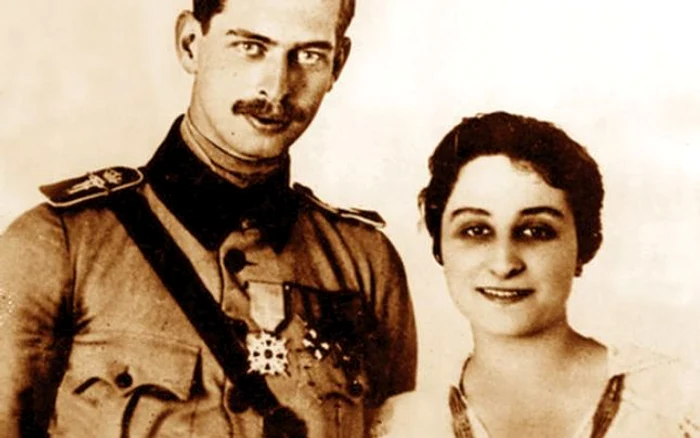
Carol and Zizi Lambrino PHOTO the truth
“The uproar was enormous, because the Prince, in whom we all had put our trust for the future, had entered the mouth of the world for the first time, giving us a great disappointment”. wrote Constantin Argetoianu in “Memories”.
The Prime Minister of Romania, Alexandru Marghiloman, demanded the disinheritance of Prince Carol. “I consulted ministers and presidents; I have not spoken to the opposition, but I know the general opinion of the public. The prince must be declared forfeit of his prerogatives; Prince Nicholasproclaimed in his place and a severe and serious education made for him(….)Prince (Carol) is not loved. It is completely indifferent and showed a lack of judgement, which does not bode well for the futureMarghiloman said to King Ferdinand.
But the king made another attempt. He forcibly brought Carol back to the country and forced him to sign a deed renouncing his marriage to Zizi Lambrino. Cruel crises followed. Carol shot himself in the leg, on the Hungarian front, threatening suicide. In addition, he sent two letters announcing his abdication. Only to follow his girlfriend. “It would have been honorable to die with a bullet in the head, to be buried in Romanian soil, than to betray him”his mother, Queen Maria, would have confessed to him.
An unrecoverable case
To make him forget Zizi Lambrino, King Ferdinand married Carol to Princess Elena of Greece and Denmark in 1921. Moreover, “Zizi” was sent to Paris at the expense of the Royal House just to stay away from the country. Things seemed to be on the way and the incident just an unfortunate accident, “of the wave of youth”. Especially since the young princely couple had already conceived an heir.
On October 25, 1921, Princess Elena of Greece gave birth to Mihai. However, Carol proved irretrievable. He defied any dynastic rule and did not seem aware, as Marghiloman had remarked, of his role, that of heir to the throne.
Not long after, the crown prince, who had already abdicated twice, fell in love with Elena Lupescu, the daughter of a Jewish pharmacist. She was married to the officer Ion Tâmpeanu, when the relationship with Prince Carol began. To the astonishment of the Royal House as well as politicians, Prince Carol commits a new particularly serious error.
In 1925, taking advantage of a funeral in Great Britain, where he represented the Royal House, Prince Carol ran away with Elena Lupescu. The two leave for Italy. Carol II again asked to be excluded from the ruling family and at the same time promised not to come to Romania for another 10 years. Shortly after, in order to prove his decision, he sends the fourth abdication to the throne.
“I hereby declare that I irrevocably renounce all rights, titles and prerogatives which, by virtue of the Constitution and the Statute of the Royal Family, I have enjoyed until today. As a prince of Romania and as a member of the Royal Family. At the same time, I renounce the rights that would come to me by the laws of the country over my son and his property. I also declare that I will not have any claim on the rights that I renounced voluntarily and on my own initiative and I undertake, for the good of all, not to return to the country for ten years, and after the expiration of this term not to return without the authorization of the Sovereign”. Prince Carol wrote from Milan.
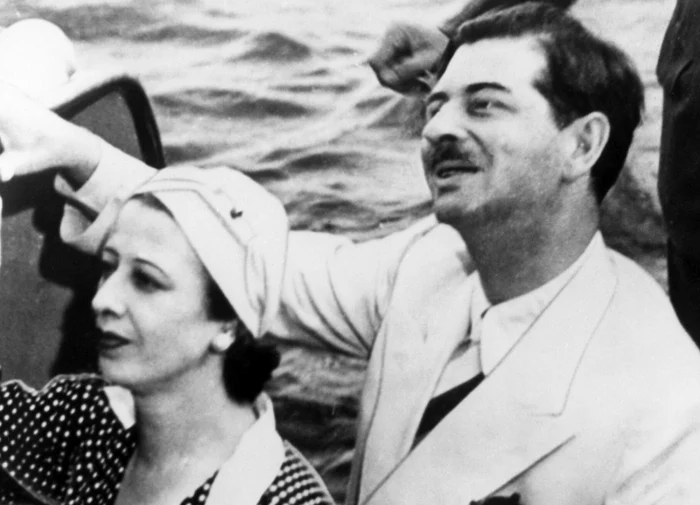
Carol II and Elena Lupescu PHOTO Profimedia
Tired, probably, of his son's whims, King Ferdinand legalized Prince Carol's declaration of abdication. “Sitta (princess Elena) and I sat and looked at the horror ahead. (…) We called his Majesty. All three of us stood as if struck by lightning. (…) But Sitta, the child, we, his parents his country, the army he served in! Shame! Shame! Shame!”, wrote Queen Maria.
On December 31, 1925, in front of the Constitutional Assembly, Ferdinand requested the recognition as heir of Prince Mihai, his nephew, son of Carol. “The fate of the Crown should not be left to the fickle will of anyone”, asked Ferdinand to Romanian politicians and statesmen, through a letter addressed to Averescu.
Moreover, by will, Ferdinand cancels Carol's right to inherit the royal properties. The decision was published in the Official Gazette on January 4, 1926. Carol was no longer the heir to the Romanian throne and was simply called Carol Caraiman. In 1927 Ferdinand I dies and Mihai I, a child, becomes king. The country ends up in the hands of a regency and the future actions of Carol II will shake the Romanian democracy.