Brussels and Kyiv repair commercial relations. Ukrainian exporters can breathe a sigh of relief. “Strong support signal”

The agreement means a significant relief for Ukraine, which is still based on the full -glass aggression of Russia. At the beginning of this month, Kyiv lost extraordinary commercial exemptions granted to him by Brussels at the beginning of the war.
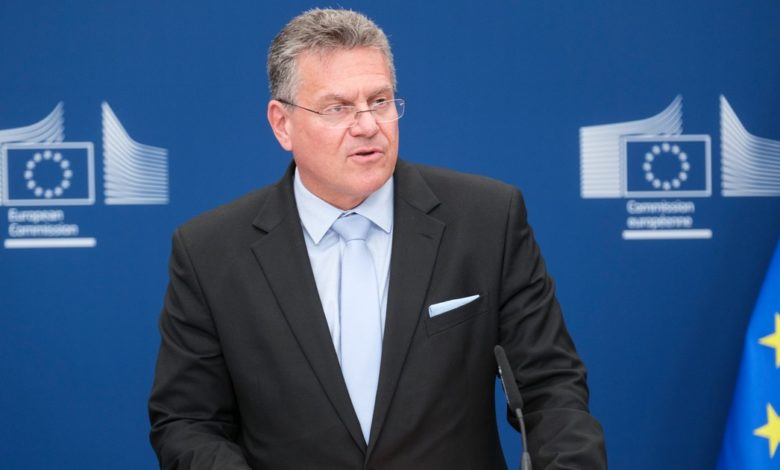
– Today's agreement is in principle balanced, just and realistic. It is the best possible result in difficult geopolitical conditions – said at a press conference the EU Commission for Trade Maros Sefcovic.
“Strong support signal”
– From a political point of view, this is a strong signal of support for Ukraine, which defends its sovereignty and democratic future. Most importantly, it is also a response to the fears expressed by our Member States, farmers and food producers – added Sefcovic.
The amended agreement, which confirms earlier reports of the Politico website, is based on the existing free trade agreement between the EU and Ukraine, but updates them for conclusions drawn from the war.
Ukraine has committed itself to further adapt your agricultural standards to EU regulations – This process is already underway as a preparation for the country's membership in the EU. Full adaptation is to take place by 2028, including in areas such as animal welfare and the use of pesticides.
The contract also allows each party to limit imports, If it causes serious disruptions on the market. And although Ukraine will not regain total duty -free access, which it used during the war, new conditions increase contingents for many products that were not liberalized before. At the same time, they maintain more stringent limits on a narrow list of politically sensitive goods, such as sugar, poultry, eggs and wheat.
The main commercial negotiator of Ukraine, the duck terrace, described the result as “a really good contract”. In an interview with Politico, he said that the level of liberalization in agreement would allow Ukraine to maintain the amount of trade from the war, with few exceptions.
– In fact, we follow the EU standards – and we started it not today, but 15 years ago – said the duck, adding that the agreement shows that Ukraine is a “predictable trade partner” and puts foundations for deeper economic integration.
“Bridges of immunity and solidarity”
The agreement is the result of months of tense negotiations and uncertainty for Ukrainian exporters. As part of temporary EU funds, she initially abolished duties on all Ukrainian products, but later restored restrictions on sensitive agricultural goods.
When these trade funds expired on June 6, the Commission introduced a hurried temporary solution, restoring contingents to the level before the war. This caused panic among Ukrainian exporters who tried to take out goods before introducing restrictions.
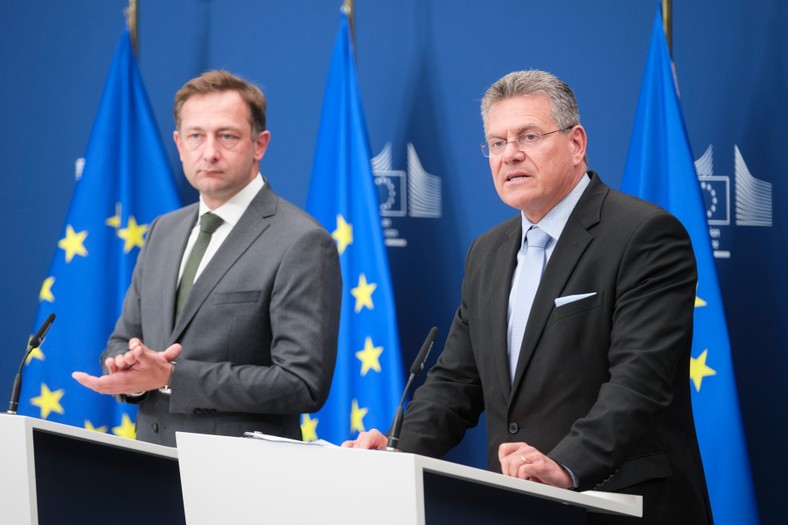
EU Commissioner for Agriculture and Food Christophe Hansen and EU Commissioner for Trade Maros Sefcovic at a conference at the headquarters of the European Commission in Brussels, Belgium, June 30, 2025.
The chairwoman of the European Commission Ursula von der Leyen with satisfaction accepted the agreement, stating in a statement that it would allow to build “bridges of resistance and economic solidarity in the face of an unjustified Russian host war.”
In her opinion, the agreement will secure the interests of European farmers and at the same time strengthened Ukraine's position as part of the European family. “We maintain our commitment to the path of mutual growth and stability, leading to the full integration of Ukraine with our Union,” said von der Leyen in a statement.
Since Russia's full invasion, Ukraine's exports to the EU increased rapidly, which was due to the suspension of customs duties during the war. This liberalization helped balance Kiev's losses suffered during the war, but caused a political response in the EU converted countries. Farmers accused the Ukrainians that their cheap goods contributed to the underestimation. In countries such as Poland, Hungary, Slovakia and Romania, there are still a number of domestic bans and licensing systems.
After a Monday agreement at the political level, both parties will now work on refining technical details. In the coming days, EU Member States and the European Parliament will be informed about it. After agreeing the final legal text, both parties will formally approval the update of the existing trade agreement.
On the part of the EU, the agreement would have to be approved by the Council, representing EU Member States. Then it would be formally adopted by the EU -Ukraine Association Committee.