2025 was the year of peak coal consumption. As a planet, we consumed more of it than in 2024, although the difference was not significant; the increase from 8,805 million tons to 8,845 million tons was 0.5%.
The rest of the article is below the video:
However, as the International Energy Agency (IEA) predicts in the report with the revealing title “Coal 2025”, in the coming years we should not expect any further, even slight, increase in demand. It is expected to reach a stable level and finally start to decline.
Read also: What are the miners from Silesia talking about? “It's a sense of injustice”
The share of coal will decrease
This will not be a radical retreat from coal burning, but its role in electricity production is decreasing. Renewable sources account for most of the growing demand for electricity, followed by gas and nuclear energy.
In 2030, coal consumption is expected to be the same as in 2023, while energy generation from this source will drop to levels prior to 2021. The share of coal in the global energy mix will drop from 35%. in 2024 to 27 percent in 2030
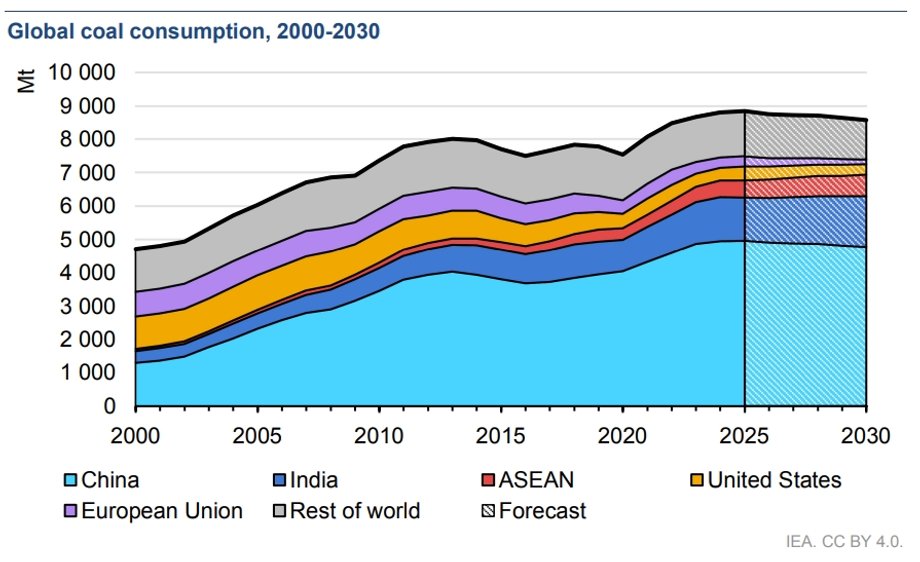
Global coal consumption
|
IEA/IEA
According to IEA estimates, the situation will be slightly different when coal is used for non-energy purposes, i.e. in industry, including industries such as aluminum or cement production. In 2023, the use of coal in these areas accounted for 23%. as a whole, and Asian economies are primarily responsible for the growth. By 2030, the world outside energy will consume less than 50 million tons more than in 2025.
The EU is slowing down
Let's take a closer look at the situation in the year just ended. After years of decline (an average of 6% per year over the last 15 years), the United States recorded an increase in coal consumption by approximately 37 million tons, or 8%.
The agency points to two favorable factors here – slower decommissioning of sources thanks to the support of the federal government and higher gas prices. On the other hand The European Union was moving away from coal significantly slower than in previous yearsmainly due to weaker conditions in wind and water energy in the first half of 2025 (we wrote more about this in August 2025).
Read also: Emissions in the EU have increased. Poland among the countries with the highest results
For the third time in the last five decades, coal consumption has declined year-on-year in India. This was due to lower demand for electricity due to the early and strong monsoon season, but also to increased operation of hydroelectric power plants.
China, responsible for, remained stable at 4,953 million tons 56 percent world coal consumption. The increase occurred in Southeast Asia. According to the IEA, there is a “complex interplay between the expansion of coal in emerging markets and the challenges surrounding its phase-out in more mature systems.”
Biggest growth in India
Despite a slight decline on a macro scale, by 2030 in the Agency's assessment India will consume more coal (an increase of 225 million tonnes from 2025 to 2030 – an average of 3% per year) and countries from Southeast Asia, primarily Indonesia and Vietnam (an increase of 127 million tonnes in the same period). The growth there will be the fastest, reaching over 4%. per year.
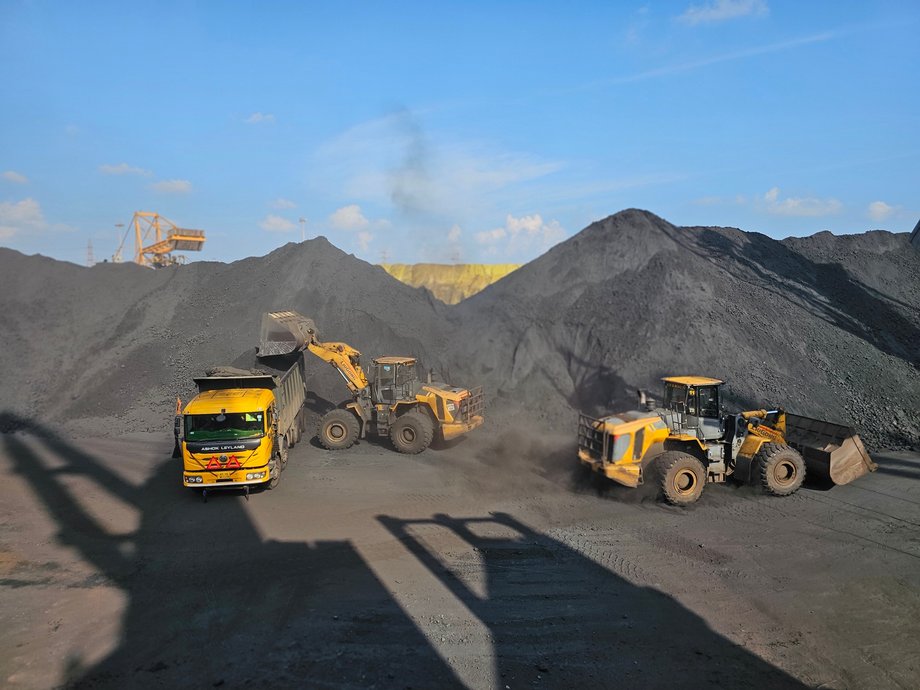
Coal in India
|
Khongkha Somphan / Shutterstock
Chinese consumption will fall to 4,722 million tons, the local authorities have announced their ambitions to reach peak consumption before the end of this decade. Decreases of 153 million tonnes and 106 million tonnes will be recorded by the European Union and the USA, respectively. The American “coal-exit” may slow down not only gas prices, but also the increase in electricity demand.
After record levels in 2024, there was also a five percent reduction in coal imports in 2025. Countries and blocs such as the EU, Japan, South Korea and Taiwan have already reduced their dependence on raw materials imported from abroad. By 2030 by approximately 2.5 percent. China – the world's largest importer, relying primarily on Indonesia – will also reduce its coal purchases annually.
Three countries export almost 3/4 of coal
Exports from the latter country in 2025 decreased by 50 million tons. Okay. 20 percent Colombia also saw a decline in coal sales abroad, while a level similar to last year's was recorded in Russia. The decline in imports in the mentioned Asian countries (Japan, South Korea and Taiwan) may also affect Australia (together with Indonesia and Russia, it was responsible for approx. 74 percent export).
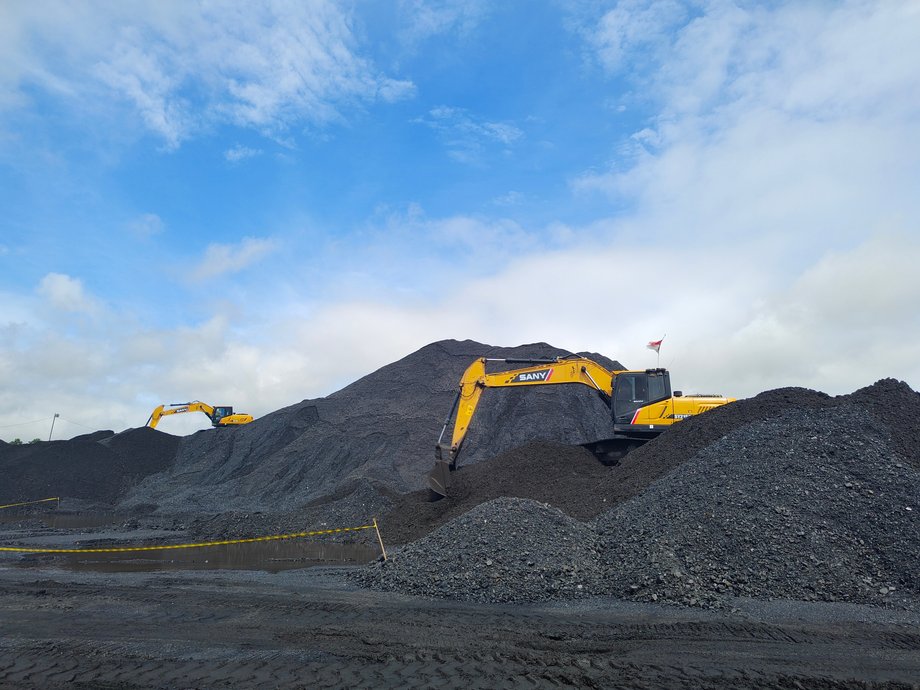
Coal in Indonesia
|
Rmb Project / Shutterstock
2025 was also a year of lower prices. The crisis years with the direct impact of the Russian invasion of Ukraine are behind us – in the European Union, coal prices dropped by approximately 10%. Even less, about 20 percent, was paid in Asia. As we read in the report, prices are starting to approach the costs of delivering the raw material to the market, the industry is therefore becoming less and less profitable. By 6 percent in 2025, the trade in thermal coal decreased by 3%. the one used in industry.
Due to falling prices and reduced trade, There are also fewer mergers and acquisitions in the coal sector than in previous yearsespecially in the period 2021-2023. “Mining companies in the industry had enough cash to acquire attractive assets, so entities that wanted to diversify could sell them at reasonable prices,” write IEA experts. However, from 2024, these activities “almost completely” stopped.