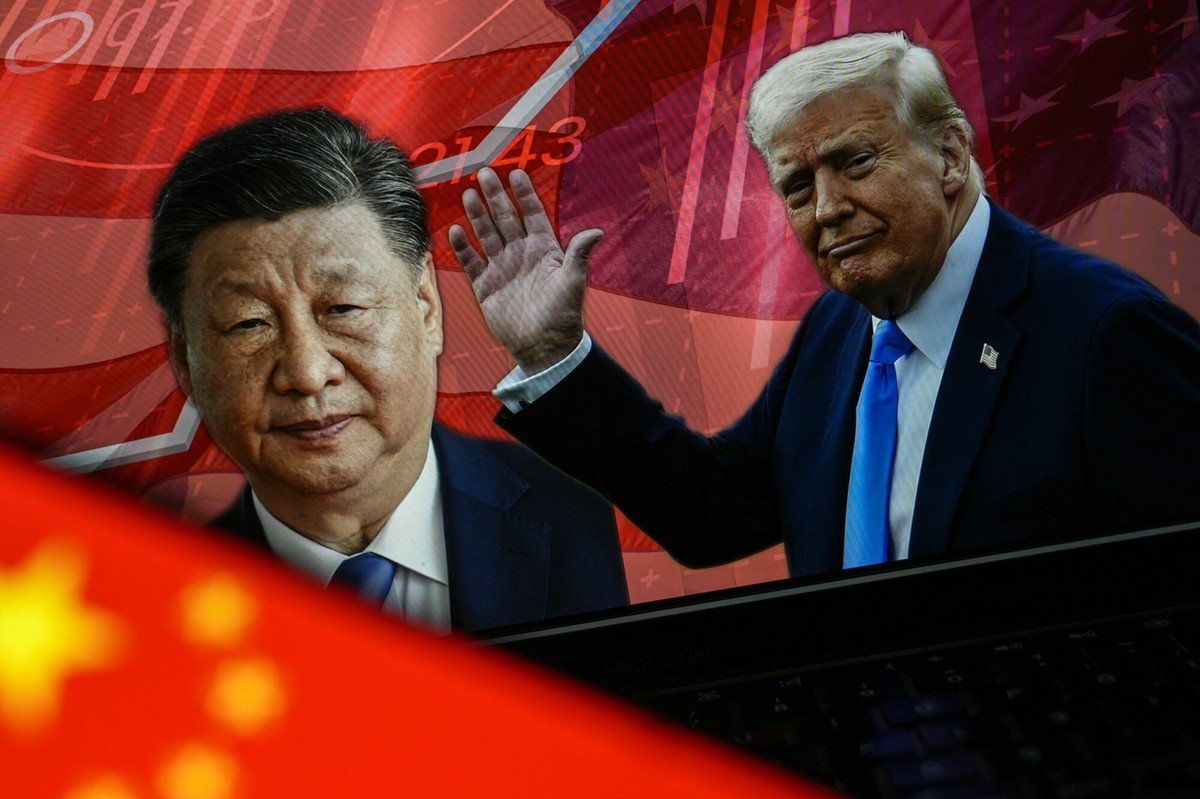
Since the beginning of 2025, the BRICS countries have been intensifying their de-dollarization efforts – Russia and Iran have eliminated the dollar from mutual transactions, and trade between Brazil and China takes place directly in reals and yuan. However, the economist points out that, contrary to information that appears from time to time, the financial world will not abandon the American currency as the most important currency in world trade.
The dollar as the “oil” of world trade
“The potential de-dollarization in international trade is not visible, because the dollar dominates in international transactions. It is simply convenient,” emphasizes Stojanowski. The expert explains that the dollar serves as a common denominator in the global financial system.
“The entire currency market often crosses the dollar because there is not that much exchange between the two countries,” he illustrates with the example of the Mexican peso and the Argentine peso. “Two Spanish-speaking countries, but trade between these countries means that the exchange rate of the Mexican peso to the Argentine peso must pass through the dollar. This is also the case with the Korean won and the Brazilian real.”
China as a beneficiary of the current system
Stojanowski draws attention to the paradox of the Chinese approach to dedollarization. “Departure [od dolara] by the People's Republic of China is quite complicated because the People's Bank of China has to keep Chinese exports competitive, so the exchange rate has to be controlled.
“Increased demand pressure on the yuan would strengthen the yuan and reduce the competitiveness of exports, and they cannot afford this for political reasons,” explains the expert. China therefore remains a beneficiary of the current dollar system as the reference currency.
The Chinese economic model, based on state investments, according to Stojanowski, “is exhausted.” “We have overinvestment in China. This is visible, for example, in the ratio of public debt to private debt, where both increase simultaneously with budget deficits. This proves the ineffectiveness of these investments.”
Technologies instead of “shoelaces”
According to Hubert Stojanowski, it is true the reason for the US-China conflict is of a completely different nature than the commonly believed trade deficit problems. “The problem with China from the American perspective is not that there is a trade deficit on the American side, but there is some kind of violation of the unwritten consensus that complex technologies are the domain of Western and developed countries,” explains Stojanowski.
“China's investments in technology disturb this system. And this is a problem, because the main value of the American economy from the perspective of the Americans themselves is intellectual property and technological dominance.”
The expert emphasizes that “if China was still involved in sewing shoelaces, producing shoes, and low-tech production, no one in Washington would think about any potential problems with China, because everything would fit within the current paradigm, where everyone has their place.”
Rare earth metals as weapons of commerce
In the context of escalating tensions, China's restrictions on the export of rare earth metals are becoming particularly important. However, Stojanowski reminds that “rare earth metals are not as rare as the name suggests.” However, they are crucial for the defense industry – “without tungsten we will not create sub-caliber bullets.”
The Chinese Ministry of Commerce introduced strict controls on the export of rare earth metals in October 2024, which analysts perceive as another move in the trade war with the US. China controls about 90 percent. the global market for processing these raw materials that are necessary for the electronics, semiconductor and defense industries.
Historical parallels
Stojanowski points to historical precedents for similar conflicts. “We have an example of French-British rivalry, an example of competition to maintain the colonial power of Spain. There was simply plenty of it,” he notes.
The Thucydides trap, described by the American political scientist Graham Allison, refers to a situation when a growing power threatens the hegemonic influence of the current leader, which often leads to conflict.
“A similar process took place during the second Stalinist five-year plan, when the Soviet Union was also eager to steal American technologies in the field of industry, agriculture, etc. And this ended with the extinction of trade relations almost to zero,” the expert reminds.
Escalation inevitable?
Stojanowski emphasizes that the current escalation is systemic and does not depend on specific politicians. “If there was a counterfactual scenario that the Democrats won the election and Hillary Clinton was president, then this clash with China would also be inevitable.”
“This is due to the problem with American patents and intellectual property protection in China, despite the agreement with the Obama administration to protect it,” he explains.
As Stojanowski estimates, “trade escalation is occurring with varying intensity, but it is not a new thing, because it actually started during Trump's term.” The future of this conflict remains uncertain, but its structural nature suggests that tensions will persist regardless of political changes in both countries.
The entire conversation is available here:
Onet Morning. Financially
“Onet Morning”. Financially is a weekly program in which Business Insider journalists talk to invited experts from the world of business and politics about current events and issues related to the Polish economy, public finances and the impact of politics on the wallets of every Pole.
The program can be watched every Wednesday at 10 on the main page of the Onet portal, and from 11 as a podcast on Onet Audio.