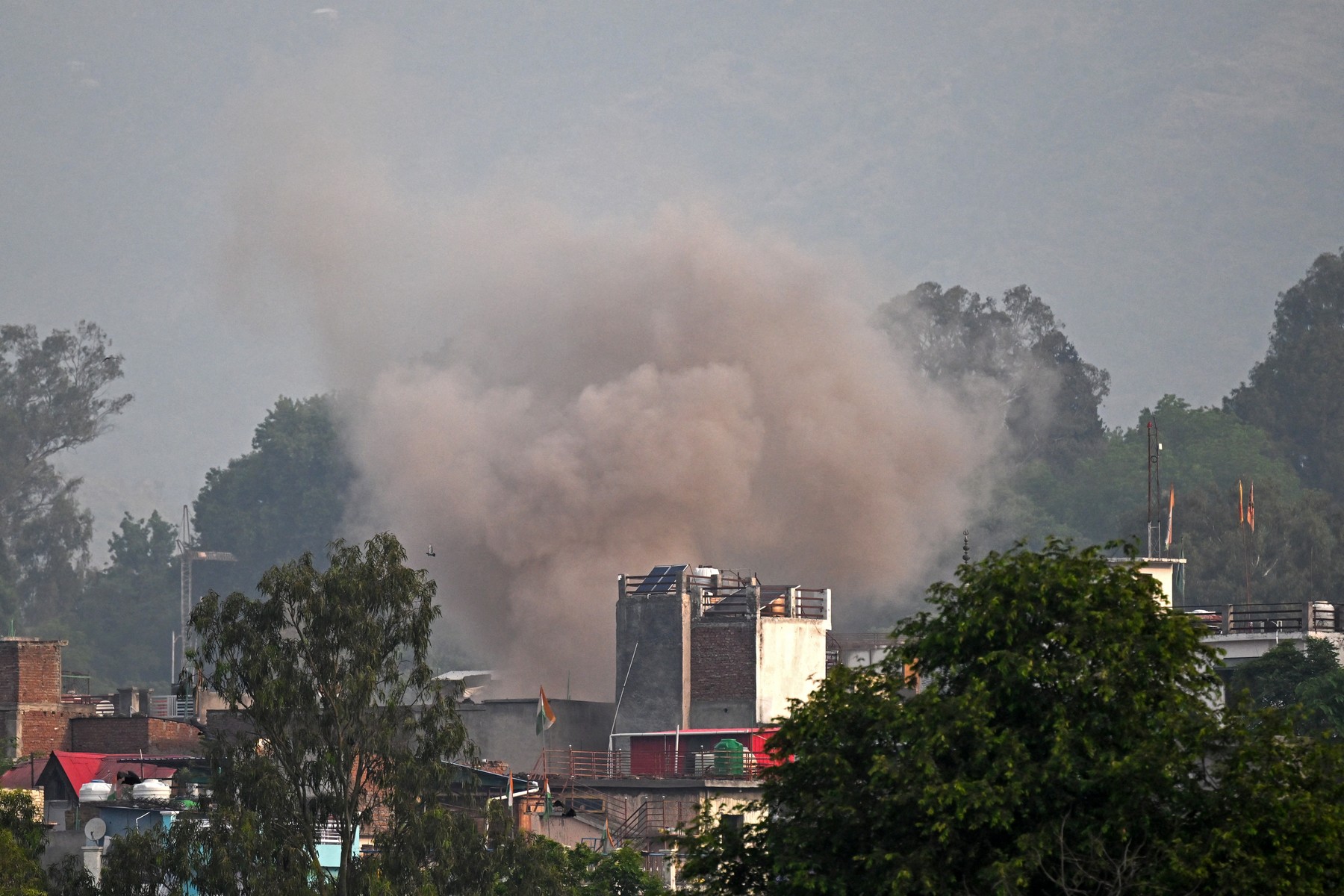
Poonch district, Kashmir on May 7, 2025. India fired missiles into Pakistani territory on the morning of May 7 in a major escalation between the two nuclear-armed countries. Photo source: Punit PARANJPE / AFP / Profimedia
India and Pakistan exchanged lists of nuclear installations on Thursday with the aim of avoiding mutual attacks after the recent military conflict in May, in which their nuclear arsenal was one of the main concerns, EFE and Agerpres agencies report.
“India and Pakistan exchanged today, through diplomatic channels and simultaneously in New Delhi and Islamabad, lists of nuclear facilities and centers covered by the Agreement on the Prohibition of Attacks on Nuclear Facilities and Centers between the two countries,” according to a statement issued Thursday by India's Foreign Ministry.
“The agreement, signed on December 31, 1988 and entered into force on January 27, 1991, provides, among other things, that India and Pakistan must inform each other every January 1 about these installations,” the statement added.
This is the 35th consecutive exchange of these lists between the two countries, the first taking place on January 1, 1992, a trust mechanism that both sides maintain within their historic nuclear rivalry.
Both countries also exchanged lists of civilian prisoners and fishermen in mutual custody.
Also a day earlier, on Wednesday, during the funeral of former Bangladeshi Prime Minister Khaleda Zia, India's Foreign Minister S. Jaishankar and Pakistan's National Assembly Speaker Sardar Ayaz Sadiq shook hands, marking the first direct contact between the two countries since the May military conflict.
Since then, officials of both countries have largely avoided public contact and refrained from greetings or exchanges at international meetings.
The rapprochement marks a major resumption of dialogue between India and Pakistan after on April 22 both countries went through a period of tension that lasted until May 10, reaching levels not seen since the 1999 Kargil war, with missile and drone attacks in the disputed region of Kashmir.
On May 10, the two nuclear powers agreed to an armistice brokered by the United States.
India and Pakistan have been disputing their sovereignty over Kashmir, in the western Himalayas, since 1947, when the independence of the Indian subcontinent from the British Empire led to a traumatic division whose consequences still mark the relationship between the two countries, the quoted agency comments.