European money and the conditions under which farmers have access to it in 2026. “The sums are small, the battle will be fierce”

A little over 500 million euros are available to farmers, money to access through AFIR, in 2026. The race to access the funds opens at the very beginning of the year, January and February being scheduled for the launch of the sessions.
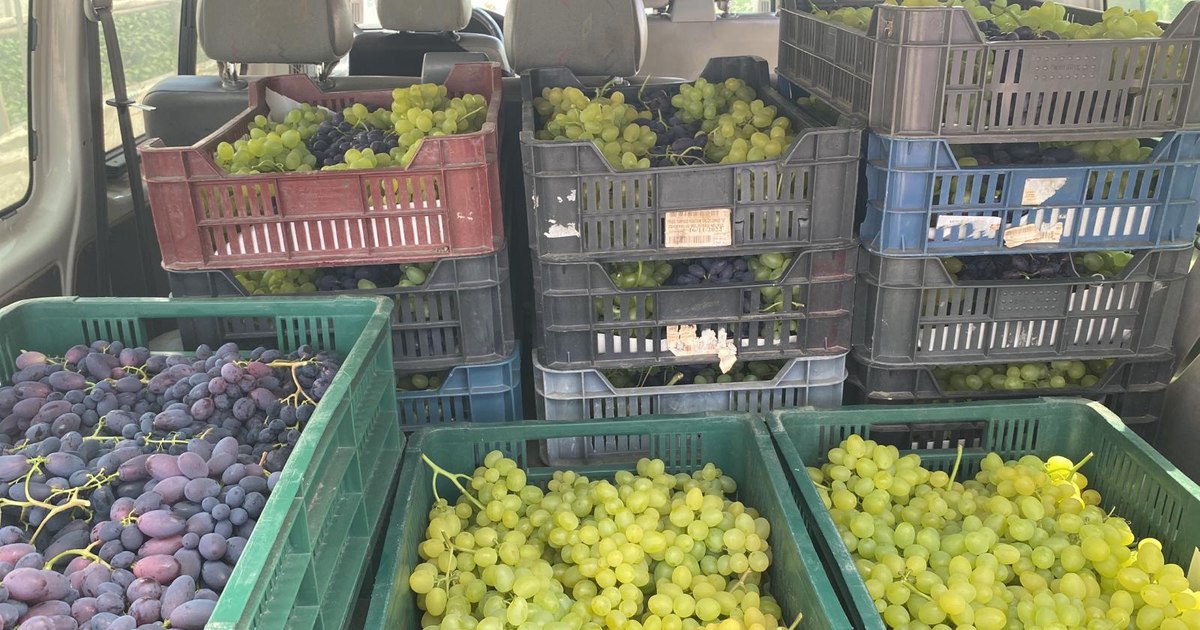
Distinct program for financing farms that produce table grapes PHOTO. Ion Paunel
Not a lot of money, a little over 500 million euros in total, remains to be granted, through the Rural Investment Financing Agency (AFIR), in 2026, from Pillar II of the PAC 2023-2027 Strategic Plan. Farmers have been waiting for the opportunity for a long time, some have set up their farm to meet those conditions. The sums are not big, consultant Ion Păunel points out, so those who wish to do so must expect a serious competition.
The novelty is that for farmers in the vegetable sector there are also funds that they will not have to share with farmers from other branches. All interventions instead require co-financing, in different percentages, which from the start assumes that they are addressed to farmers who know what they are doing and have their own money to invest in development.
Over 150 million euros just for vegetables
The first intervention to be opened in 2026 – according to the calendar, the launch of the session would take place on January 19 – is DR-16 “Investments in the vegetable and/or potato sector”. It has an allocation of approximately 151 million euros, and farmers who grow vegetables and/or potatoes will only compete among themselves for this money.
“The maximum non-refundable amount is a maximum of 65%, the co-financing part is 35% and we have several types of investments”explains Ion Păunel.
For investments in equipment and machinery, a farmer can access a maximum of 300,000 euros, and in the case of cooperatives, the amount increases up to 700,000 euros.
If, instead, the farmer proposes to modernize the holding by building greenhouses, solariums, etc., the value of the project can reach up to 2 million euros. For farmers who grow potatoes, the investment in machinery and equipment can be financed with up to 700,000 euros (compared to 300,000 euros for vegetables), the same being the ceiling for cooperatives whose members grow potatoes. For processing, sorting and packaging facilities, the maximum value of the project is 2 million euros. In any of the situations, the co-financing is 35%.
“In our experience, it addresses farmers who are more capitalized or associative forms that are capitalized. But it must be said, and this is valid for all financing lines, for the co-financing part, how much will it be – in this case 35% – the beneficiaries can go to the banks, let's call them partners with the Ministry of Agriculture, and they can obtain a financing line or a credit line under advantageous conditions”, stated Paunel.
Loans will be granted at a maximum interest rate of 3%, “there is even talk of 1.95%”, stated Păunel, the grace period will be one year, and the repayment period will be 10 years.
“That's what I think will make farmers who aren't quite as capitalized to try. The problem with all the financing lines that will be opened, especially since in 2025 we didn't really have anything launched, is related to the amounts. The amounts that are allocated are quite small and the battle will be quite fierce”, the consultant appreciated.
The scores will make the difference between the applicants, and for an additional score professional training in the vegetable field, attested with diplomas, is very important.
Information about this funding line has been available since last year, so interested farmers have most likely prepared themselves.
Consolidation of holdings of young farmers, with co-financing
Another long-awaited intervention is DR- 12 “Investments in the consolidation of holdings of young established farmers and newly established farmers”. The financing line for young farmers this time comes with a part of co-financing, the consultant states. According to the calendar, the opening is scheduled for January 30, and the allocated funds are almost 170 million euros.
“Young people who settle for the first time, young people who are up to 41 years old but have no more than 5 years of experience on the farm and young people who are up to 45 years old but have more than 60 months of experience are eligible. Young people who have no more than 60 months of experience can receive from 10 thousand to a maximum of 200 thousand euros, and they must come with a 20% co-financing, and young people who are up to 45 years old, but have more than 60 months of experience in the farm (since they are registered at APIA) can also benefit from the same amount, from 10 thousand to 200 thousands of euros, only that the financing is 65%, the co-financing part is 35%”, Paunel mentioned.
Those farmers who also accessed DR-30, another intervention intended for young farmers through which sums of 70,000 euros were granted, are no longer eligible, because at least 24 months have not passed since accessing the first tranche of money from DR-30, the consultant explained.
The hope of the farmers is that if there are unspent funds from other measures, the funding for this type of program can be supplemented.
45 million euros for hops and table grapes
A measure that farmers have at their disposal for the first time is DR-17 “Investments in the hop and/or table grape sectors”.
“Neither hops nor table grapes have been financed separately so far. We have 45 million euros, we say neither more nor less. It is good that a financing line was found for these two sectors as well, but hops and table grapes will fight each other in one way or another, because we do not know at this time if there will be separate allocations”, he specified the consultant. And in the case of this measure, a contribution from the farmer of 35% is required.
Another intervention, DR-19 – “Non-productive investments at farm level” it's not just for farmers. The money allocated is approximately 11.8 million euros, and the launch is scheduled for February 9.
Also next month, on February 13, the launch of the intervention is scheduled DR-21 – “Investments to prevent the spread African pigfish (PPA)”. It has an allocation of 10 million euros.
DR-18 – “Investments in floriculture, medicinal and aromatic plants” will be released on February 23. It has an allocation of only 5 million euros and is found for the first time in the calendar. “It's good that a line of financing is being opened for this sector. The money seems a little bit to us, but it comes after so many years in which we also supported and helped them, managing to convince the Ministry of Agriculture (…) that the flower sector also has its importance and every time it was at a disadvantage, because they could only access funds if the flower sector was part of the farm's activity”the consultant pointed out.
For now, in the case of this intervention, it is not clear what maximum amount an applicant can access, but it would be preferable, says the consultant, not to be very large amounts in order to benefit as many farmers as possible, considering the allocation of only 5 million euros.
The most expected measure, allocation of 108 million euros
DR-14 – “investments in small farms” is, according to the consultant, the most expected measure. It will be launched on February 27 and has an allocation of 108 million euros.
“Here we wish to add more, but we will see. Farmers can access a project of maximum 50,000 euros with a co-financing part of 15%. The smallest co-financing is for small farms, and I want to mention that we fought quite hard for this, because we were told that there are no more funds for small farms. Inquiring, we found out that the decision is up to the member state. Through negotiations we managed to introduce a financing line for small farms as well. Indeed, it has a part of co-financing, but it is the smallest co-financing of all that this PNS means”, emphasized Ion Păunel.
The financing for small farms will have access to farms from 2,000 SO (SO are standardized indicators, in euros/hectare – for plants or as a value per unit – for animals, used in European agriculture to determine the size and economic potential of a farm; with their help, the eligibility for accessing European funds is calculated) up to 11,999 SO if we are talking about a farm with a zootechnical component, and for a vegetable farm, from 4,000 SO and up to 11,999 SO. The maximum amount accessed from European money will be 50,000 euros.
Funding is decided based on the scores, and farmers active in agricultural cooperatives will have extra points, at least from the information circulated so far.
The consultant Ion Păunel draws attention, in this regard, to an important aspect: membership in a cooperative does not automatically bring additional points to the project evaluation, because there are some details that make the difference between the members of a cooperative. There are founding members, cooperative members and associated members, the last mentioned, the associated members, being able to carry out activities within the cooperative, but having fewer rights than the first two categories, and they do not receive additional points when evaluating projects.
“For sure 2026 will be a landmark year and what the selection will do,” appreciated the consultant Ion Păunel, referring to the fact that farmers must expect that the exemptions they have benefited from in these years will begin to be canceled, and that the legislation will be applied exactly, regardless of whether it is marketing documents, the application of treatments, the authorization of water wells, etc., which will make the farmers who manage to meet all these rigors to resist on the market.