A Russian conductor will conduct the New Year's Concert in Vienna in 2027 / This year's program, more inclusive under the baton of Nezet-Seguin


The Russian conductor Tugan Sohiev will be the one to conduct, on January 1, 2027, the Vienna Philharmonic's New Year's Concert, an event in which he will make his debut, the prestigious ensemble announced on Thursday.
Tugan Sohiev, who in March 2022 resigned as musical director of the Bolshoi Theater in Moscow in protest against the Russian invasion of Ukraine, has been collaborating with the Vienna Philharmonic for almost two decades, EFE and Agerpres report.
“Tugan Sohiev has been very close to us, both musically and personally, since 2009. From our first concerts, a great trust and a mutual musical understanding were quickly created, which since then have deepened and developed”, said the president of the Philharmonic, Daniel Froschauer, in a statement.
“We are looking forward with great enthusiasm to our future projects and the next New Year's Concert”, the same press release states, in which it is mentioned that Sohiev, aged 49, is particularly involved in the training of new musicians.
“Forced to face the impossible option of choosing between my beloved musicians”
Born in 1977 in the Russian republic of North Ossetia, Sohiev also resigned in March 2022 from the position of music director of the Toulouse Orchestra, citing the pressure he received in France to pronounce on his country's attack on Ukraine.
“I was asked to choose between one cultural tradition and another”, declared the conductor at the time to explain his resignation from both positions.
“Being forced to face the impossible option of choosing between my dear musicians in Russia and my dear ones in France, I decided to give up my posts,” he said.
20 conductors so far at the lectern of the Viennese New Year's Orchestra
The collaboration between Sohiev and the Vienna Philharmonic began in 2009, during a tour in Asia, in Seoul.
In 2025, in addition to the seasonal concerts and a European tour, he conducted the Summer Night Concert for the first time, as well as the Anniversary Gala Concert dedicated to Johann Strauss, on the occasion of the Austrian composer's centenary.
Since the mid-1980s, the Philharmonic has chosen a new conductor each year – until now all men – to lead the world's most famous recital, although many of them have returned several times.
With Sohiev, the number of conductors who were at the orchestra lectern in the Golden Hall of the Wiener Musikverein concert hall to welcome the New Year with music will reach 20. This year, the New Year's concert was conducted by the Canadian conductor Yannick Nézet-Séguin.
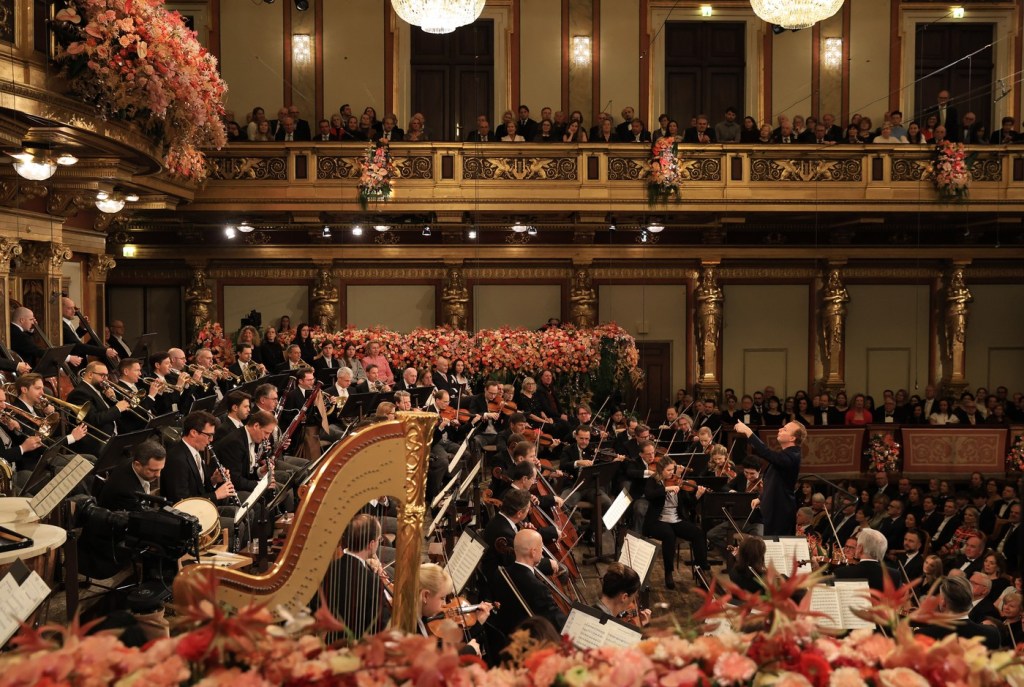
This year's concert, more inclusive under the baton of Canadian conductor Yannick Nezet-Seguin
The Vienna Philharmonic's New Year's Concert, the most watched classical music event in the world, debuted in 2026 with a more open and diverse program, under the direction of Canadian conductor Yannick Nézet-Séguin. Keeping the essence of the Viennese tradition, the recital included, for the first time for this edition, two works composed by women, marking a new step in the modernization of an event with roots dating back to 1939, writes Agerpres.
Conducted by Yannick Nézet-Séguin, 50 years old and one of the most influential figures on the international classical scene, the concert combined the established repertoire of the Strauss dynasty – waltzes, polkas and marches – with five works performed for the first time in this setting. Among them were compositions signed by Florence Price (1887-1953), the first African-American woman recognized as a great classical composer, and Josephine Weinlich (1848-1887), a pioneer of European music.
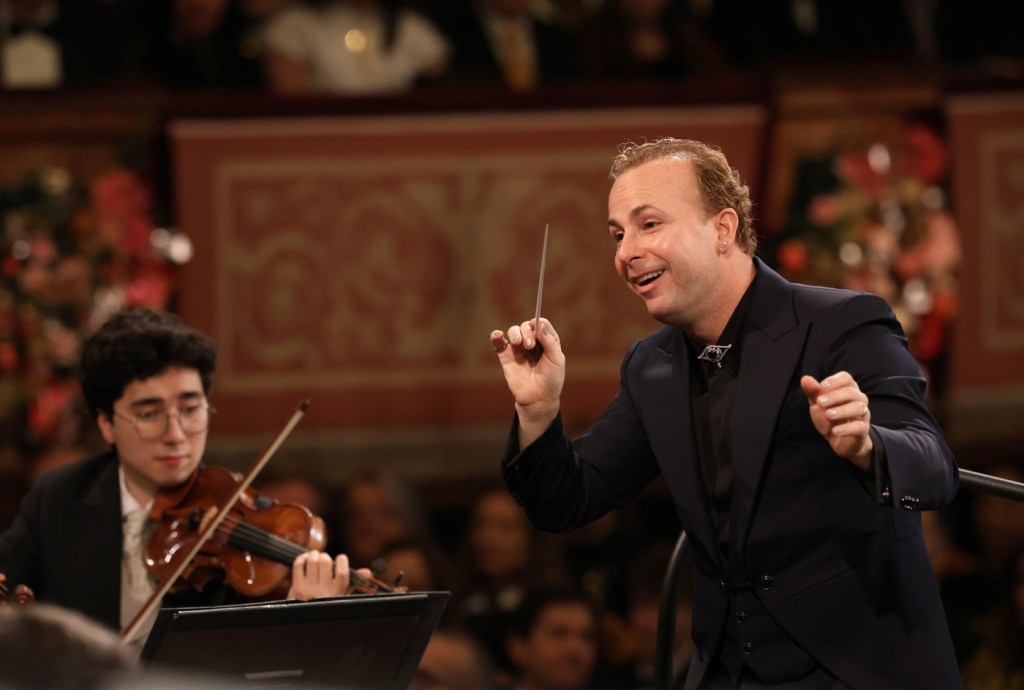
Nézet-Séguin explained before the concert that she specifically wanted a work by Florence Price to be included, noting that she had been “unfairly marginalized because of her gender and her race”. The “Rainbow Waltz”, inspired by African-American and popular music, offered the audience a perspective on a more open and diverse classical music.
For her part, Josephine Weinlich, founder of the first female orchestra in Europe in 1875, was represented by “Siren Songs”, a work with a message of solidarity and emancipation, which matched the conductor's desire to update the concert repertoire.
The Vienna Philharmonic has never had a female conductor at the lectern
Only in 2025, after 85 editions, the New Year's Concert included for the first time a work composed by a woman, and this year's edition confirms a slow but visible change in a traditionally male-dominated institution. The Vienna Philharmonic has never had a female conductor at the lectern, and the first instrumentalist was admitted to the orchestra only in 1997.
The concert also preserved the classic moments of humor and spectacle, such as the choreographic interventions of the Vienna State Ballet, for the televised version of the concert, and the traditional encore with “Blue Danube” and “Radetzky's March”.
After the classic “Blue Danube” encore, Nézet-Séguin came down from the podium to conduct the traditional “Radetzky March” in the middle of the audience, to the rhythm of the spectators' applause.
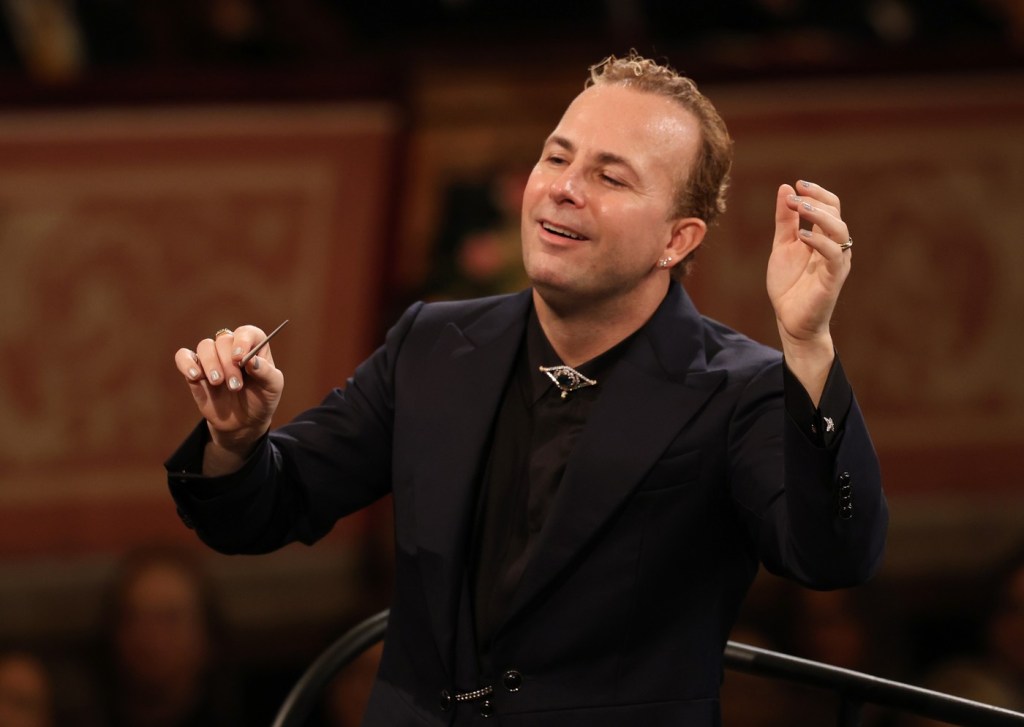 VIDEO Who is the Canadian conductor Yannick Nézet-Séguin who performed and brought the hall to its feet at the New Year's Concert in Vienna
In his New Year's address, Nézet-Séguin sent a message of peace and unity, saying that music can bring people together around the world. Nézet-Séguin is very active in the defense of LGBTQ+ rights and showed her solidarity with Ukraine, supporting the Democratic candidate Kamala Harris in the electoral campaign in which she was defeated by the Republican Donald Trump last year.
With this 86th edition of the concert, the celebration of the bicentenary of the birth of Johann Strauss son, a central figure of Viennese music, to whom Austria dedicated numerous events throughout the year, ended.
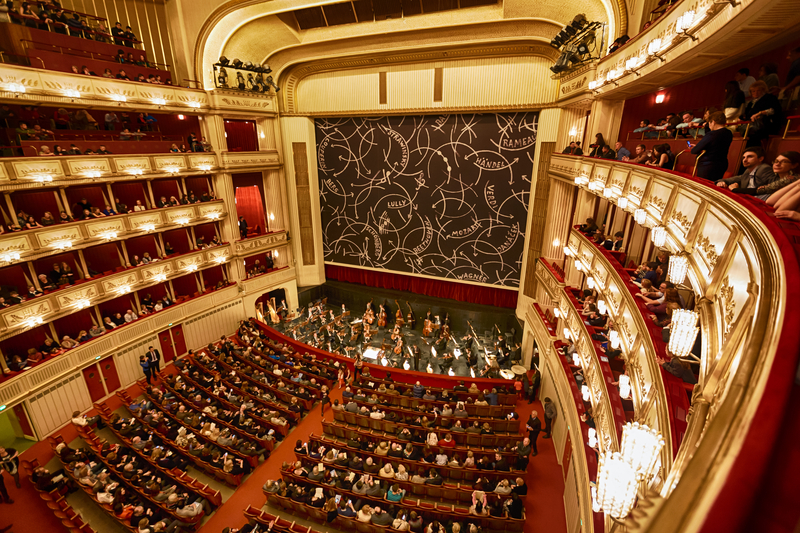 New Year's concert in Vienna. When is the traditional concert from the Austrian capital broadcast and on which TV station