In a potential conflict, Taipei's fate would quickly become intertwined with the US-Japan security alliance, the WSJ reports.
SHUTTERSTOCK PHOTO
Last month, after Japanese Prime Minister Sanae Takaichi hinted that his country could mobilize a military response in the event of a Chinese attempt to seize Taiwan, Beijing responded with angry statements and extensive warplane exercises. Its implicit message: None of your business.
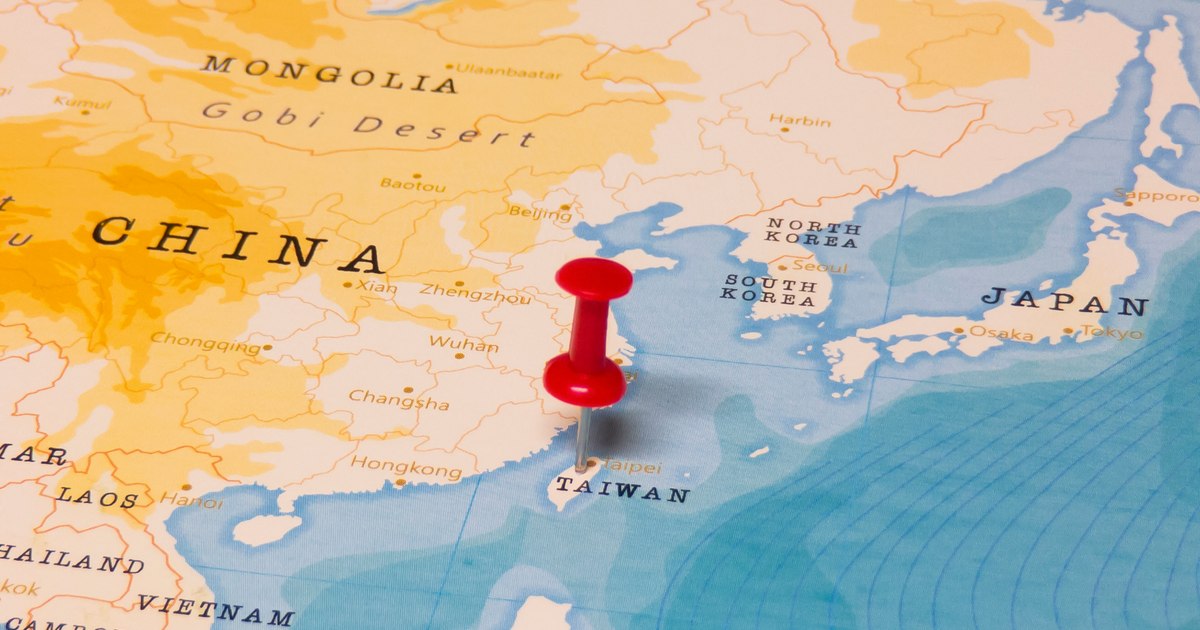
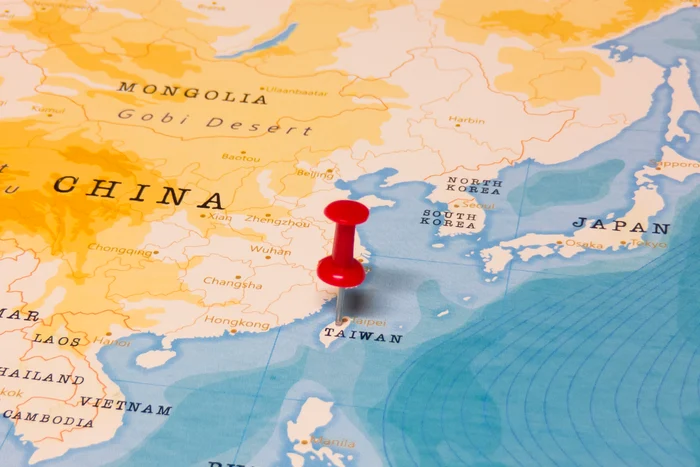
But economic and geopolitical reality suggests otherwise: a potential Chinese invasion of the Taiwan Strait would pose a significant threat to the interests of Japan and its biggest ally, the US. And that's because, as the maps show, Taiwan, a democratically governed island, is at a crucial maritime crossroads.
Much of global trade passes through the South and East China Seas, and the area includes crossing points such as the Bashi Channel that touches the edges of Taiwan.
A successful capture of Taiwan would allow Beijing to dominate the region's strategic waterways, project its military might into the Pacific, and more aggressively pursue its disputed maritime and territorial claims.
“The balance of power in Asia would tilt quite decisively in China's favor if Taiwan fell to China,” said Robert Ward, president of the International Institute for Strategic Studies.
Looking out to sea, China is “somewhat blocked” at the moment, he said, referring to the First Island Chain – a string of archipelagos off the country's east coast, made up largely of a trio of US partners: Japan, Taiwan and the Philippines. China “clearly wants out of this situation,” Ward said.
In a potential conflict, Taiwan's fate would quickly become intertwined with the US-Japan security alliance. To repel a full-scale attack, Taipei would need America – its main defense partner – to join the fray. For this purpose, US forces would need Japan.
Whether the US would directly intervene in a conflict is an open question. Washington maintains a policy of what it calls “strategic ambiguity” to keep China in limbo.
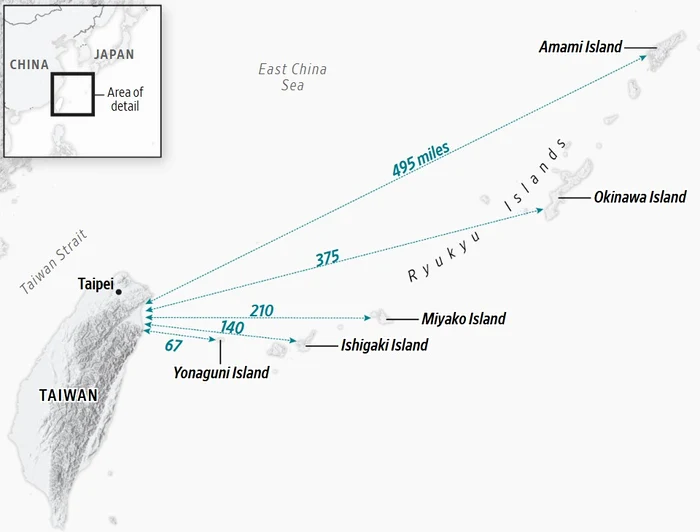
Geography presents specific challenges for Japan. A group of Japanese islands called the Ryukyus stretches to the southwest, stopping just before Taiwan. Yonaguni Island, more than 1,200 miles from Tokyo, is less than 70 miles from Taiwan.
Some of these islands would be right next to the war zone – or even inside it – if China were to send missiles and warships to blockade, strike and encircle Taiwan, putting Japanese citizens and territory at risk. Hostilities on otherwise busy shipping routes would disrupt the essential trade on which Japan relies.
In recent years, as Tokyo has reconfigured its security posture in response to China's rapid military rise, it has made a number of investments in these southwestern islands. These include new bases, radar installations, electronic warfare capabilities and missile systems.
Japan's Type 12 anti-ship missile batteries, with a range of 200 km, are now positioned on several islands in the Ryukyus, and longer-range variants are under development. Japanese officials claim the Yonaguni will receive surface-to-air missiles.
Should Japan decide to participate in a conflict over Taiwan, these missiles – and others it produces to strike more distant targets – would play an important role, as would Japanese submarines and warships.
Japan-China territorial disputes
Japan has its own territorial dispute with China over a group of uninhabited islands called the Senkaku. Controlled by Japan and claimed by China and Taiwan, these strips of land lie just over 160 kilometers northeast of Taiwan. China, which calls them the Diaoyu Islands, routinely sends coast guard vessels into the waters around them to assert its claim, a source of ongoing friction with Tokyo.
A Chinese takeover of Taiwan would increase the threat to the Japanese territory, said Yuki Tatsumi, senior director at the US-based Indo-Pacific Security Institute. “Japan will no longer have a buffer, if you will,” she said, adding that it would face direct pressure from the Chinese navy.
Whether or not Japan joins a war over Taiwan, how far it will fight, and what it will do if the US stands aside depend on a combination of military, legal and political factors. If Washington decided to defend Taiwan militarily, decisions made in Tokyo would influence US intervention.
Japan is home to a network of strategically positioned US bases supported by a robust infrastructure. US forces would have to activate them, which involves talks between Washington and Tokyo. This includes Kadena Air Base, a center of US air power in the Pacific, and the US Navy base at Yokosuka, home to the Seventh Fleet and an aircraft carrier.
“The US doesn't have anything like the military bases that Japan has in other parts of Asia,” said Eric Heginbotham, a senior research fellow at the Massachusetts Institute of Technology's security studies program. “You can't replicate what's in Japan.”
A 2023 report on a military game in Taiwan by the Center for Strategic and International Studies, co-authored with Heginbotham, described Japan as the centerpiece. “The United States must be able to use its bases in Japan for combat operations,” the report said.
One island in particular, Okinawa, is home to military facilities and training areas. Kadena Air Base hosts a wide range of aircraft at any given time, including fighter jets that would be needed to sink Chinese ships in the Taiwan Strait and fight Chinese warplanes. A new missile-equipped Marine Corps unit designed for inter-island combat is also based on Okinawa.
However, the island's proximity to China makes it vulnerable to attacks. Beijing has amassed such a formidable arsenal of missiles that concentrating fighter jets at one or two well-known locations almost anywhere in the region would put them at risk of being completely destroyed. To make it more difficult for China to target them, the US Air Force would try, in the event of a conflict, to spread its aircraft not only over various US bases, but also beyond them: over Japanese military installations, civilian or dual-use airfields in Japan, and other sites in the region.
That means US air operations could expand Japan's involvement, if Tokyo agrees.
Japan would be particularly important for fighter jets, which have limited range and use a lot of fuel. From airstrips in Japan, pilots could quickly get to Taiwan and back, with more time to fight than if they commuted.
Without Japan, the US would be heavily dependent on Guam, a US territory in the western Pacific about 2,700 kilometers from Taiwan. Long-range bombers could use Guam, but fighter jet operations would be much harder to sustain, even with aerial refueling. Air superiority missions, for example, would require the planes to conduct missions and remain “in position” in the vicinity of Taiwan for a period before returning, which is not feasible from Guam, Heginbotham said.
Aircraft carriers would be an option, but these warships are large and expensive targets, and the US is unlikely to commit too many in the early days of a conflict, he said.
Meanwhile, naval bases in Japan would help rearm warships. The further the ships have to go to detect new missiles, the longer they would be out of combat.
Japan could also be drawn into the conflict by China's wartime decisions. If Beijing calculated that the US was likely to join the conflict, it could preemptively try to mitigate that threat by sending missile barrages at US bases in Japan and possibly at Japanese targets. It has hundreds of missiles of each category – short, medium and intermediate range.
This year, the US brought its Typhon system to Japan for the first time — it has since left the country — placing it in the south, where it could hit targets in mainland China. The new Nmesis ship-destroying missile battery used by the Marine Corps was also brought to Okinawa for the exercise.