
Manus reaches the Meta. Zuckerberg now has an ace up his sleeve – the question is whether he will use it


Manus specializes in general-purpose AI agents. It is software that is supposed to understand the goal, break it down into stages, use tools and deliver the finished result with minimal user participation. The company emphasizes the difference in its messages. Instead of responding step by step like a classic conversational assistant, Manus' agent is to “plan and execute” — prepare a research report, analyze data, write code, scan a CV, build a website or perform stock analysis. The possibilities are endless.
The start-up was established in March (just nine months ago) and moved the center of gravity from China to Singapore, among others. to limit the effects of US restrictions on Chinese AI companies. Manus operates as a subscription product and has quickly gained momentum. According to available information, it was supposed to achieve annual revenues of around USD 125 million and exceed USD 100 million in December. recurring revenue (ARR). The team consists of approximately 100 people, mainly located in Singapore.
The next part below the video:
Importantly, Manus does not build its own AI model from scratch. It uses models from other companies (the materials include Anthropic and Alibaba), and its advantage lies in the executive layer, the so-called orchestration, error tolerance, completing long tasks and delivering final projects.
Check also: Audiobooks are increasingly winning over hardcovers. We prefer to listen rather than read
Why Meta is buying Manus now
Meta has been pumping billions into AI for months. Zuckerberg's company wants to improve recommendations, build more powerful generative models, and power the next wave of hardware. The purchase of Manus fits into this puzzle because it takes the competition to another level. In addition to competing for who has a better model (Meta is developing its own), the billionaire's company will now also compete with agent services for who can best “read” users' intentions and perform specific tasks.
In practice, Meta buys three things at once.
Firstly, a finished product with revenue and user base. At a time when investors are looking at the massive spending on AI and asking about monetization, Manus looks like a shortcut to business proof that it sells.
Secondly, position in the hottest segment: AI agentswhich perform multi-step tasks. This field is rapidly expanding – in addition to platforms and model providers, there are also tools such as Copilot and agent-based software solutions for companies. The meta clearly communicates that it wants to cement this segment for itself.
The next part below the video:
And thirdly, team and know-how. Manus CEO Xiao Hong (also known as “Red”) will report to Meta's COO Javier Olivan, and Meta's Chief AI Officer Alexandr Wang publicly welcomed the team on the Meta side. This is a signal that it is not just about plug-in technology, but about the competences to build agents as a key layer of Meta's product and platforms.
At the same time, there are geopolitical and regulatory issues in the background. Meta emphasizes that there will be no further Chinese ownership of Manus following the transactionand the company is expected to end services and operations in China. Previously, there was controversy over the financing of Manus by the American venture capital sector with ties to China, so cutting off this thread is an element of risk minimization for Meta.
See also: The AI agent will do everything for us. The new version of the Internet will not be created for people
What this could mean for Instagram, Facebook and WhatsApp
If Meta does indeed build Manus into its applications, it will change the nature of what AI in social media is supposed to be. Today, Meta AI is widely available in the company's services as a tool for conversation and simple suggestions. Manus brings something different – AI that is designed to act as a background task performer, for an extended period of time, with access to tools, iterations and the final result.
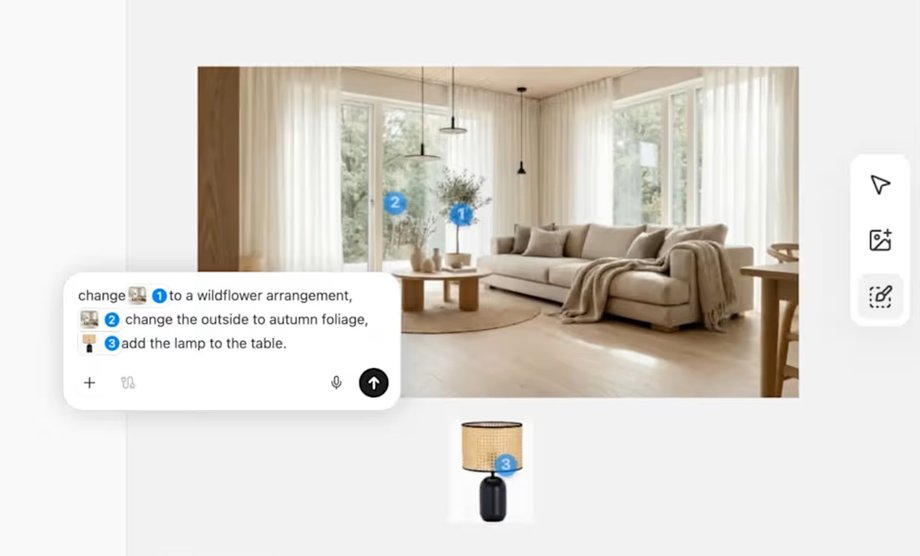
In Manus, we can, for example, select an element in a photo and ask to replace it with another one – just the description is enough, the AI will take care of the rest
|
Manus
In Instagram and Facebook, this agent layer naturally involves creating content and ads. Manus was described as a system that can go from research and idea to ready-made material, and even build websites or applications. In the Meta ecosystem, this may translate into more autonomous campaign preparation, from graphic design proposals, through the selection of formats, to generating variants and reporting results in the Meta Business Suite. From the perspective of small businesses – a group that Meta serves en masse – an agent could combine into one sequence what is done separately today. That is, a plan for content, responses to messages, ad settings and performance summaries. Usually, such work is done by marketing agencies or busy entrepreneurs who don't necessarily have time for it.
In WhatsApp, the potential is more operational. This includes: customer service, organizing and automating calls, preparing responses, collecting information for orders, and even performing activities on the company's side based on the conversation. If the agent is to actually complete tasks, WhatsApp can become not only a contact channel, but an interface for doing work – especially for businesses that conduct sales and support via the messenger anyway.
Read also: What to invest in in 2026. Ten companies with growth potential [GIEŁDA]
For regular users, the direction is simple. There will probably be less “let's talk about it” and more “just do it for me” within social media applications. Planning, comparing offers, preparing content, shopping or organizing events can switch from manual to semi-automatic mode, and Meta, having huge traffic and behavior data, can build this execution mode wherever the user spends his time.
However, this also gives birth obvious tensions. An agent that runs in the background requires deeper integration and access to context. This always raises questions about privacy, security, and control over what AI does on behalf of the user or company. The meta promises scaling and integration, but we still won't know what exactly supervision, authorizations and transparency of agents' actions will look like.
Author: Grzegorz Kubera, journalist of Business Insider Polska


