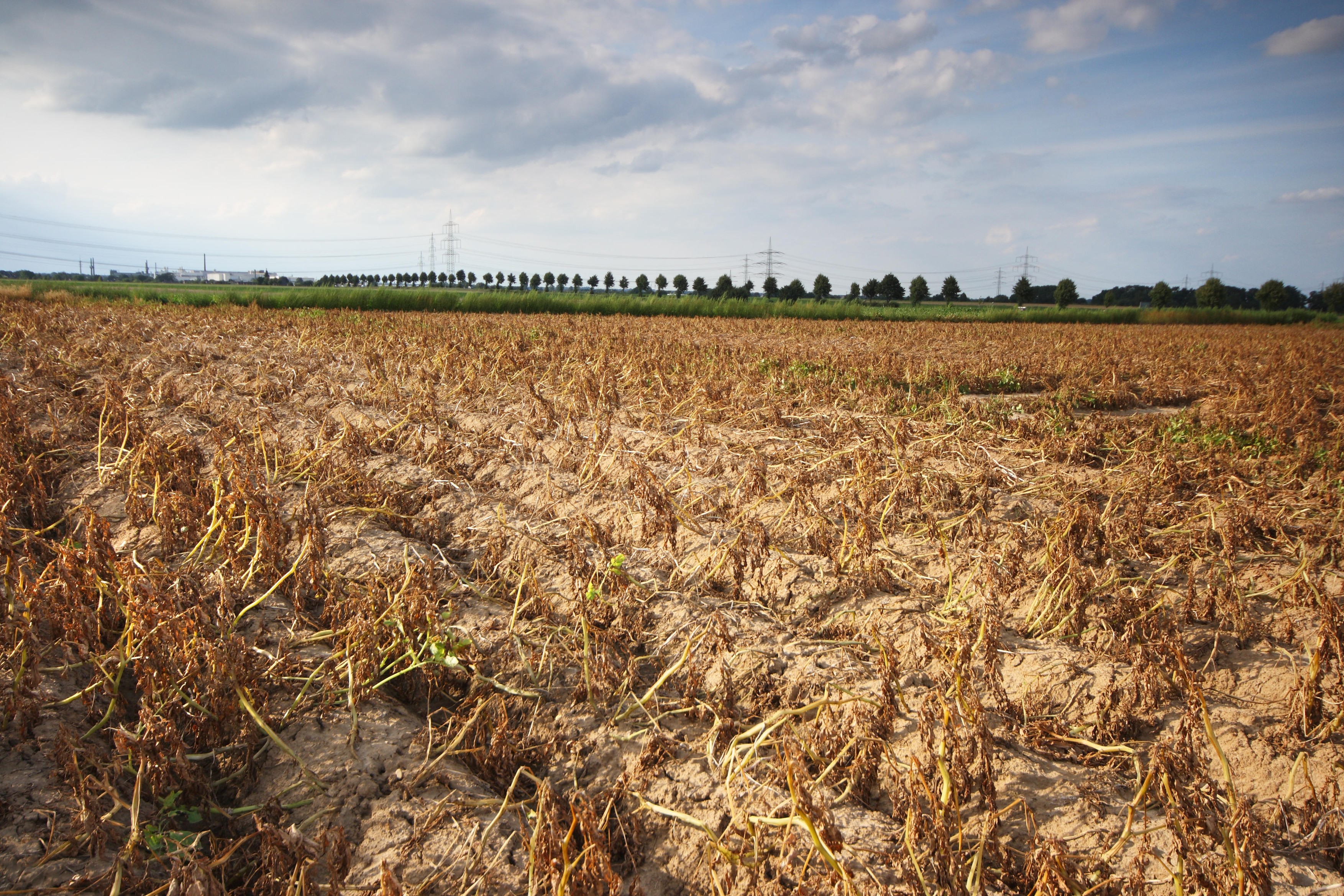
Drought. Credit line: Zoonar/Andre Bonn, Zoonar GmbH / Alamy / Profimedia
Every second, the continents lose a volume of fresh water equivalent to four Olympic swimming pools, a phenomenon with serious consequences for food security, ecosystems and economic stability, reports Science Alert, cited by Mediafax.
Earth's continents are losing fresh water at an alarming rate, according to a report published by the World Bank on November 4, based on 22 years of data collected by NASA's GRACE mission.
The World Bank report looks at changes in Earth's gravity caused by water displacement, supplemented by economic and land-use data from the past two decades.
The researchers found that the average annual loss of freshwater from the continents is about 3% of the global net “income” from rainfall. In arid and semi-arid regions, however, losses reach 10%, severely affecting areas such as South Asia.
Areas where agriculture is the main economic sector, such as sub-Saharan Africa and South Asia, are among the most exposed.
According to the report, drought shocks cut between 600,000 and 900,000 jobs annually in sub-Saharan Africa alone, particularly affecting landless farmers and other vulnerable groups. The effects are also spreading globally, as many countries depend on food imports from regions undergoing aridification.
The consequences are serious
Continental drought increases the frequency and severity of wildfires, especially in areas of high biodiversity. At least 17 of the 36 global biodiversity regions, including Madagascar, parts of Southeast Asia and Brazil, show steadily declining freshwater availability and increased fire risk.
The main cause of this phenomenon is the excessive extraction of groundwater, a poorly regulated sector globally. Amidst climate change, as soils dry out and glaciers retreat, the pressure on groundwater is ever-increasing.
The report shows that agriculture is responsible for 98% of the global water footprint. Improving water use efficiency for 35 key crops, such as wheat and rice, could save enough water to meet the annual needs of 118 million people.
Solutions include smart irrigation technologies, the use of artificial intelligence, crop relocation and stricter policies on groundwater extraction.