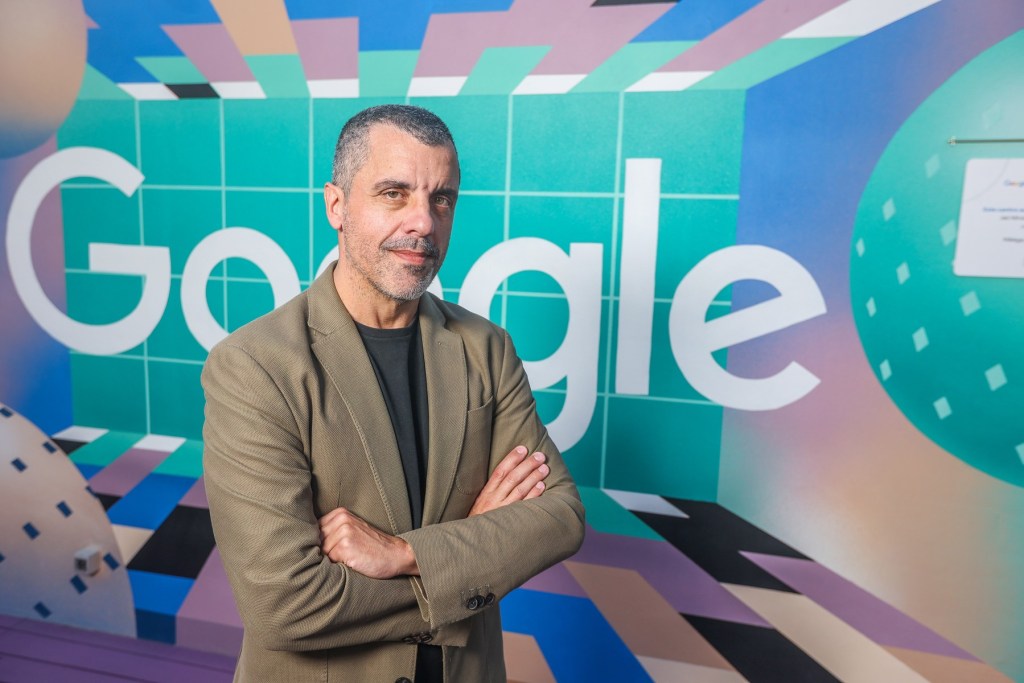
After 33 years, Bernardo Quintero decided it was time to find the person who changed his life – the anonymous programmer who created a computer virus that infected his university decades ago, reports TechCrunch.
The virus, called the “Málaga Virus”, was mostly harmless. But the challenge of defeating it ignited Quintero's passion for cybersecurity, which eventually led to the founding of VirusTotal, a startup that Google acquired in 2012.
That acquisition brought Google's flagship cybersecurity center from Europe to Málaga, turning the Spanish city into a technology hub. And it all happened because of a small malware created by a person whose identity was never known.
Motivated by nostalgia and gratitude, Quintero launched a search for the anonymous programmer earlier this year. He asked the Spanish media to write about his approach in the hope of getting some tips. He went back over the virus code, looking for clues he might have missed when he was younger. And he finally solved the mystery, sharing the bittersweet denouement in a message that went viral on LinkedIn.
A message hidden in a computer virus
The story begins in 1992, when the student Quintero was urged by a teacher to create an antivirus for the 2610-byte program that had spread on the computers of the Polytechnic School of Málaga.
“That challenge in my first year of college sparked a deep interest in computer viruses and security, and without it my path could have been very different,” Quintero told TechCrunch.
His quest was aided by his instincts as a programmer. Earlier this year, he stepped down as team manager to “go back to the cave in the basement of Google.” He didn't leave the company; instead, he returned to the skilled and experienced, without managerial responsibilities.
That exploration-oriented mindset also led him to reanalyze Virus Málaga and look for details he had missed years ago. First, he found fragments of a signature. With the help of another security expert, he discovered a later variant of the virus with a much clearer clue: “KIKESOYYO”. “Kike soy yo” would translate to “I am Kike”, a common nickname for “Enrique”.
What happened to the programmer who created the virus
Around the same time, Quintero received a direct message from a man who is now the general coordinator for digital transformation of the Spanish city of Córdoba. He claimed that he had witnessed the moment when one of his colleagues from the Polytechnic School created the virus. Many details matched, but one in particular stood out: The man knew that the virus's hidden message—called a payload in cybersecurity terms—was a statement condemning the Basque terrorist group ETA, a fact Quintero had never revealed.
The source then gave Quintero a name – Antonio Astorga – but also told him that he had died. The information was disappointing to Quintero; now he would never be able to ask Antonio about “Kike” again.
Still, he continued to follow the story line, and the twist came from Antonio's sister, who revealed that his first name was, in fact, Antonio Enrique. To the family, he was Kike.
Cancer took Antonio Enrique Astorga before Quintero could thank him in person, but the story doesn't stop there. Quintero's LinkedIn post shed new light on the legacy of “a brilliant colleague who deserves to be recognized as a cybersecurity pioneer in Málaga” — and not just because he helped Quintero discover his calling.
According to a friend, Astorga's virus had no other purpose than to spread his anti-terrorist message and demonstrate his programming skills. In a path that mirrors Quintero's own career path, Astorga's interest in IT persisted, and he became a computer science teacher at a high school that, in his memory, named its computer lab after him.
One of Astorga's sons, Sergio, is a recent software engineering graduate with an interest in cybersecurity and quantum computing—a connection with special meaning for Quintero. “To be able to now close that circle and see new generations building on it is deeply moving for me,” he told TechCrunch.
For Quintero, Sergio is “very representative of the talent being formed in Málaga today”. This is in turn a result of VirusTotal forming the basis of what would later become the Google Safety Engineering Center (GSEC) and driving collaborations with the University of Málaga that turned the city into a hub of cybersecurity talent.