“I watch less tennis now than before”+ how he sees the Alcaraz-Sinner rivalry and the retirement of Simona Halep


Horia Tecău (40 years old), retired in 2022, takes a look at world tennis, analyzing how it has changed in recent years and also talks about the complicated moment of this sport in Romania.
Horia Tecău, champion at Wimbledon and US Open in doubles and at the Australian Open in mixed doubles and Olympic vice-champion, dedicates himself to the development of his project “Mind, Set, Match” in which he tries to guide young players from all points of view, but especially of the mind. Non-playing captain of Romania's Billie Jean King Cup team between 2022 and 2025, Horia analyzed tennis worldwide and spoke about the delicate moment in which the tricolor is.
– Horia, how do you think tennis has changed in the last few years? The feeling is that some things have changed and then, a little individualizing, how do you think the change is in doubles, including the way it is treated, promoted or not promoted during this period?
– What I have noticed that has changed are the playing conditions, being very similar everywhere, they have created a playing modelr. It is very difficult to penetrate with a different style of play in these conditions, that is, to come and do, I don't know, serve-volley or to play more varied, more creatively, because you have to play a lot on strength, on hitting the ball. All players have improved in this aspect: move well, hit well on both sides, no weaknesses.
-And?
– I watch less tennis now than before. I used to like more to see variation, to see different styles, how they behave on different surfaces. Now you see about the same matches, on all playing surfaces, and including on grass, about the same pace of play, the same rallies, the same players. For me, the most interesting thing is to watch the confrontation between Sinner and Alcaraz.
– We were going to get there too…
– Who are the players out there who work to improve aspects of their game and come up with new things all the time, and it shows in the progress they make. I mean it's like they're pushing each other and adding variations to their playstyle to be better than the other, in addition to others who are just trying to do what they're doing, but do it better. And it's the only matchup I'm curious about when it comes up: OK, how will Alcaraz approach next year?
Horia Tecău: “Alcaraz and Sinner are brilliant”
– If you were to characterize each of them and lean, say, if you have any preference for one of them, like that, as a style.
– I like them both, personality, character. They both seem to me to be impeccable in terms of attitude, communication, presence, respect for the fans.
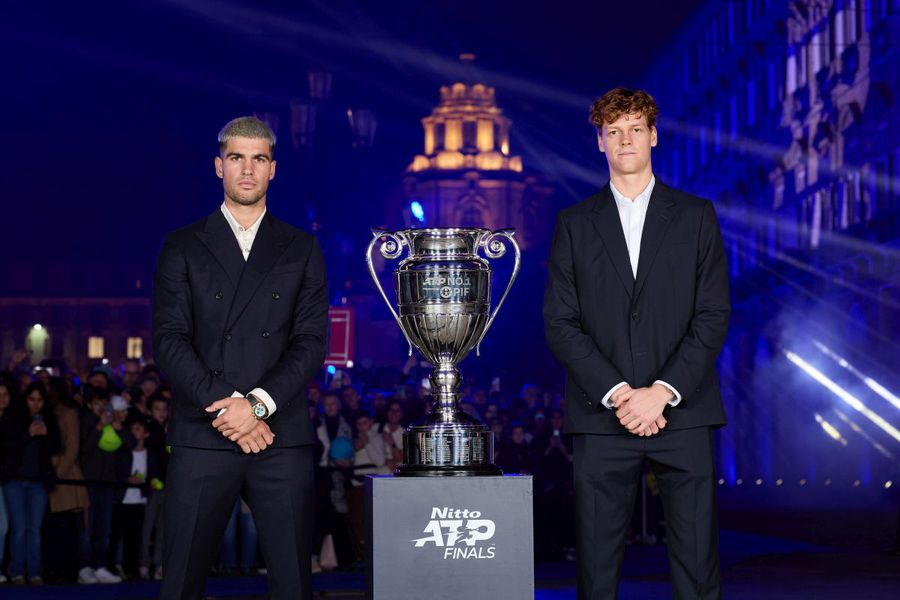
Carlos Alcaraz and Jannik Sinner/Photo: Guliver/Getty Images
– Very different indeed.
– I really like Alcaraz's creativity and rhythm breaks and the joy with which he plays, how he smiles and what he brings, it's brilliant. And on the other side, Sinner's elegance and his consistency, his discipline and the fact that he gets things right over and over again. And the way he approaches a defeat and how he is with the press, with his colleagues. Brilliant both. We always seem to want this rivalry to be balanced. I always want the loser to come back. Right now I see them like this, in perfect balance.

– Back to doubles…
– I notice a decline in the doubles game also through this lens. It's been happening for a long time, not now. That's because of the lack of promotion and attention for the doubles show, for the teams, for the doubles players. There was a time when they said they couldn't get promoted because they changed all the time, and then the teams stayed together longer and nothing changed. And then, slowly, slowly, the attention decreases. Maybe some big names in doubles have left the circuit and the interest has waned a bit. And when singles players play doubles, they may not have played with the greatest seriousness and intensity. Yes, it is, no, a bit sad to see such a decline and then discussions of making decisions that will impact the doubles event. It's not about changing something, creating something with more money. It's just a matter of promoting more.
– How did you think they did in mixed doubles at the US Open? Do you think it's for gamers?
– I like the idea of mixed. It's a show, it seems like a fun exhibition, and if it draws attention to tennis, to doubles, to mixed doubles, to doubles players, it helps. There were doubles players who won, it helps, but I wouldn't call it a Grand Slam. Plus not everyone has the chance to play, very few do. There are many players who played doubles, they played mixed doubles, they supported themselves from the awards there and there are players who are very representative in their countries and, to say, they inspire children, generations, they do things. And suddenly you cut their job to create resources, money, to make money for others. It doesn't seem like a decision made for sport; it's a different decision.
– Do you think that the retirement of two of the Big Three and the fact that we don't know how the third will evolve next year left a gap, or is it partially covered by the rapid creation of the Sinner-Alcaraz rivalry, which captured almost all the interest or is capturing all the interest now?
– From the way it can be seen that tennis is growing as an audience, sponsorships, tournaments, there is a great interest. This shows us that he occupied that place quickly. Lucky tennis, because they appeared now like this. And, once again, it shows us that the world forgets quickly. We quickly forget what Federer was like 15 years ago, what Nadal was like at Roland Garros. And it's like it's such a memory and it didn't happen until very recently. But tennis has shown us many times that we forget quickly.
Horia Tecau. “I think it's a reset moment for Romanian men's tennis”
– About Romanian tennis, how do you see it at the moment and what do you hope for the future?
– I believe that the best thing that is happening for Romanian tennis now are these tournaments, this circuit of tournaments that are played in Romania from April almost until October. You can play: 16-year-old juniors, 18-year-olds, seniors, challenger, both boys and girls. You've got the WTA 250, you've got the ATP 250, you've got a very consistent tournament schedule and that's going to help a lot of people grow in the coming years. Instead, there is a much, much smaller presence of those trying to move up to seniors.
– How so?
– Before we had, I don't know, 30–35 players who were constantly on the circuit and playing; now you have 15 or how many you have. You need this kind of tournaments: to know that you are playing at home, that you are playing at lower costs, that you have more opportunities. I think it's a reset moment, at least on the male side. There are some good juniors coming up, scoring ITF and they are there. And after that, when the transition to seniors is made, we know it's hard, we know you have to have patience, support, good information. There are several factors. I've noticed that there are fewer and fewer coaches who travel and take on that role of coach, to go on tours. These athletes are almost always thinking, OK, who can I go to tournaments with? They almost always have to go to an outside coach, because we have fewer and fewer coaches who travel full-time. To coach a player, you have to go with them, and that's 25–30 weeks a year.
– Did Simona's withdrawal surprise you? It was, on the one hand, not so surprising, perhaps surprising in that it was so sudden, let's say, the announcement came abruptly, during the Cluj tournament.
– Yes, I can't say that I was surprised. I felt that once she got some clarity on her case and she got confirmation that she was cleared of any intent, she kind of felt like, “OK, now she's clean,” and I think that's when she came to terms. I think it would have been difficult for him to go on the circuit again for 30 weeks, in his daily routine, after a very long period of time off. And somehow I admired the intention to continue and try one more time, try again, try again, but at one point I felt very at peace in Cluj and, after that, it was as if a burden was released.
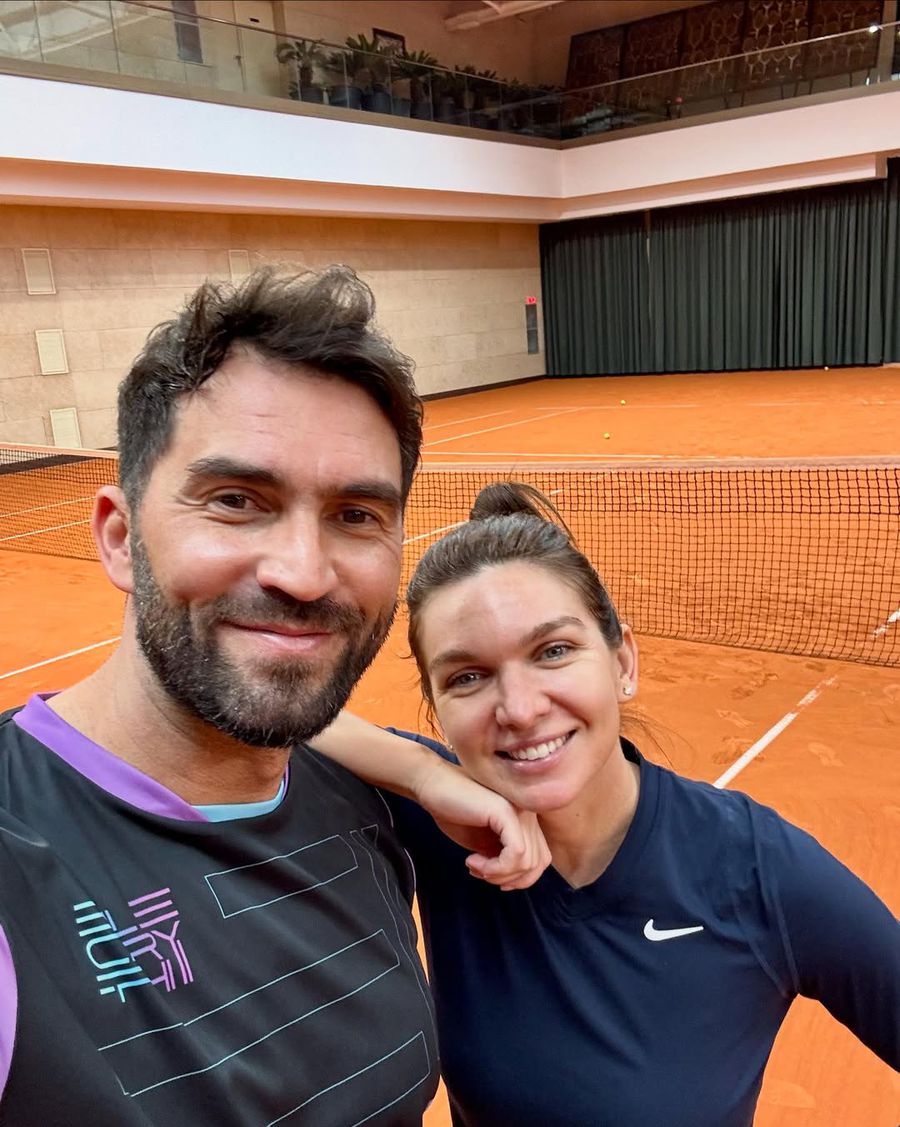
Simona Halep and Horia Tecau/Photo: Instagram (Horia Tecau)
– That was also our feeling when we talked a little with her in Iași, that she was serene and peaceful. And she also said that she found that the physical level now in the women's circuit is much, much different than a few years ago and that she, in the physical situation she was in, with the knee problems and so on, did not think she could cope at that level anymore. It seems that the women's circuit has also changed?
– Yes, yes. It seems to me that the average level has gone up and I can see it. Prizes have increased, more players can hire specialists to keep their bodies healthier, more prepared. These services are now very constant in everyone's teams. When we were playing, I think it was such a bonus to have people with you, more than a coach. Now with that, everybody trains, everybody progresses, they keep their bodies fit, they have consistency, they are longer in the sport and many young people are coming up. Watching women's tennis more in recent years to prepare for the team, I have seen a high level of play from players outside the top 100. And we have very good players who can beat top players at any time, and good juniors who show potential and are on a good path.
Horia Tecau. “It was a generation that did things right”
– Sorana announced her retirement for the upcoming season and possibly Irina as well. A prodigious generation ends, but in the end, all things have an end. What did it mean for Romanian tennis, even if it may not have been the fruit of a plan that would have led to the appearance of these important players? It was a generation that offered a lot to Romanian tennis. How do you feel?
– Really yes. Looking at this aspect, we see what a valuable generation, present, long-lasting, with consistent results. i think that our generation was inspired, motivated by the generation before it. They showed us that it could be done and I think we showed each other that it was possible. We are there together, in constructive competition, and that has somehow broken down now on the male side, because there is no one present there to show the way and show that it can be done. You have to look back a bit to see that.
– You were a very good generation…
– Yes, clearly, it was a generation that did things well, I would say, in their teams. And we are talking about coaches, involved parents. To remain as a model, as a “can do” and that it's not that hard. Many people have the impression that it is very, very difficult and give up, when in fact you have to do things well, constructively, constantly, with small, constant steps. I don't think I've done any, I don't know, major changes, some extraordinary stuff. We were simply there, with discipline, constancy, with teamwork, with desire. We wanted to prove and fulfill our dreams. We felt like a circuit. You feel it when there is a presence on the boards, it is felt around, for everyone: for the fans, for the sponsors. It feels where are you from From Romania? Romania had many players on the board, and that had an impact.