Growing up Catholic in the Netherlands, I witnessed what seemed like the irreversible process of secularization and the growing de-Christianization of European society. I never expected that these trends would stop or reverse in my lifetime. And yet, that's exactly what I'm seeing today – not as a massive, noisy movement, but rather a quiet but determined rediscovery of the Christian faith and its rich tradition by still relatively small but rapidly growing groups of mostly young Generation Z people.
The best indicator of these changes is the systematic increase in the number of baptisms of youth and adults in Western countries over the last decade.This year's Easter Vigil in my hometown in the province of North Brabant attracted a large crowd. The church was packed with people of all ages and stages of life,and we also celebrated the baptism of 10 young adults. The numbers were even greater in Catholic churches in larger cities, especially Amsterdam. Such scenes were simply unthinkable in my youth, and even a few years ago, when churches were emptying and many of them were closed forever. Now the same revival trend can be seen throughout Europe. Is this renewal permanent?
The statistics are impressive. Over the last ten years in France, the number of baptisms of youth and adults has increased by 160%. In 2024 alone, 17,800 French teenagers and adults were baptized – a 45% increase. more than in 2023. In the UK in 2024, the highest number of adult baptisms in over a decade was recorded, and the participation of people aged 18-24 in services increased from 4%. in 2018 to 16 percent in 2024. In Austria, the number of baptisms increased by 85%. between 2023 and 2024
These data may be surprising. Public discourse in Europe and especially the political climate – with few exceptions – it remains decidedly post-Christian, even anti-Christian at times. The Vienna Observatory on Intolerance and Discrimination against Christians in Europe, conducting detailed and meticulous research since 2005, documents patterns of discrimination that receive little public attention.
The article continues below the video
Over the last 20 years, discrimination and marginalization of Christians in Europe have been systematically increasing, and an increasing percentage of these cases involve violence. For example, few mainlanders realize that in 2024, nearly 100 arson attacks on Christian churches were recorded — that's almost twice as much as a year earlier. One third of these intentional acts of vandalism occurred in Germany alone.
So, if we look at these two seemingly contradictory processes, rebirth and regression, what can we expect from the role of Christianity in European society in the coming years? Was Christianity written off too early, or is its decline still irreversible? Do Christians who live their faith still have a role to play in society?
Christianity survived years of persecution
The first answer to these questions lies in the past. Even though Christianity was the most persecuted religion for centuries – whether by Roman emperors in the first centuries after Christ or today by Islamists and communists – it not only survived, but ultimately flourished. The number of Christians in the world continues to grow significantly. Between 1990 and 2024 alone, their number increased from 1.9 billion to 2.6 billion, with the largest increase recorded in Africa.
This means that a small group of 12 people who followed Jesus over 2,000 years ago grew into the largest religious movement in the history of mankind. This happened despite the strenuous efforts of various regimes and ideologies— throughout history up to the present day — to eradicate the message of the Gospel and push its followers to the margins. Poland provides a telling example. During the post-war period of totalitarian communist rule, the regime made every effort to weaken, discriminate and persecute Christians and the Catholic Church.
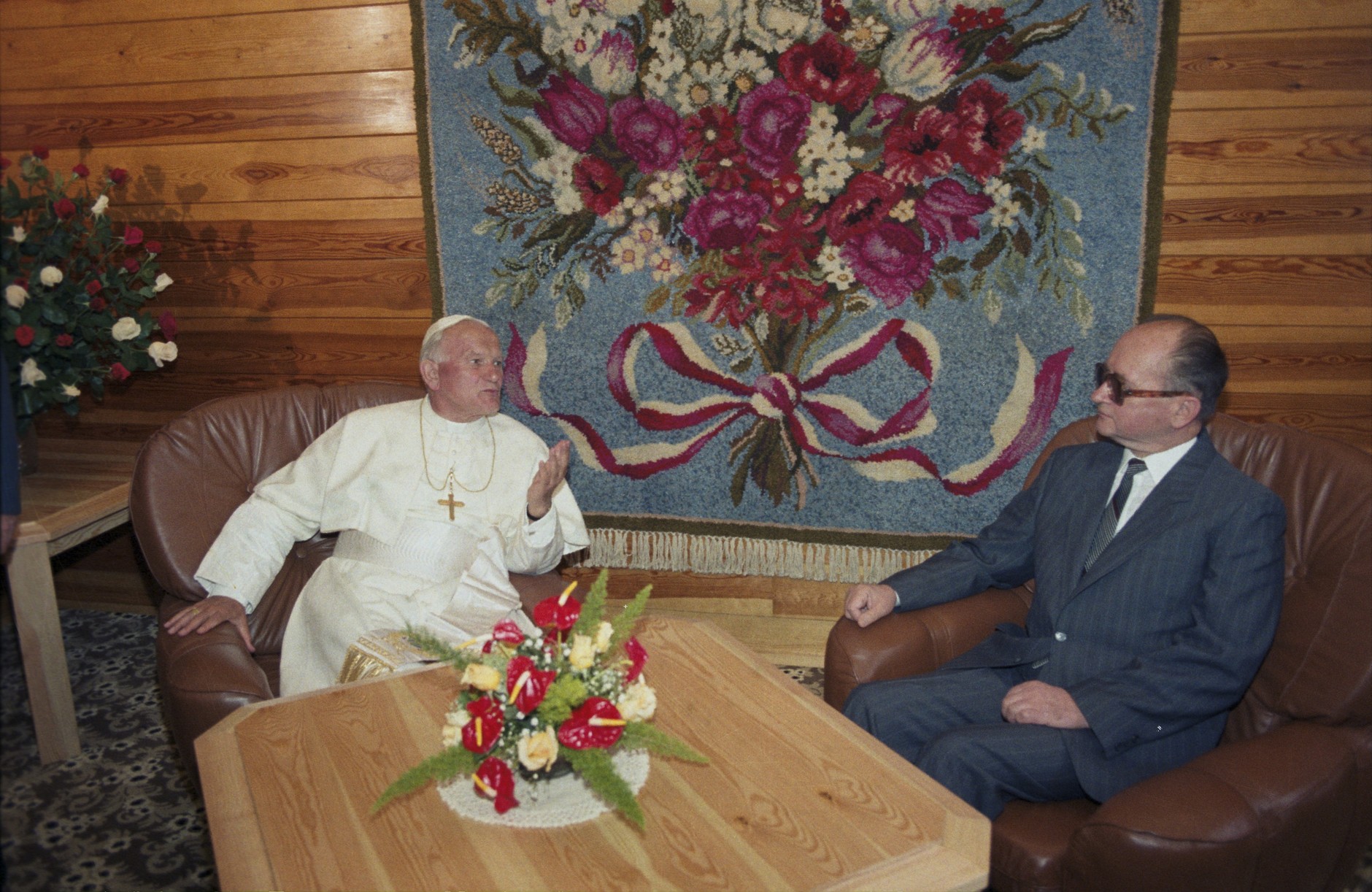
Despite this, the Church in Poland remained a force to be reckoned with and which did not give in to pressure. Pope John Paul II also came from the Polish Church, and after his election in 1978, he became the most serious opponent of communism in Europe. He was one of the main architects of the overthrow of the Iron Curtain in 1989, after the peaceful liberation of Central and Eastern Europe from the communist yoke.
Pope John Paul II and General Wojciech Jaruzelski. Warsaw, June 14, 1987PAP/Grzegorz Roginski / PAP
The second answer to these questions can be found in the brilliant words of Pope Benedict XVI, spoken during a historic speech at the Bundestag in Berlin in September 2011, when he noted:
How to recognize what is right? Throughout history, legal regulations have almost always been justified on religious grounds: what is right among men is decided by reference to the Deity. Unlike other great religions, Christianity has never imposed revealed law or legal regulations derived from revelation on the state and society. Instead, it referred to nature and reason as the true sources of law – it referred to the agreement between objective and subjective reason, to an agreement that, however, assumed the existence of both, arising in the creative Mind of God.
This means that the Christian tradition has to offer Europe not just one of many religions, butA strong foundation in nature and understanding as the guiding principles. This has been the basis of success for many centuries. The Christian message, according to Benedict, does not impose a new system of government – as Islam does, for example, through Sharia law – but emphasizes the need to base actions on the created order in which we live as humans and on the constant use of reason.
The concept of human dignity, enshrined in the European legal system after World War II but reaching much further into the past, arose from this fundamental understanding of what humanity is. Christianity in Europe will maintain this concept for generations to come.
Young people are looking for a coherent message that gives hope
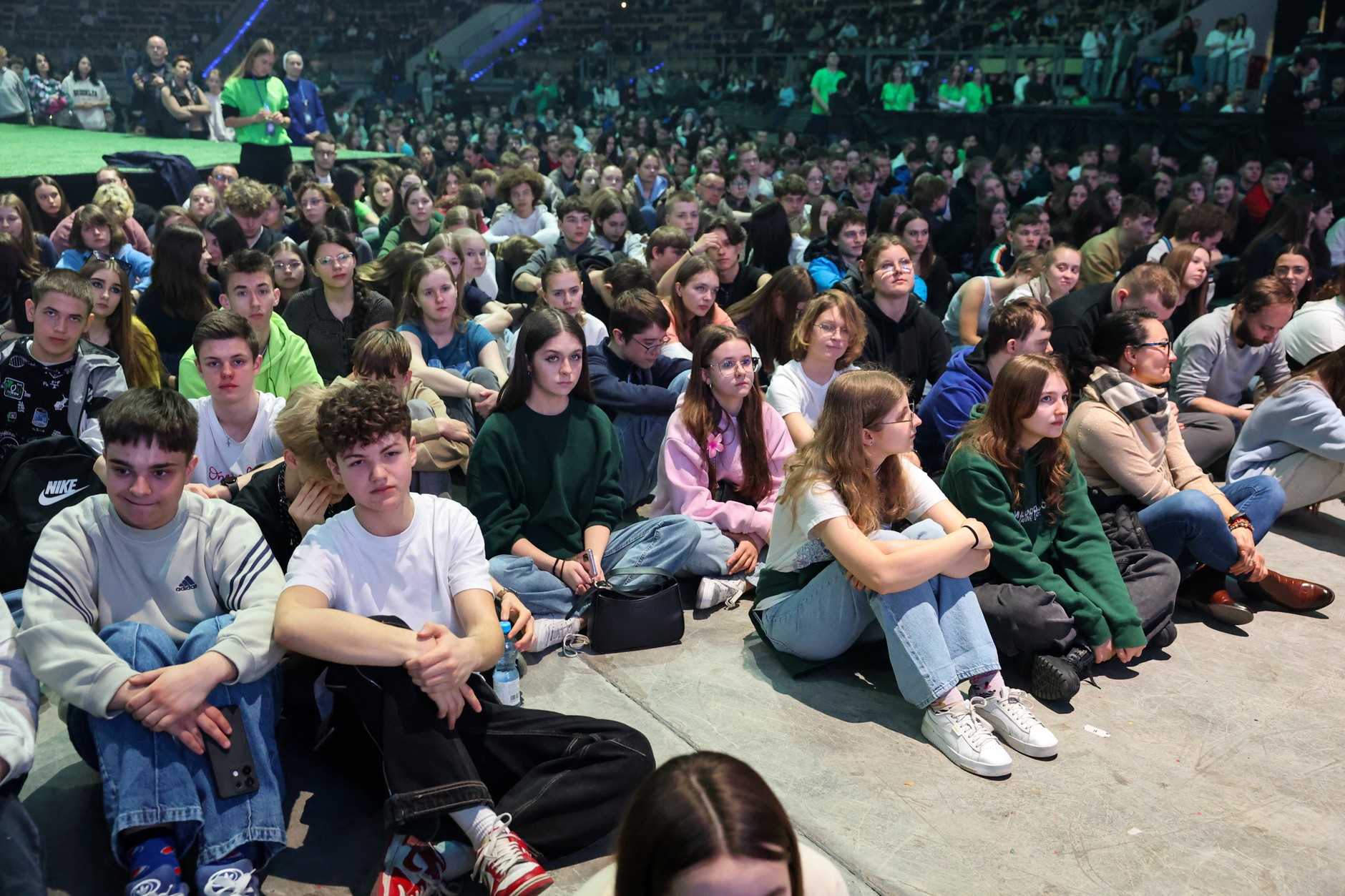
The third answer to these questions can be found not in the growing number of political parties and movements in the West that often instrumentalize “cultural Christianity” for their own purposes, but rather in the observation an ever-growing group of young people who are no longer attracted to the loud, ideological orthodoxies of modern times.
Young people gathered for an evangelization meeting with Cardinal. Grzegorz Ryś, then metropolitan of Łódź, in Atlas Arena. Łódź, May 7, 2025PAP/Marian Zubrzycki / PAP
These intrusive ideologies make the meaning of life dependent on the fulfillment of every whim, need or feeling, and constantly present every person or group that has suffered harm as an eternal victim. More and more young people see that such ideologies do not bring fulfillment or happiness, but lead to violence, despair and loneliness. Instead, they are looking for a coherent message that gives hope, provides a coherent moral framework, and offers community and a sense of belonging.
Increasingly, they find this in the Christian tradition – through its sacred, timeless texts and liturgy, its sense of beauty, and its constant call to personal responsibility for our lives and for those entrusted to us. In Christian churches and schools they meet people who have understood the message of a joyful life of service, mercy and sacrifice. In the words of the great statesman and Pope St. John Paul II discover the liberating idea of true human freedom: “freedom does not consist in doing what one wants, but in having the right to do what one should.”
These three answers are just some of the clues to how Christianity is enduringly resilient and unchanging in its message will continue to shape Europe's future. To illustrate this, just look at the enormous role that Popes John Paul II, Benedict XVI, Francis and Leo XIV have played in recent decades – far beyond the scope of the Catholic Church.
Despite many claimed economic and political successes, Europe still desperately needs moral clarity amid the self-made ruins of moral relativism, war and overregulation – the latter a dramatically failed attempt to plug the huge gap left by moral relativism replacing common sense with conformism.
The future of Europe and its democratic institutions, the rule of law and prosperity will be decided not by moralizing bureaucrats from Brussels, but by the dignity of life, the sense of justice and the deep understanding of true freedom that are carried in the hearts, minds, families and developing communities of millions of Europeans – those who have not renounced their Christian identity and are finding solace and inspiration from it again.
I’m Ashley Davis as an editor, I’m committed to upholding the highest standards of integrity and accuracy in every piece we publish. My work is driven by curiosity, a passion for truth, and a belief that journalism plays a crucial role in shaping public discourse. I strive to tell stories that not only inform but also inspire action and conversation.