He did what Trzaskowski failed to do. The President of Romania on Europe, Trump, Ukraine and Russia


Since the great disrupter of international norms returned to the White House in January, it has become clear how little he really cares about Europe. Some of his key aides are downright hostile.
The US president has drastically reduced financial and military support for Ukraine, imposed tariffs on the European Union and attacked its leaders as “weak”. His administration is now campaigning to interfere with European democracy, support “patriotic” parties, and shift policy toward MAGA's anti-immigration goals.
For leaders such as the moderate president of Romania, the constant dilemma is how much Trump's priorities can be accepted – because Europe still needs America – and how to firmly resist his hostility towards centrist European values. Does a true transatlantic alliance still exist?
“The world has changed,” says Dan in an interview from his penthouse suite in a Brussels hotel. — We have, in a sense, moved from a moral way of doing things to a very pragmatic and economic way of doing things.
He says EU leaders understand this change and are now focusing on development practical strategies for functioning in the new reality of Trump's world. Centrist politicians will need to take into account a concerted effort by Americans to support their right-wing, populist opponents as the United States tries to change the direction of Europe.
The article continues below the video
Administration officials such as Vice President J.D. Vance have condemned last year's election cancellation in Romania, and the new White House National Security Strategy indicates that the U.S. will seek to subordinate European policy to MAGA's anti-immigration goals.
Dan believes that American politicians have the right to express their opinions. However, the problem would arise if if the US tried to “influence” politics in an “undemocratic” way — for example, by paying for utilities in European countries, “just like the Russians do.”
Weak Europeans?
Relations with America are crucial for countries like Romania, which, unusually, remained relatively open to the West during four decades of communist rule. Romania, located on the EU's eastern border and neighboring Ukraine, hosts a large NATO base (soon to be the largest in Europe) as well as a US missile defense site. However, the Trump administration announced the withdrawal of 800 US troops from Romaniawhich caused anxiety in Bucharest.
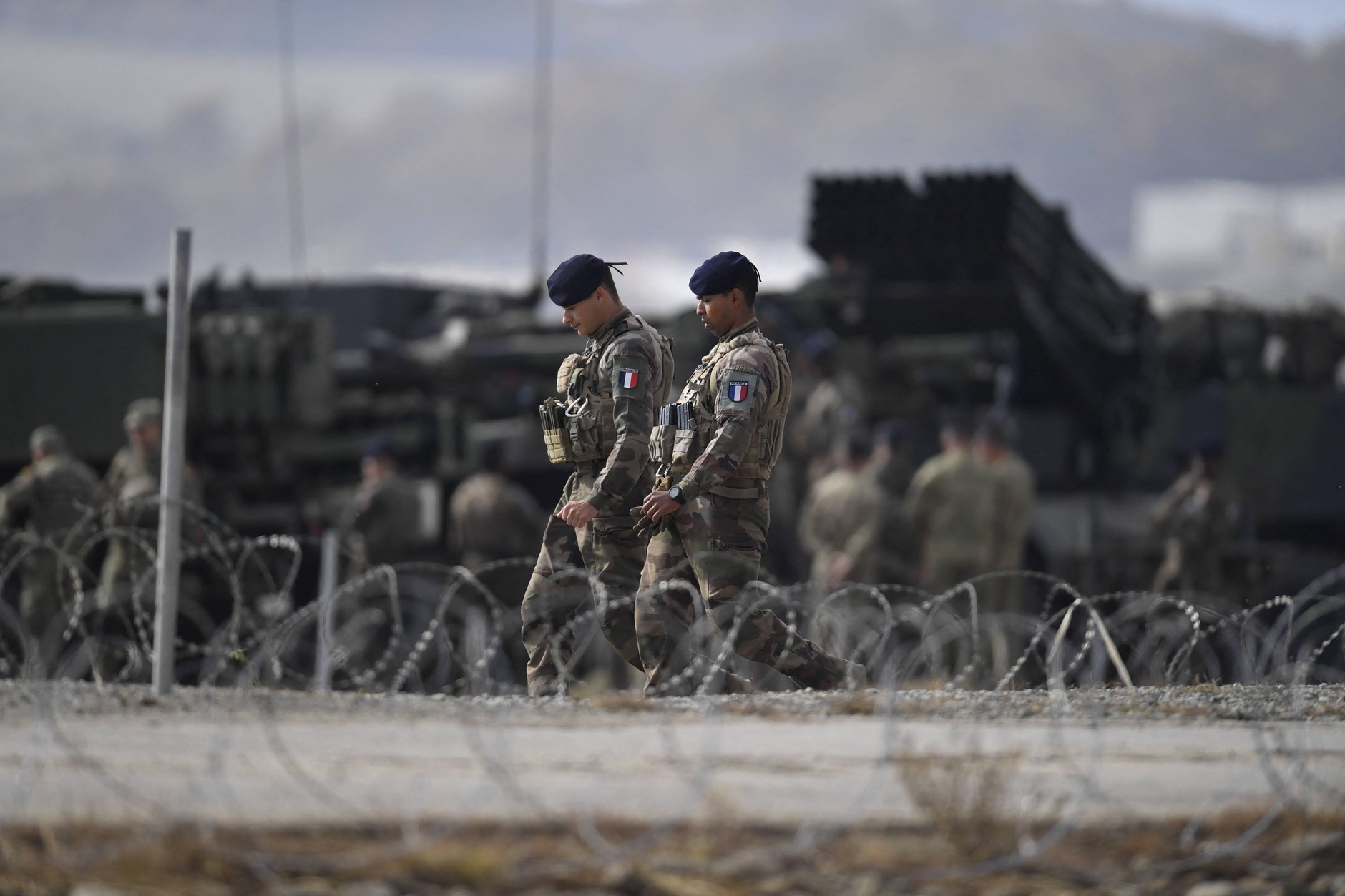
“Dacian Fall” exercises at the NATO military base in Cinc, October 30, 2024.Alex Nicodim / Anadolu/ABACAPRESS.COM / PAP
Dan argues that Europe and the USA are natural allies because they share more values than any other regions in the world. He believes that “the right partnership” will be possible — “in the medium term.” But for now, “we are in a kind of transition period where we need to understand each other better.”
Dan's honest assessment shows how much the transatlantic bond has been damaged this year. Trump has introduced uncertainty into all aspects of the Western alliance — even to resuming relations with Russian leader Vladimir Putin. Sometimes Europeans didn't know how to react.
Does Dan agree with Trump, who told POLITICO this month that European leaders are “weak”? “Yes,” Dan admits. There is “some truth” in Trump's assessment. Europe can be too slow in making decisions. For example, the agreement on financial support for Ukraine was reached after months of disputes and a stormy summit in Brussels, which ended at three in the morning. But, most importantly, even in a divided EU, an “important decision” was finally made, he adds.
This decision to take out common EU debt of EUR 90 billion [ok. 380 mld zł] for a loan to Kiev, which is in financial difficulty, will allow Ukraine to continue its fight against Putin for another two years.
Waiting for peace in Ukraine
According to EU leaders who support this plan (Hungary, Slovakia and the Czech Republic will not participate), it makes a peace agreement more likely because sends Putin a signal that Ukraine will not collapse if he waits long enough.
But Dan believes the end of the war is still a long way off, despite Trump's insistence on a ceasefire. “In the short term, I'm more of a pessimist than an optimist,” he says. Putin's side does not seem to be striving for peace: – They believe that peace in two or three months will be better for them than peace now. That's why they will keep fightingbecause they are making minimal progress on the front.
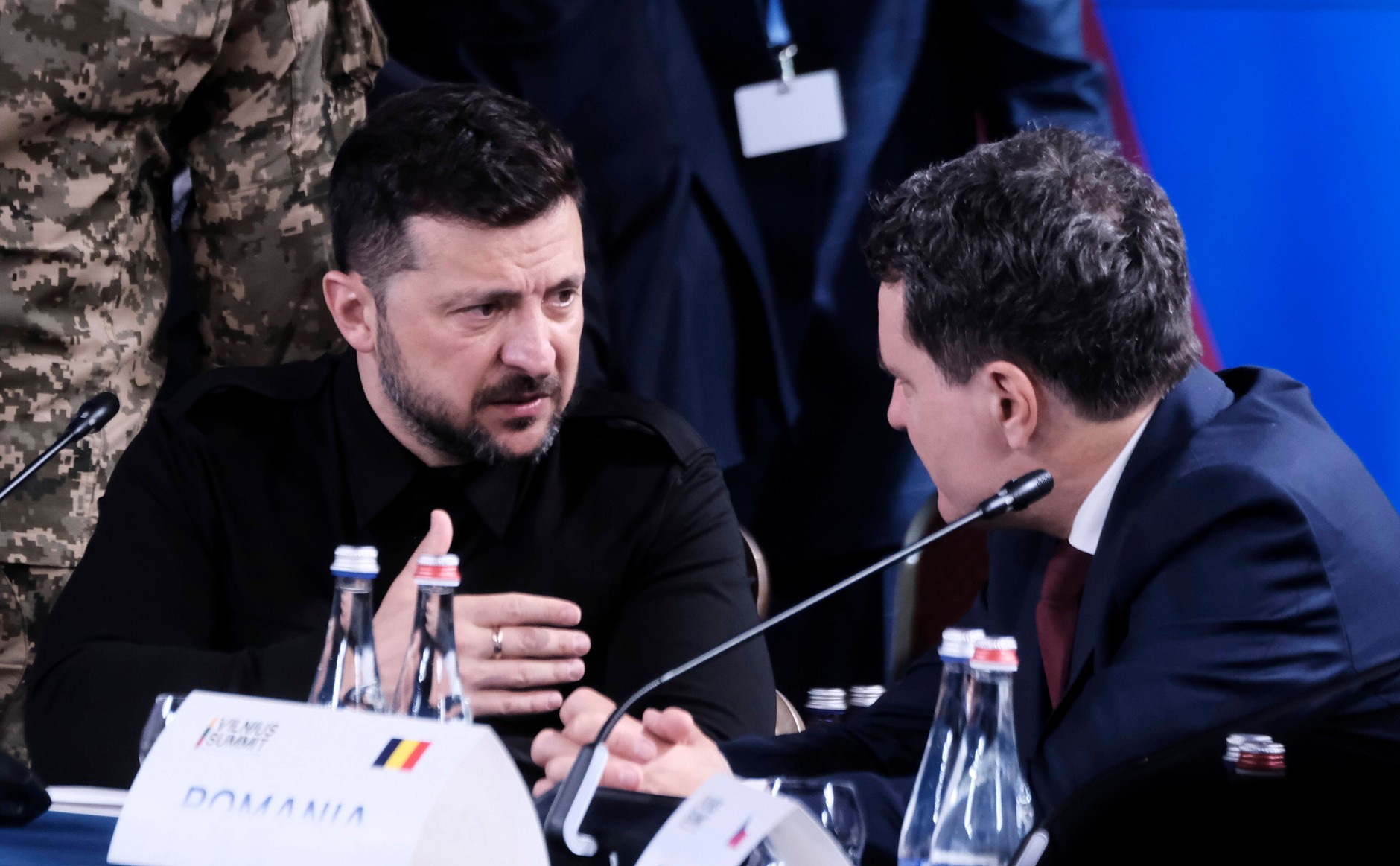
Volodymyr Zelensky, President of Ukraine, talks with Nicusor Dan, President of Romania, during the Bucharest Nine summit. Vilnius, June 2, 2025EPA/VALDA KALNINA / PAP
Ukrainian President Volodymyr Zelensky said at last week's European Council summit that he would like Trump to put more pressure on Putin to agree to a ceasefire. Does Dan agree with this?
– Of course. We support Ukraine. – he replies. But, as he points out, Trump's “very strong” recent sanctions against Russian oil companies, Rosneft and Lukoil, are already bearing fruit. He also welcomed Trump's commitment to peace and America's new willingness to provide security guarantees designed to strengthen the final agreement.
It's clear that Dan doesn't want Putin to take over the entire Donbass region in eastern Ukraine, but does not intend to tie Zelensky's hands. — Any peace in which the aggressor is rewarded in some way is not good either for Europe or for the future security of the world. But the decision about peace rests solely with Ukrainians. They are suffering the most, so we cannot blame them for any decision they make, says Dan.
Romania plays a key role as an operational center for the transfer of supplies to neighboring Ukraine. Thanks to the Black Sea port in Constanta the country will be of strategic importance for future peacekeeping operations. Ukrainian soldiers are training in Romania, and this country is already cooperating with Bulgaria and Turkey in demining the Black Sea, as Dan emphasizes.
Meanwhile, Russian drones have violated Romanian airspace several times since the beginning of the full-scale war, and recently a village on the border with Ukraine had to be evacuated when drones set fire to a gas tanker. However, Dan downplays the threat.
— We had several drones. We are sure that they were not intentionally directed to our territory. We are trying to convey to our citizens that they are not in any danger, he says. Despite this, Romania is increasing its defense spendingto discourage Russia from attacking.
Corruption and crisis of confidence
Dan, 56, won the presidential election in May this year at a tense moment for the country of 19 million people. The moderate former mayor of Bucharest, contrary to expectations, defeated his populist rival, skeptical of Ukraine. This year, the vote was held again after the first attempt to organize presidential elections was canceled in December last year. due to reports of massive Russian interference and illegal support for far-right favorite Calin Georgescu. There are ongoing court proceedings, including charges against Georgescu and others of attempted coup d'état.
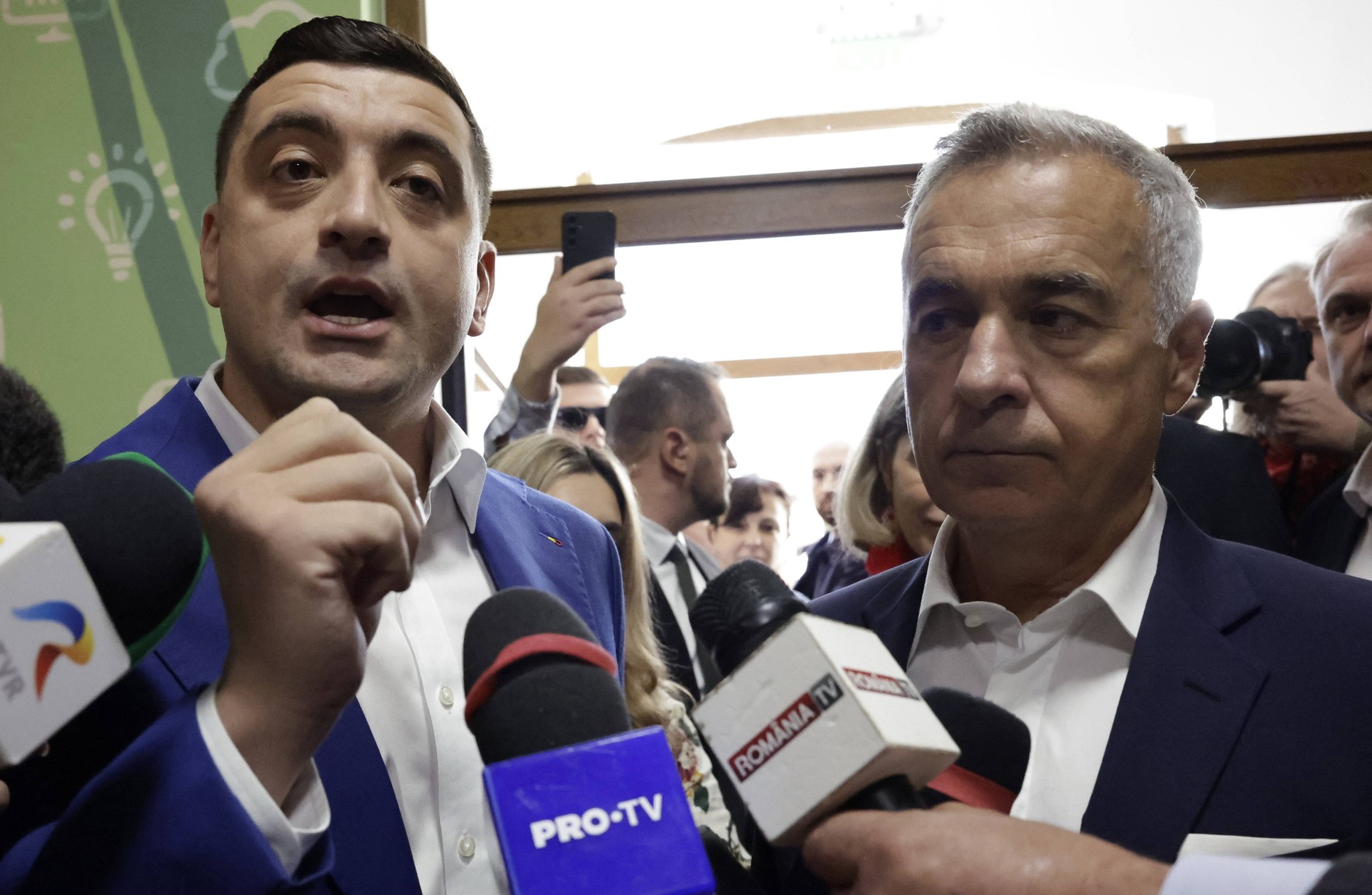
George Simion, candidate of the Romanian far right in 2025, accompanied by Calin Georgescu, who was banned from running. Mogosoaia, May 18, 2025EPA/ROBERT GHEMENT / PAP
For many Romanians the cancellation of the 2024 elections only deepened cynicism towards the entire democratic system in the country. They expected changes, and almost half of the electorate supported the far right to force them.
Corruption remains a serious problem in Romania, and Dan has made restoring voter confidence his main goal. In the first six months of his term, however, he focused on painful and unpopular cuts in public spendingto bring the EU's largest budget deficit under control. “We haven't done much to address society's biggest problems, starting with corruption,” Dan admits.
However, as he assures, this is about to change. A recent television documentary about alleged corruption in the courts sparked street protests and a letter of opposition signed by hundreds of judges. Dan is meeting with them this week and then intends to work on reformswhich will ensure that the best judges will be appointed to the highest positions thanks to their own merits, not their connections. “People at the top of power work for small networks of interests, not for the public good,” says Dan.
It also makes it clear that the state has not yet sufficiently explained to voters why last year's elections were canceled. He adds that more details will be revealed in the report, which is expected to be published in the next two months.
How to defeat populism and Russian disinformation? Nobody knows a universal recipe
One thing is clear today: Russia's attack on Romanian democracy — including a large-scale influence campaign on TikTok — was not isolated. Dan says that his country has been a target of Moscow for a decadeand other European leaders admit that they themselves are victims of similar disinformation campaigns and sabotage today. No one has a solution to the flood of false information on the Internet.
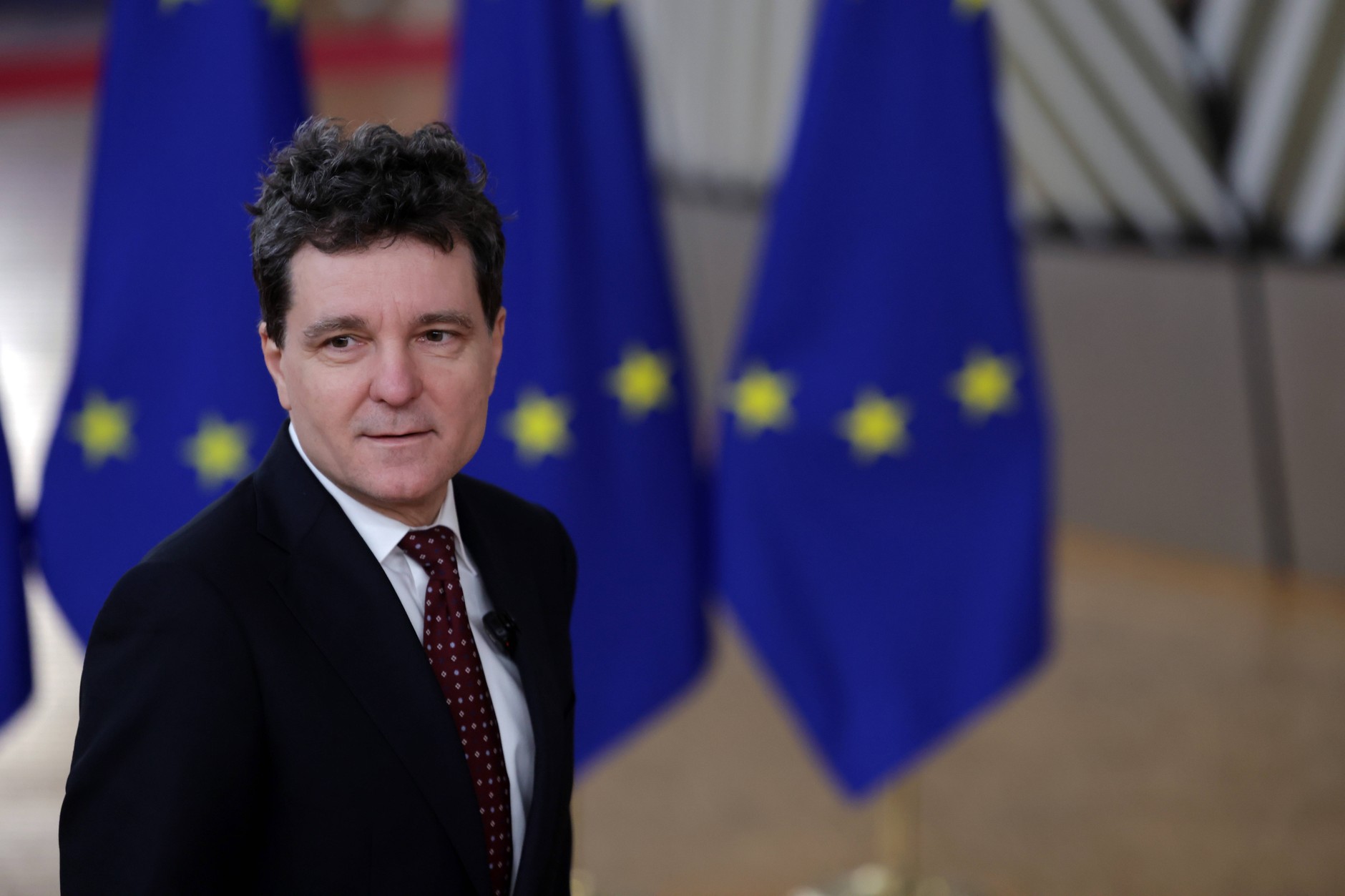
Nicusor Dan, President of Romania at the EU Council summit. Brussels, 18 December 2025Epa/OLIVIER MATTHYS / PAP
— I'm just talking to leaders of countries that are much more advanced than us and I think that no one knows a fully effective answer Dan said. — If such “information” reaches half a million people, even if it is corrected the next day, it is already too late.
The far-right populist party Alliance for the Unification of Romanians (AUR) is leading in opinion polls with around 40 percent support, reflecting similar trends in other European countries. Dan, who defeated AUR leader George Simion in May, believes that his own team must be closer to the people to defeat populism. And it is a pity that national politicians in Europe blame Brussels for all unpopular decisions, because this only fuels support for populist slogans.
Dan emphasizes that learned that EU politics is in fact a democratic processin which individual member countries present their own ideas. — After six months of experience, I can say that it's really a debate. There is no bureaucratic “ruler” who arranges everything. This is democracy. It's a shame people don't feel it directly, Dan added.
What about those marathon EU summits that keep everyone working long past midnight? “The topics are well chosen,” admits Dan. — But I think the debates are a bit too long.