Behind the scenes of the birth of Putin's system. From the fight against communism to the fight against freedom. “Dictatorship was in the air from the beginning” [WYWIAD]
Aleksandr Baunov is a Russian political scientist, publicist and an internationally respected analyst of Russian and post-Soviet politics. After several years of working in diplomacy, he moved to journalism and political analysis. Currently, he is a senior analyst at the Carnegie Russia Eurasia Center in Berlin, where he mainly deals with Russian foreign policy, the country's internal situation and Putin's power system.
WELT:In the years 1999–2003 you were a diplomat in Athens. At that time, Boris Yeltsin stepped down as president, and in 2000, Vladimir Putin took power. How did you perceive it then?
Aleksandr Baunov: Nobody knew Putin. The fact that he became president was a surprise to everyone. When he came on a state visit to Athens, he said that Russia had a traumatic experience of totalitarian dictatorship behind it – and that is why it is now immune to it. I wrote this speech. And when I returned to the country in 2003, I found a completely different Russia. She really has completely changed.
Of course! Why do you think Putin was so appreciated? People suddenly started having money. I saw the life of a normal European country.
In the first years of his presidency, Putin sent signals of readiness to cooperate with the West. It's hard to imagine it today. What happened? Was the confrontation with the West planned from the beginning?
Absolutely not. When Putin became president, he did not plan either a war with Ukraine, a long-term rule, or Russia's economic dependence on China. A complete severance of relations with the West was unthinkable then. But there was a plan – by Yeltsin. He had many enemies and was afraid of retaliation from the communists. Intellectuals and much of the newly established Russian business class also feared a communist return to the past. Yeltsin was therefore looking for a successor who would guarantee his personal security after his departure. It was Vladimir Putin.
Western journalists associate Putin almost exclusively with his past in the secret services, but it was not that important. In the KGB he was a supporting figure – a lieutenant colonel of counterintelligence, not in Berlin but in Dresden, where little was happening.
He was rather a failure. It was said that his wife kept reminding him of this and he hated her for it. Yeltsin chose him for other reasons: Putin was the deputy of the mayor of St. Petersburg, Anatoly Sobchak, one of the greatest advocates of the free market and democracy at the time.
He was the “lesser evil”, inconspicuous enough not to arouse resistance, and compromising enough for everyone to accept.
It's hard to believe today that Putin grew up in such a democratic environment…
His views at that time were deeply pro-Western. He wanted to join the World Trade Organization and had nothing against a democratic Russia. He understood that the closed Soviet system and its economy had failed, while democracy had ensured victory for the West in the Cold War. However anti-Western his course later became, he still protects capitalism today. Dictatorship and capitalism can function hand in hand.
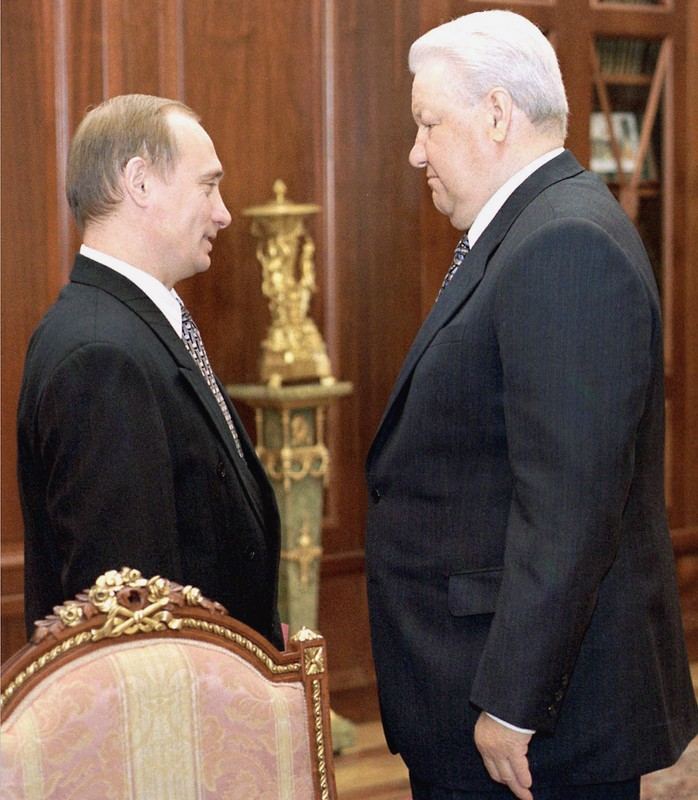
Vladimir Putin, then Secretary of the Security Council of Russia and Director of the Federal Security Service, and Russian President Boris Yeltsin at the Kremlin in Moscow, Russia, May 19, 1999.ITAR-TASS POOL / AFP Photo by ITAR-TASS POOL / AFP / AFP
How the West became the enemy
So he did a lot of things right at the beginning?
Economically, Putin has succeeded. Russia's GDP grew by seven percent annually and was praised as a modernizer. He was also brazenly lucky – oil prices skyrocketed shortly after he came to power. At the same time, he dealt harshly with Chechnya; internal security was the common denominator for all political groups. Programs were carried out to bring Russia closer to Europe.
I am convinced that his stay in Dresden inspired him to some of the reforms. For example, he switched the country from vodka to beer. The Soviet Union was living with a permanent hangover. Putin saw Germany – everyone drank beer there, the economy worked, factories worked. The average Russian associates Germany with good beer, solid cars and wealthy retirees. He wanted the same for Russia. And then, after eight years, he resigned – in accordance with the constitution. It was crazy.
So what ultimately went wrong?
Russia turned into a fascist dictatorship. I believe there has been what I call “accidental autocratization” – a chain reaction. Dictatorship was in the air from the beginning. Many wanted to catch up with the West as quickly as possible, and the newly overthrown communism was perceived as a threat.
People thought that communism depraved people, took away their independence and left them with paternalistic nostalgia: there was a state “protector” who gave everything away for free. They feared that the numerous communists in parliament would block the construction of a modern Russia along Western lines.
It was even said – even in progressive circles – that Russia needed its Pinochet, who would build effective capitalism with an iron fist. Coupled with threats from organized crime and terrorism, this “accidental autocratization” has begun. The country saw more and more enemies that, in his opinion, had to be fought.
First it was communists. Then the oligarchs, some of whom began to engage democratically, finance parties and build a parliamentary base. This was also considered a threat. As a result, the fight against the oligarchs began. This, in turn, did not like the media – so they were considered a threat too. The restriction of press freedom outraged liberals, and when their rights began to be restricted, the West did not like it. And before anyone knew it, the West was also declared an enemy.
So the threat of communism turned into a threat from the West?
This is what “accidental autocratization” is all about. They wanted capitalist modernization and a Russia functioning according to Western standards. But in the process of achieving these goals, all these standards were broken along the way. The final break came in 2012, when Putin returned to power. It was a transition from an authoritarian modernizing dictatorship to a repressive dictatorship.
Unused pressure tools
Since then, Russia and the West have become increasingly distant. Today, relationships are in an unprecedented crisis. Could this have been prevented? What did the West do wrong?
When Putin was re-elected in 2012, it was clear that this man should not return to office. He began consciously building an authoritarian state. The elections were rigged and civil protests broke out. And yet the West recognized his legitimacy — Merkel and Obama even sent congratulations to Moscow. It wasn't necessary. It was then possible to introduce real sanctions, not just symbolic ones, as after the annexation of Crimea. The regime was much weaker then than it is today, and civil society much stronger.
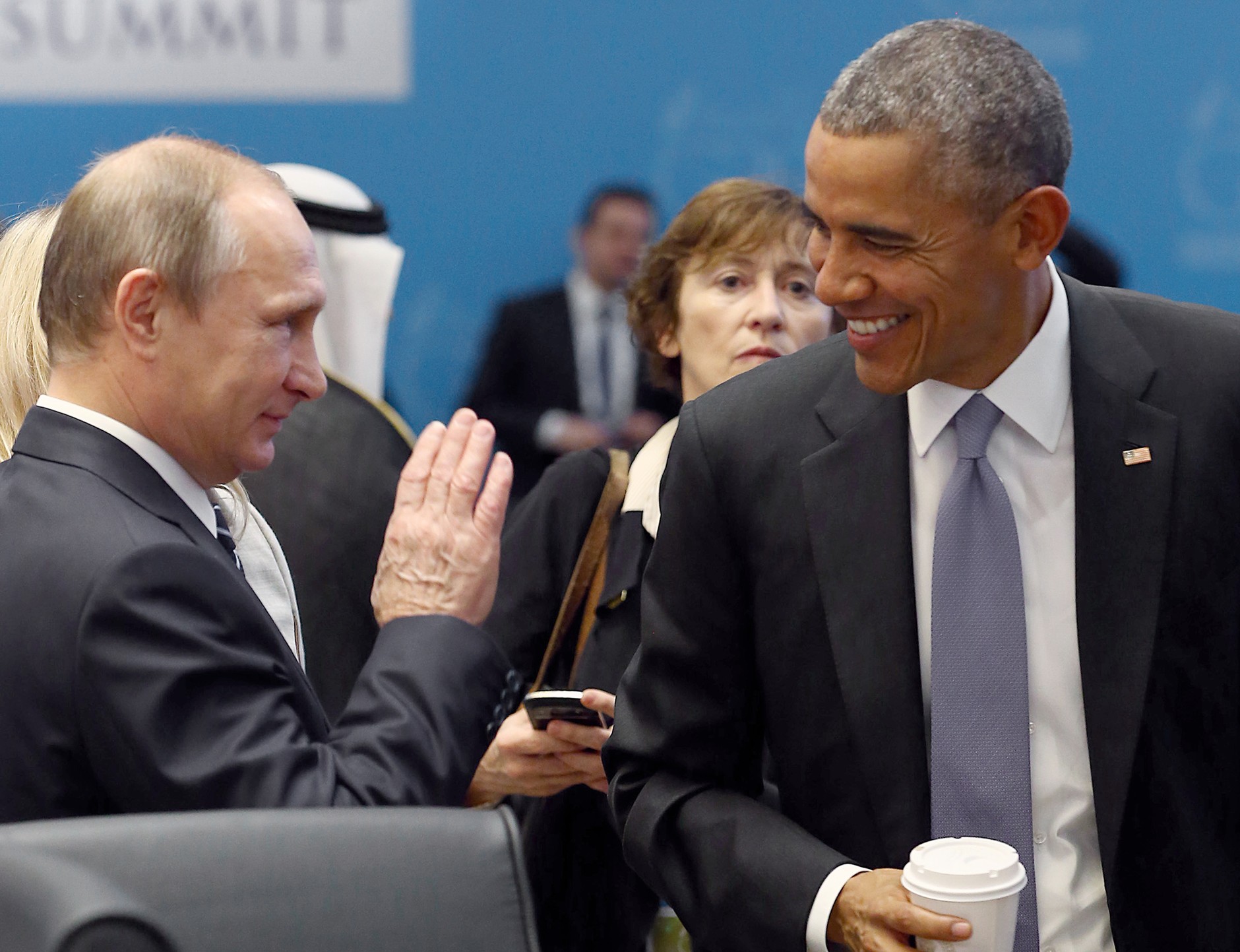
Russian President Vladimir Putin and then-U.S. President Barack Obama talk before the second working session during the G20 summit in the Turkish Mediterranean resort of Antalya, November 16, 2015.KAYHAN OZER / POOL / AFP / AFP
Moreover, the West should have supported Russia more in the 1990s. To this day, the average citizen associates democracy with poverty. Many Russians will say: “We already had democracy. There was no food, no work, no wages, bandits roamed the streets, and Chechens carried out attacks.” And it was true. There was freedom, press, literature – but people were so poor that they were ashamed to look each other in the eye. This experience of democracy could have been avoided. On the other hand: which Western politician would then dare to tell his voters that they need to give money to this ruined country with a drunk president?
These opportunities are already lost. What can the West do today?
Spanish dictator Francisco Franco did not visit a single European country – apart from Portugal – during his 40 years of rule. And how many times has Putin been to Europe? Russian MPs who threaten Europe with war travel freely around it. Russian “experts” calling for nuclear attacks on Europe give interviews to Western media – while Western politicians, experts or Russian emigrants have no access to Russian media.
Even during the war in Ukraine, Putin flies to the USA, Orban comes to Moscow and invites him to Budapest. Hungary should suffer very severe consequences for this. Is he afraid that they will “fall into Russian hands”? Let them drop in – we'll see what comes of it.
If Hungary does not recognize Russia as an aggressor, NATO could stop guaranteeing its protection and suspend Article 5. Then they will see for themselves how well they can defend themselves.
I wonder if Hungarians would elect their prime minister again.
Power cannot be transferred
What will happen after Putin?
If Putin dies as the sitting president, the prime minister will take over, according to the constitution. But the power Putin has consolidated cannot be fully handed over to his successor. The issue of succession is not being discussed in the Kremlin at all today. There are several possible scenarios. However, I am concerned that Europe has no plan for the time after the war. Europeans are not interested in the opposition – they want rulers who will “turn back the clock” and return to the old order. But those times are gone forever.
It shocks me that Europe does not understand that the war in Ukraine is accompanied by the construction of an openly – and literally – fascist dictatorship in its immediate vicinity. Repression in Russia today is harsher than in the declining USSR. The language of power is brutal, the state finances violence against civilians.
Sometimes someone naively asks me: “Why don't Russians protest against the war?” Anyone who wants to protest must make a decision: yes, I am destroying my life and the life of my family. Parental rights are lost, neighbors stop greeting your mother, and prison sentences are unimaginable.
Why didn't Germans protest during World War II? In today's Russia, repression, ubiquitous propaganda, false patriotism and a sense of powerlessness are at work at the same time. Therefore, the country resembles less the USA during the Vietnam War and more like Germany during World War II.
I’m Ashley Davis as an editor, I’m committed to upholding the highest standards of integrity and accuracy in every piece we publish. My work is driven by curiosity, a passion for truth, and a belief that journalism plays a crucial role in shaping public discourse. I strive to tell stories that not only inform but also inspire action and conversation.