The concept of “Kashubia” is intended to combine security with the economy: investments in ports, roads, railways, logistics and energy are intended to simultaneously strengthen the country's resilience and attract PLN 200-250 billion of capital in 10-15 years. Maciej Samsonowicz, advisor to the Minister of National Defense and author of the concept, explains why, after Sweden and Finland joined NATO, the Baltic Sea became a key operational theater, and the north of Poland – a place where “deterrence” is to go hand in hand with reindustrialization and cheaper green energy.
Andrzej Stec: How was the concept of “Kashubia” born after Sweden and Finland joined NATO and in the context of new strategic conditions?
Maciej Samsonowicz: The concept of “Kashubia” did not arise overnight. Its foundations appeared already during work at the Ministry of National Defense on a report under the Pact for Poland's Security – Central Pomerania. We already knew then that for defense reasons, the state would have to quickly incur very large expenditure on infrastructure: ports, roads, railways and logistics and energy facilities. And then a key question was asked: since we have to spend huge amounts of money on building security anyway, why not design these investments in such a way as to create conditions for Polish companies and entrepreneurs to earn money from them and at the same time build a lasting advantage for the state? The combination of this logic with the Baltic Declaration initiated by the Polish Ministry of National Defense, which confirmed the importance of the Baltic Sea as a coherent NATO operational system, and with the ongoing energy transformation of northern Poland – allowed us to develop the concept of “Kashubia” in its current shape. Today, it is clearly visible that it also responds to the direction set by the new US security strategy, which emphasizes the importance of real capabilities, infrastructural resilience and the industrial base of allies. As a result, Poland – through the solutions proposed and implemented by the Ministry of National Defense – is becoming the regional leader of the new security architecture of the Baltic Sea, and in many dimensions also a global player. “Kashubia” is one of the key elements of this architecture: it combines deterrence, infrastructure, energy and economy into one coherent system.
How does “Kashubia” differ from the classic reindustrialization program?
The difference is in the philosophy itself. “Kaszubia” is not a program in which the state spends money and hopes for a development effect. It is a platform for attracting capital, in which the role of the state is to create conditions, and the role of the market is to invest and scale ventures. It's not about spending PLN 250 billion from the budget. The idea is to attract PLN 200-250 billion of investments, domestic and foreign, to the Green Industrial District of Kashubia over the next 10-15 years. The starting point is defense and infrastructure needs, but the goal is sustainable economic development based on industry, logistics, energy and modern technologies, including dual-use.
When does this scale of investment become real and not just ambitious?
If the investor has access to infrastructure, cheap and green energy and efficient procedures, the capital comes by itself. Then the scale of PLN 200-250 billion ceases to be an ambition and becomes a realistic scenario, based on hard economic calculations.
What instruments are intended to attract investors to Kashubia?
This applies to all four industrial districts: Kashubia, Vistula, Warta and Galicia. We concentrate all the key incentives for these ZOPs in one coherent package: the “Investments for Local Poland” Program. The main element is the investment bonus – the ability to deduct 120% of the investment value from the CIT or PIT base within four years. This is a real shortening of the capital return period and a clear signal that the state actively supports investing in the real economy. Another element is the reform of taxation of industrial infrastructure. Today's construction tax is one of the most anti-investment solutions in Poland. The infrastructure is aging and the burdens remain. We want to change this by introducing fair depreciation along with a temporary tax exemption on new infrastructure and gradual introduction of taxation as it ages. So that within a certain time horizon it becomes profitable to invest again in more modern infrastructure. We are also considering linking the financing of local governments with their share in VAT, so that municipalities have a real interest in the development of legal economic activity. It is one, coherent system of incentives that forces modernization instead of stagnation.
What role does energy play in this?
This is one of the key pillars of competitive advantage. The first electricity from offshore wind farms will flow next year. At the same time, a nuclear energy program is being launched – in full compliance with EU regulations, thanks to the work of the Minister of Energy Miłosz Motyka. This means that an investor in Kashubia has met regulatory, financial and market requirements from day one, and at the same time has access to cheaper green energy. This is a huge competitive advantage and one of the key reasons why this project is changing the geostrategic realities of the Baltic Sea region.
How does simplifying procedures for strategic investments fit into this model?
Covering Kashubia and subsequent Green Industrial Districts with solutions intended for strategic investments means simplified administrative procedures, faster planning and environmental decisions and the elimination of long-term delays. For an investor, it is a signal of stability and predictability. For the state – a guarantee that key capabilities will not get bogged down in bureaucracy.
Why are you talking about a new security architecture for the Baltic Sea?
Because it is not an economic project “next to” defense. This is an element of the new security architecture of the Baltic Sea, in which the state's strategic resilience is built simultaneously through the army and the economy. This model is proposed by the Polish Ministry of National Defense, headed by a world-class politician – Deputy Prime Minister and Minister of National Defense Władysław Kosiniak-Kamysz, who accurately reads what is happening globally. The logic is simple: hundreds of billions of zlotys spent on defense must simultaneously build Polish industry, competences and capital. This is a model in which Poland becomes the first military force and the strongest economy of the European Union, and thus gains a decisive political voice in key issues for the entire Community – as a global player. It is also no coincidence that this idea comes from the environment of the Polish People's Party – a formation with a 130-year history, capable of thinking beyond terms of office, focused on building a state in the long term, and not on participating in current political adventures.
What role does transatlantic support play in this?
This direction has real support from the United States, which today rewards countries that are able to act, invest and take responsibility, and not just announce subsequent strategic documents. This is exactly how Poland works – it doesn't pretend that nothing has changed, it just anticipates and designs solutions that actually work. As Churchill said, “you can't waste a good crisis like this.” It is our responsibility to ensure that Poland does not waste this crisis. We must use it to build lasting military, economic and political strength, which gives us real influence on the future of Europe and the West and, above all, ensures security. Because history shows one thing: those who can cope and win are supported. You rely on such partners. Today, everyone in the world knows that Poland is worth investing in.
Thank you for the interview.
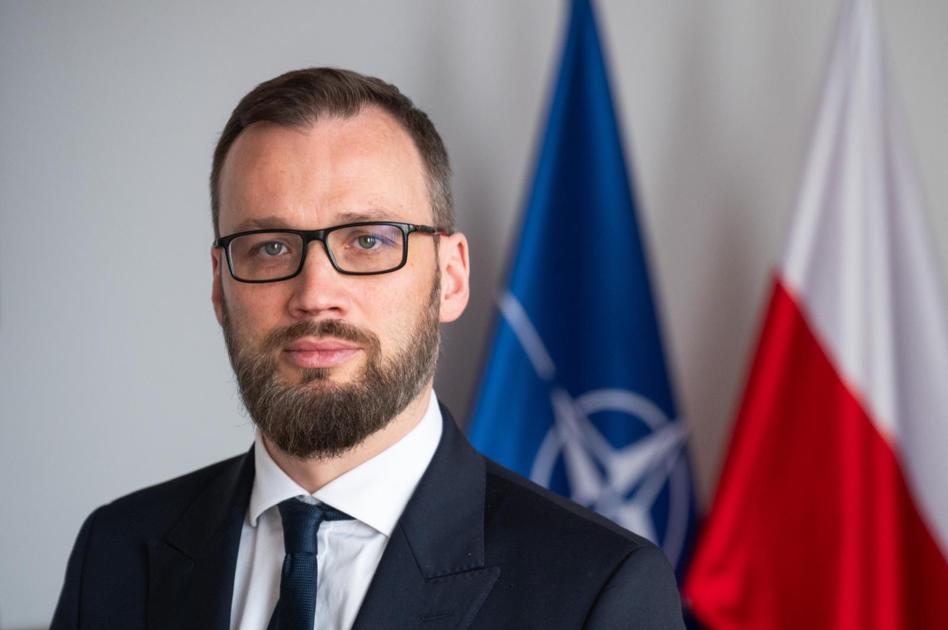
Maciej Samsonowicz is an advisor to the Minister of National Defense, author of the concept of Green Industrial Districts and the military-economic area of the Baltic Sea basin, initiator of the Baltic Declaration.