Corneliu Ionescu, trainer and financial coach Banometru, a free financial education program, analyzes how 2025 was for Romanians' budgets and what they can do for a more prosperous 2026.
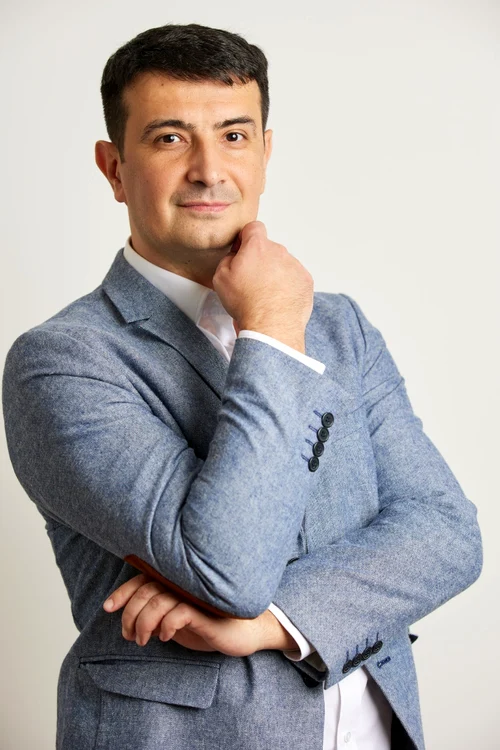
“More and moreÞand rumyears assume their own financial life, they understood that it is in their power to organize, to dream, to build, that they can make decisions regarding their lives.”
- After almost 10 years of financial education, how has Romanians' relationship with money evolved, what have you noticed that is different now, compared to the beginnings of Banometru?
I think we can talk about a new dimension. If at the beginning, we talked a lot in the coaching sessions about specific problems, credits, various debts, now there is a greater interest in building something long-term. People are much more open to planning. They participate in our Online Challenges because they want to learn how to save, plan their long-term income, diversify their income. For me, this means that more people are assuming their own financial lives, that they understood that they cannot rely only on the state and that it is in their power to organize, to dream, to build, that they can make decisions regarding their lives, without waiting for the approval of their older brother.
Another thing we know from our annual reports is that 56% of those who interact with Banometer later become “financial advisors” to other people in their lives. Talk about money with friends, family, colleagues. That means there's a much greater societal openness to financial education and discussions about money that wasn't the case ten years ago.
2.
How does the need for financial education influence the current economic context (inflation, uncertainty, increased financial anxieties). Have you noticed changes in the type of questions or concerns people come to Banometer with?
Financial anxiety was part of the financial reality of 2025 and will continue to be in 2026. And it's normal, if we think about the major news we've been receiving: signs of economic crisis at European level, already translated into layoffs here, tax increases that affected both employees and entrepreneurs, price increases, changes in the legislation regarding the II and III Pillar of pensions, the increase of local taxes, political instability and others.
What we know from the concrete experiences of our community members is that those who have a monthly or annual budget handle the news of price increases much better and experience less stress. They can calculate and discover how each government announcement or change in the business environment will affect them. For example, it's one thing to hear that your property taxes will be increased by 75% and another to see that this will represent an additional expense of 100-200 lei in a year and to start looking for solutions to get this money. In 2025, we launched the first edition of the “Carefree Retirement Challenge” and we had 6,700 people sign up, the interest was very high! I think it happened that way because the Romanians have realized, perhaps now more than ever, that they can no longer rely exclusively on the public system and are looking for concrete solutions to help themselves and be more independent.
3.
In 2025, Banometru launched the fundraising page. How do you see the community's role in supporting financial education?
The donation page came as an extension of our desire to reach more Romanians than we can currently reach and to keep financial education free. We know that the scale of the need exceeds what we can cover through corporate partnerships alone, as valuable as they are. In addition, we want to encourage a conscious approach to donations, that's why we encourage Romanians to make recurring donations, not impulsive gestures, and to include the donation in the monthly budget, to see if the amount is sustainable or not. When you constantly support a cause that makes sense to you, you begin to perceive yourself differently, because you realize that you have enough resources to give to others, and this habit also influences your relationship with money.
4.
What does the power of the community mean to Banometer and how do you encourage the development of your community?
In recent years, we have been able to expand the impact of our program, including thanks to digitalization. During the pandemic we developed Online Challenges, where we work in large groups, but we noticed that although digital helps us reach many people, sometimes we miss the deep connection that offline meetings bring. That is why one of the most important objectives for the year 2026 is to develop a national network of ambassadors and local communities and to see each other more often even offline. We want to create local cores of people passionate about financial literacy who can organize meetings, facilitate discussions and advocate for change in their hometowns. We have already started working in this direction and we are happy to discover all over the country people willing to build with us.
4.
As the new year approaches, many people are already thinking about their financial goals for 2026, whether we're talking about debt, savings or investments. In your experience, what are the first 3 concrete steps someone should take in January so they don't abandon their goals after a month?
The first step would be to define the change they would like to make, then think of a plan of action. The good news is that they don't have to do it alone. I recommend that they sign up for our free Challenge starting in January, “Financial Health Marathon – Resolution Challenge”, where we also address this topic: identifying the saboteurs who prevent us from sticking to our goals. This Challenge lasts 30 days, includes webinars, practical assignments and a dedicated workgroup, all online. In our experience, those who go through a financial change process on their own drop out much faster than those who have support, so I invite them to join this community. Participants from the previous edition paid off debts early, started saving regularly and changed their mindset. For many it was the first time they had written down an annual budget or had an honest family dialogue about money, all of which brought a lot of clarity to them.
The second step would be to explore our website, banometru.ro, where you can find a lot of free resources, so I suggest you take advantage of everything we offer there.
The third step would be to schedule a one-on-one financial coaching session so that they can have a more applied discussion with a financial coach. Our sessions are dedicated to those who want to make a budget, a debt payment plan or learn the habit of saving. It is not addressed to those who have already taken these steps and reached the investment area.
6.
If you were to convey a single piece of financial advice that every Romanian should apply in 2026, regardless of income or situation, what would it be?
It's a crisis, act like one. Make a financial plan, even a simple one, for the next year. Planning, adjusting some habits and caution bring a sense of security that helps you navigate any period much more easily. On our website you can also find budget models, very easy to follow, which will help you take the first step towards a better year from a financial point of view.