Brazil's president's warning to Trump: “An armed intervention in Venezuela would be a catastrophe”


Luiz Ignacio Lula da Silva, Photo: Flickr/ Alexander Bonilla
Brazilian President Luiz Inacio Lula da Silva warned on Saturday that an armed US intervention in Venezuela would be a humanitarian catastrophe, reports AFP, Reuters and DPA, quoted by Agerpres. At the same time, he urged the EU to show “courage” in signing the free trade agreement with Mercosur.
“Four decades after the Malvinas war, the South American continent is once again haunted by the military presence of a foreign power,” Lula said at the opening of the Mercosur summit, in Foz do Iguacu (southern Brazil).
“An armed intervention in Venezuela would be a humanitarian catastrophe for the (southern) hemisphere and a dangerous precedent for the world,” he insisted, after in an interview with NBC broadcast on Friday, US President Donald Trump did not rule out the possibility of a war against Venezuela, whose leader, Nicolas Maduro, accuses of being in charge of a drug cartel.
Washington has deployed a significant military presence in the Caribbean since the summer and has launched a series of attacks targeting ships believed to be involved in drug trafficking in the Caribbean and Pacific. At least 104 people have been killed in these attacks since the beginning of these operations, without the US government ever providing any evidence that the targeted vessels were actually involved in any trafficking.
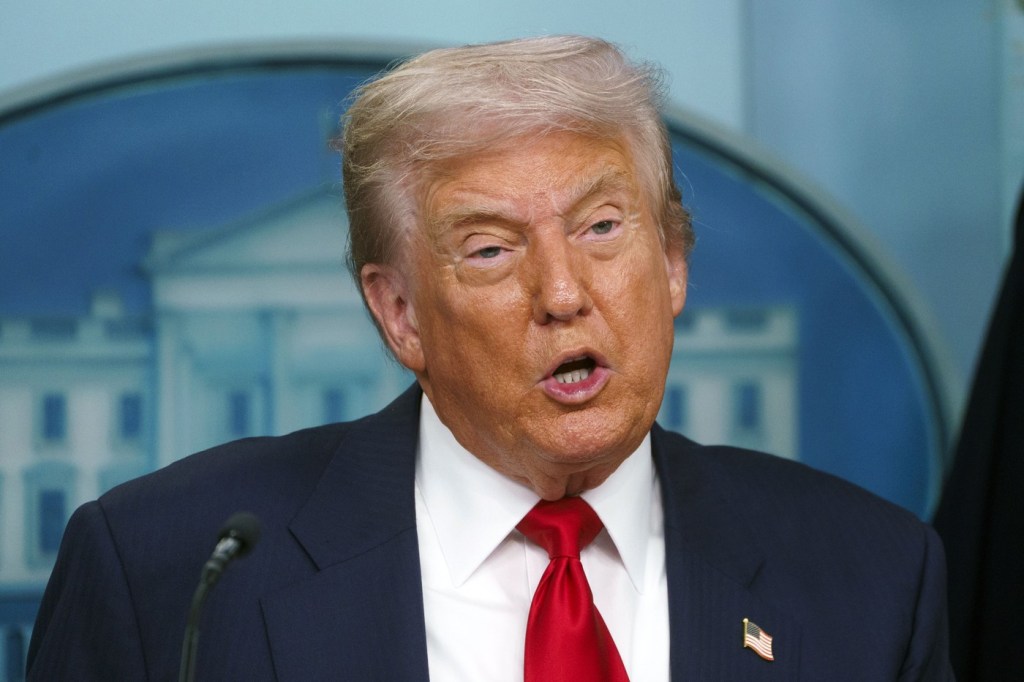 Donald Trump does not rule out a war with Maduro's Venezuela. “He knows exactly what I want”
Lula calls on the EU to have courage
On the other hand, the Brazilian president asked the European Union to show courage on Saturday, after the postponement of the signing of the free trade agreement with Mercosur. “Without political will and courage on the part of the leaders, it will not be possible to conclude the negotiations that have been going on for 26 years,” declared Lula.
Argentina, Brazil, Paraguay and Uruguay initially hoped to initial the treaty on Saturday, as did European Commission President Ursula von der Leyen and most EU countries, but the signing was delayed due to anger from European farmers, particularly in France and Italy.
“We had the opportunity to send an important message to the world in defense of multilateralism and to strengthen our strategic position in an increasingly competitive global context. But, unfortunately, Europe has not made up its mind yet,” lamented Lula. “Yesterday we received a letter from the presidents of the European Commission and the European Council, in which they both expressed their hope that the agreement will be approved in January,” he added.
The EU-Mercosur deal would allow Europeans to export more vehicles, machinery, wines and spirits to South America and in return would make it easier for meat, sugar, rice, honey and soybeans from South America to enter Europe, which worries the sectors involved.