The beginning of the 1990s in Poland was perfect for starting all types of businesses. It was then that not only small enterprises began to emerge, but also economic powerhouses, many of which still function today. Wiesław Podgórski, a circus performer, clown and ventriloquist from Silesia, also had his “five minutes” – or rather about five years – on the market. It was on his initiative that the first amusement parks under the Cricoland banner were established in 1991-1992 – in Warsaw and Gdańsk, and later in several other cities. They instantly became a sensation among Poles eager for new things and attractions, but just as quickly cracks appeared on the seemingly smooth and colorful façade. A serious accident that occurred in 1996 in Cricoland in Gdańsk only accelerated the decline of the amusement park business.
See also: Tragedy in the circus in Bautzen. Families with children saw the fall of death
Cricoland. The adventure began with a yacht
Wiesław Podgórski has almost always been able to make people laugh, and that's ultimately where his life went, although his plans were different. Born in Bytom, he first wanted to be a sailor – he graduated from the maritime technical school in Kędzierzyn-Koźle, obtaining the title of engine and ship equipment technician. Right after school, he joined his first yacht. As we read in his memoirs on the Portallunapark.pl website, it was during that cruise that Podgórski realized that he wanted to do something completely different – cheer up others. Soon he found an advertisement for a circus school – they were looking for clown candidates. He passed recruitment and started training. “Crico” began his career as a trained clown and ventriloquist in one of the largest Polish circuses in the 1970s. His dream was to run his own circus business. However, fate wanted it otherwise.
See also: A Polish billionaire took over the factory from the Germans. “I thought: why not?”
The beginning of the 1980s was not a good time to start a circus. Martial law in 1981 was not favorable to the entertainment industry. So Podgórski traveled to various places with performances, using his skills as a clown and ventriloquist (he claimed he could “speak” in ten different voices). Apparently he also had a traveling mini zoo with which he visited parish fairs. Even then, he was known for his characteristic outfit – a black coat and a highlander hat with shells.
After the fall of the Polish People's Republic and political changes in the early 1990s, a new idea came to Wiesław Podgórski's head: an amusement park. The fact that “Crico” met a certain German – Ulrich Schubert – was also significant. It was with him that he founded the Cricoland joint venture.
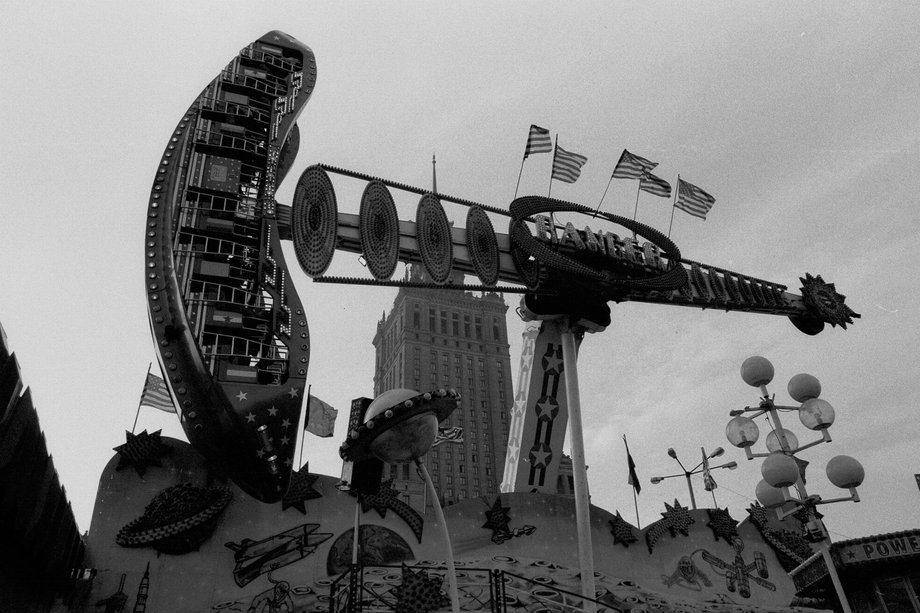
Cricoland in Warsaw next to the Palace of Culture and Science
|
Sławomir Kamiński / Agencja Gazeta
The rapid career and rapid decline of Cricoland
Machines from abroad began to arrive at the first amusement parks under the Cricoland banner in Warsaw and Gdańsk. A text published in 1991 in “Dziennik Bałtycki” stated that “30 carousels for children, 12 for adults and teenagers and a Cinema 90 cinema” were set up in the new complex in Gdańsk. Plus a spinning star, a laughter palace and electric cars. But that's not all – concerts of the biggest stars began to take place in Cricoland. In Tricity they played, among others: De Mono, Trubadurzy, Helena Vondrackova, Bajm and Czerwone Gitary. “Polityka” in turn mentioned the eye-catching names of the machines: “Here's a Ranger, there's a Typhoon, here's a Condor, there's a Heksa, here's a Jumbo Boy, there's a Dance of the Witches,” we read in the 1999 issue.
Poles went crazy about Cricoland – there were queues for the carousels and other devices. Few people paid attention to the fact that not everything worked as it should and that it was not very safe in technical terms. As well as the fact that the amusement parks were slowly falling into disrepair.
“The first three years were a real siege. Kids – but adults too – were rushing from carousel to carousel, from attraction to attraction. In fact, these carousels may not have looked the safest, but who cared back then – the most important thing was fun.” – wrote the website Trójmiasto.pl.
“Cricoland was really something” – recalled engineers Tadeusz Wasilewski (he was the designer of the first Polish carousels) and Zdzisław Sikorski – recognized experts in the field of carousels – in the late 1990s in an interview with “Polityka”. They emphasized, however, that although Podgórski was definitely a visionary and wanted to attract to Poland a piece of the so-called still mysterious for many Poles. big world, he definitely made a mistake. He overinvested, did not take care of many things and turned a blind eye to shortcomings. Which, in fact, didn't really surprise anyone in the 1990s. There were many such half-baked businesses in Poland at that time.
See also: Poland, here no monuments are built for success. The story of Jan Kulczyk
Despite the first disturbing signals (including a decline in the number of customers), the businessman continued to invest. As “Polityka” recalls, he had almost brought a dolphinarium from Florida to Poland and had almost set up the first rollercoaster in Poland when a fatal accident occurred in Gdańsk.
In 1996, one day the door to a machine called a “spinning barrel” broke off. Three boys were injured, including one seriously. The amusement park was immediately closed. Bad luck began for Cricoland – especially since creditors were already knocking on Wiesław Podgórski's door and demanding payment for equipment leased abroad. Various dirt and technical shortcomings were brought to light in the media. In 1998, Cricoland was announced bankrupt.
Wiesław Podgórski. From an amusement park to politics
Wiesław Podgórski was a colorful and unusual figure in Polish business. He was supposed to sleep in a circus barracks every day and eat in the canteen with the crew. He invested in amusement parks, but nothing special for himself. For his services to disabled children (who had, among others, free admission to Cricoland), he was awarded the Order of the Smile. He took part in the finals of the Great Orchestra of Christmas Charity. When his amusement park went bankrupt and the bailiff took away the machines, there was no more publicity about him, but only to a certain point.
When the founder and leader of Samoobrona, Andrzej Lepper, joined the government of Kazimierz Marcinkiewicz and later Jarosław Kaczyński as Minister of Agriculture and Rural Development, Wiesław Podgórski became his advisor for culture and national heritage.
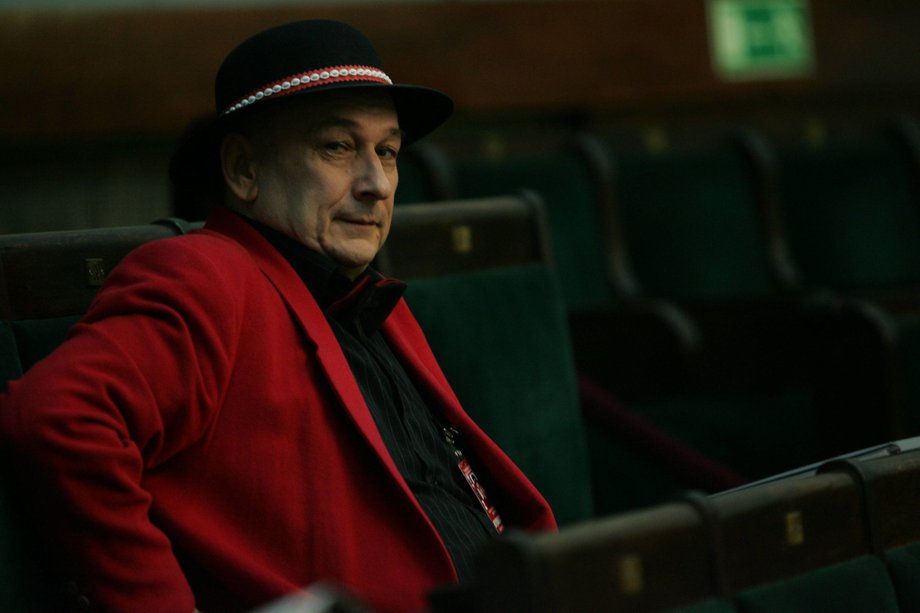
Wiesław Podgórski in the Sejm (2007)
|
Sławomir Kamiński / Agencja Gazeta
In 2006, the media reported that a clown and ventriloquist had become an advisor to the minister and deputy prime minister. Podgórski became famous not only for the fact that, in addition to his political activity, he continued to act as a traveling “entertainer”, but also for the controversial idea to which he tried to convince deputies in the Sejm. He planned to build a gigantic monument in the fields near Grunwald, which was to commemorate the battle of 1410 and consist of, among others: from several hundred figures of knights. The project never came into force.
After the Civic Platform won the 2007 elections and Samoobrona found itself in the parliamentary opposition, Wiesław Podgórski registered in the Sejm as a professional lobbyist. He was still close friends with Samoobrona and Andrzej Lepper.
In June 2011, “Crico” took his own life. A month later, the leader of Self-Defense committed suicide.