How much does the Christmas meal cost in the main European countries and what traditional dishes do they have


An analysis of supermarket prices in 12 European countries, including Romania, for the foods that make up the traditional Christmas menu shows that, in some cases, families are paying up to 27% more than last year.
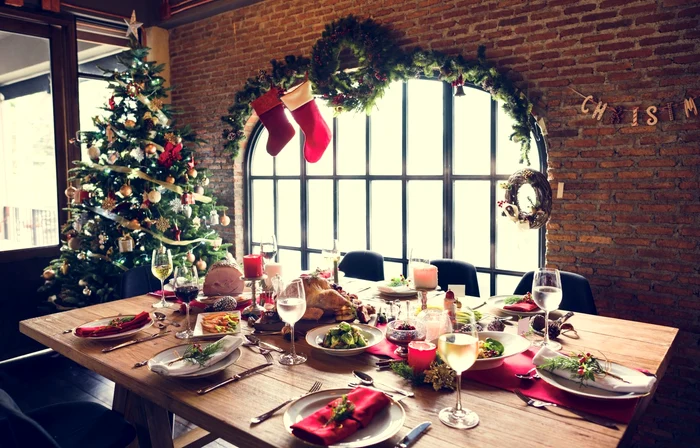
Some families are paying as much as 27% more than last year. Archive photo
The analysis shows that families in Spain are once again facing the most expensive Christmas dinner, while Romanians are finally enjoying a little respite after a year in which they endured the highest inflation in the EU, according to a 12-country study by trading and investment platform eToro.
eToro looked at local supermarket prices for traditional Christmas dishes and found that a typical Spanish Christmas meal of turkey and side dishes will cost €81.95 for a family of four, up 9% on last year. At the same time, the traditional Romanian Christmas meal, composed of charcuterie and side dishes, would cost a family of four 89.79 lei (€17.65). Compared to last year, the prices of ingredients for sarmals decreased by 2% in lei (and 4% in euros), despite a massive annual inflation rate in Romania, which reached 9.8% in November. In contrast, annual inflation in the euro area is stable at 2.1%. The explanation is that the sarmal recipe contains some ingredients whose prices have decreased, such as rice and yellow onions, which have seen a decrease of about 30% in supermarkets. The price of minced meat also fell by 12% compared to last year, but other ingredients such as green chillies and sauerkraut saw a price increase.
This year's findings reveal a major reorganization of the rankings. After sharp declines in 2024, French households are expected to see a significant rebound in prices, with the cost of a traditional stuffed turkey dinner rising to €73.68, up 26% on last year. German households are seeing the biggest increase, however, with the price of goose and side dishes rising by 28% compared to last year to €70.75, which puts Germany in the top three most expensive countries for Christmas dinner.
In contrast, Poland is seeing one of the biggest reductions, with the cost of a traditional Christmas sauerkraut and mushroom pierogi falling by 8% to €35.18. In Australia, the traditional Christmas barbecue is also cheaper, down 6% from 2024 to €43.14. On the other hand, families in the UK are facing further price rises even after the significant increase in 2024, with the cost of a turkey and trimmings rising by 5% to €44.12, which means prices are considerably higher than two years ago, when they were €24.80.
Food inflation remains a key factor in changing Christmas meal costs, with global supply chains still adjusting to weather-related agricultural losses, higher feed prices and continued volatility in energy and transport costs. While some markets have seen pressures ease this year, others are experiencing further increases as production challenges and regional disruptions continue to reverberate on supermarket shelves.
“This year, families around the world are once again facing very different situations in terms of inflation as they prepare for Christmas. Some countries, such as Germany, France and Spain, are experiencing dramatic increases, while others, such as Australia and Poland, are enjoying significant price reductions. Romanian consumers are enjoying some respite this Christmas, as prices for traditional dishes are not very different from last year. However, inflation in Romania, the largest in the EU, will have an impact on the costs of other products as rising energy and service prices put pressure on family budgets, but as always, everyone is now scrambling to find a present to put under the tree and serve a traditional Christmas meal with their loved ones.“, said Bogdan Maioreanu, eToro analyst for Romania.
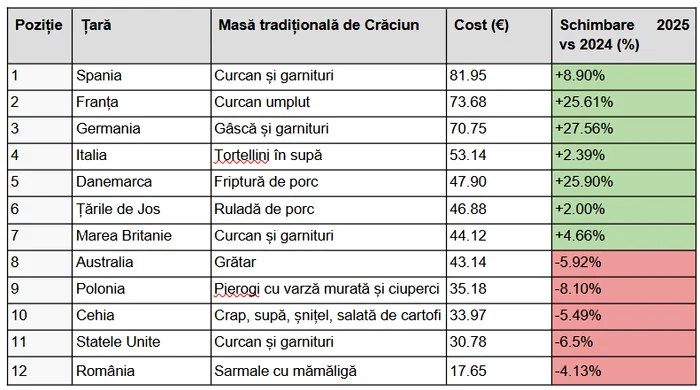
Data was collected in December 2025. Currency exchange rates used are as of December 9, 2025: AUD/EUR = 0.5693, EUR/USD = 1.166 and GBP/EUR = 1.145.