Why was Romania not invited to the meeting of NATO “heavies” in Berlin. “We did it ourselves”

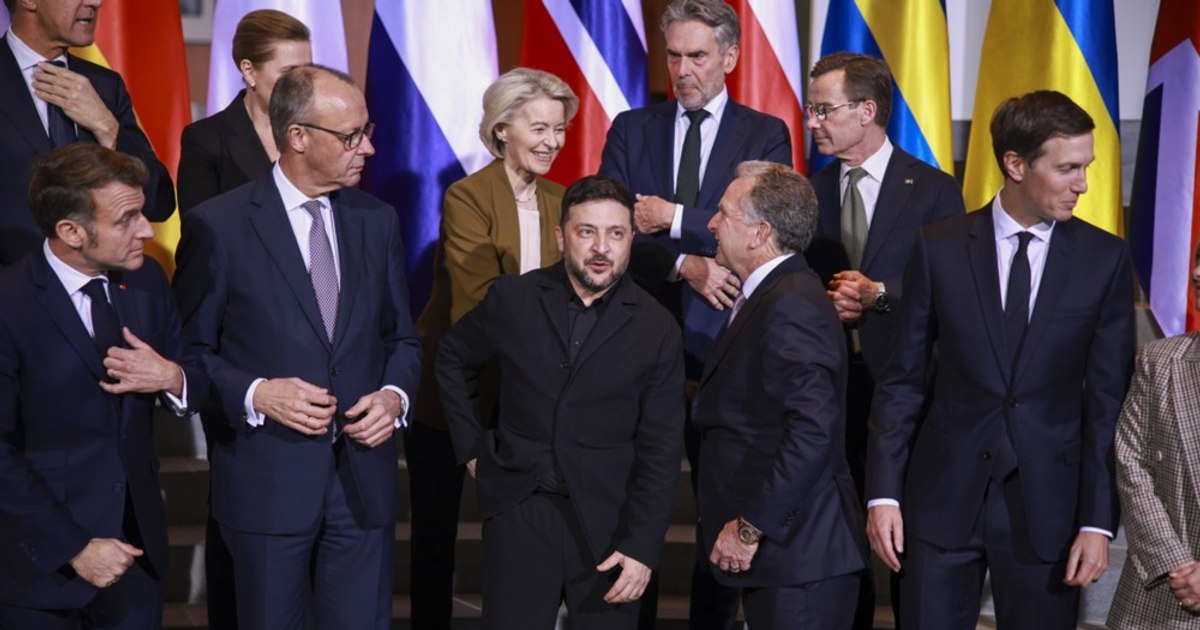
Romania was absent from a new important meeting, in Berlin, where NATO “heavies” debated the situation in Ukraine and negotiated with the Americans. Security expert Marius Ghincea, from the ETH Zurich University, analyzes the situation for “Adevărul”, and explains the absence of our country by the impotence and lack of ambition and involvement that Romania is settling now.
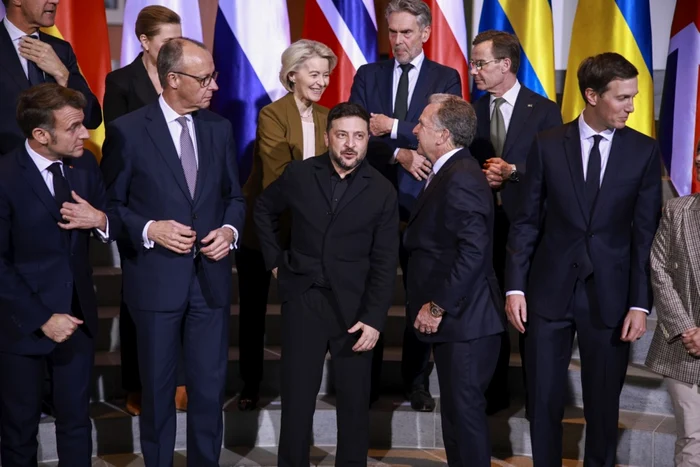
Romania is missing from the picture of the moment in Berlin. PHOTO: EPA EFE
The “heavies” of the alliance – Emmanuel Macron, Friedrich Merz, Keir Starmer, Giorgia Meloni, together with the President of the European Commission, Ursula von der Leyen, and the Secretary General of NATO, Mark Rutte, met in Berlin for the big decisions. In parallel, the heads of states of echelon 2 – Romania and several other countries on the eastern flank, were summoned to Helsinki. It is edifying that Alexander Stubb himself, the president of Finland, was not present in Helsinki and was in Berlin, where essential discussions for the future of Ukraine and the European Union took place. The prime minister of Poland, Donald Tusk, was also in the capital of Germany, but not the president or prime minister of Romania.
Basically, Romania was once again absent from the meeting with history, although in order to really count and have a say in the negotiations, it should have been in Berlin. Not even the fact that Romania has the longest border with Ukraine, nor the fact that from a logistical point of view we will have an increased geographical importance at the time of starting the reconstruction project of Ukraine were not enough arguments for a Romanian presence in the capital of Germany.
Why I missed Berlin
In an analysis for “Adevărul”, security expert Marius Ghincea, researcher at the ETH University in Zurich (Switzerland), claims that Romania's weak position among the alliance is caused exclusively by the lack of political will and the lack of involvement of our country in the partnership with the allies.
“The reason why we were not invited to Berlin, from my point of view, is because the actors who are willing to make some investments and contribute significantly, both economically and militarily, to finding a large-scale solution to the security problem of Ukraine were invited to Germany“, explains Ghincea.
Although Romania made the right choice from the very beginning – it opted for the Western camp and supported Ukraine, it did not know how to be really involved. All this time, the leaders from Bucharest, regardless of whether it was Klaus Iohannis or Nicușor Dan or Nicolae Ciucă, Marcel Ciolacu or Ilie Bolojan, demonstrated that Romania is a good executor of the requests coming from the great European capitals and from Kiev, but that it lacks any initiative, any ambition and any original idea. Instead, countries like Poland and Finland, the latter with a population a quarter of Romania's, have managed to convince through their initiatives and contribution and involvement that they deserve a place at the table of those who decide.
“Romania has positioned itself quite clearly from the beginning, saying that we do not want to contribute either with military forces, nor can we contribute with money, with material resources. This means that we have nothing to put on the table”, claims Marius Ghincea.
Geographical position is not enough
Bucharest relied on its geostrategic importance derived from its proximity to Ukraine and believed that this argument, otherwise important, was also sufficient. But he was wrong and had to lose because of it.
“The fact that we are in Ukraine's neighborhood is not enough. Other states are also in Ukraine's neighborhood, so we are not the only ones who have this advantage. Plus, in general, we did not want to assume a more assertive and ambitious position in this file. We were just hoping to benefit, to be a kind of free riders to enjoy the reconstruction of Ukraine, turning Romania into a logistics hub, but without contributing too much. We want to do our part, instead of contributing“, points out Ghincea.
Under these conditions, Romania excludes itself and minimizes its role and importance in the alliance. “Under these conditions, we can say that Romania is not willing to contribute either on the security side or militarily with forces, and it is not willing to contribute either financially, economically, because we actually cannot afford it. So let's put ourselves in the place of allies. Why would we be invited, what do we come there with, what do we put on the table? That's why it seems to me that criticism of the president or the government must start from the level of motivation and assertiveness. If we don't want it, obviously the others he will not invite us, he will not pray for us“, says Marius Ghincea.
Romania remained exactly as it was during the time of Iohannis and Ciolacu
The expert also notes the fact that neither the new president, Nicușor Dan, nor the Bolojan Government have come up with anything new compared to Klaus Iohannis and the governments from the time of the former leader from Cotroceni.
“We don't really have any change from this point of view. We have maybe some attempts, some timid attempts, maybe a more assertive position from the Ministry of Foreign Affairs, but otherwise, the president shows no change. Nobody, nothing. If we talk about the president, we can talk about Iohannis 3.0 without problems. It's effectively the continuity from Iohannis. President Dan has advisers who think in the same logic as Iohannis' advisers. So nothing new”says Marius Ghincea.
And as if that were not enough, the authorities show a lack of transparency in relation to public opinion. Marius Ghincea recalls here the position of the former Minister of Defense, Ionuț Moșteanu, who refused to answer the question about the aid offered by Romania to Ukraine. And the opacity and lack of transparency of the former minister did nothing but give “ammunition” to those who dispute Romania's decision to help Kiev and bring even more distrust and frustration on the part of the population, which feels completely ignored.
“They don't even want to publish the content of the military or humanitarian aid that we have offered so far in Ukraine. We remember Mr. Moșteanu's comments here. So we have a continuity everywhere, exactly the same position as during Iohannis' mandates. And that does not do us any good.” considers Ghincea.
In his opinion, it cannot even be argued that Romania is at an impasse in terms of its foreign policy.
“I don't think it's an impasse. It would have been an impasse if we wanted to do more and if we could. At the moment we don't want to, but we also can't, apparently. So the fundamental problem is the lack of motivation, of political will.” it's the expert's diagnosis.
The solutions we pretend we don't see
The solutions are theoretically simple, but extremely difficult to put into practice, taking into account the quality of Romanian politicians and the low level of expertise at the level of diplomacy and Romanian foreign policy.
“The solution must start from the politicians. They must have political will, they must have more ambition in foreign policy. And this political will must be channeled to the development of domestic, national capabilities, both diplomatic and military and economic. We must solve our problems at home, the military, defense, political and economic. And so develop tools that we can put on the table. We do not come with financial contributions, nor with intellectual contributions, with ideas together with projects, not even with military or defense resources. So from this point of view we want others to give us, but we are not willing to give to others”believes Ghincea.
In Romania, at the end of 2025, there are two points of view, says Marius Ghincea. It is about two camps that see foreign policy differently and weigh Romania's options with different units of measure.
Two points of view, one unfortunate choice
“There are in Romania, both in the institutions and in society, there are two points of view. We have a perspective that says that we can and should not want more, that we should be more modest and accept that we should not be the first line, that we should not be present at all the meetings, that we should not be in the big league and that therefore we should not be so ambitious. That we should look ahead and see we limit ourselves to what we can offer and what we want, to the very strict and immediate things. And there is the other perspective, which says that Romania must be more assertive, that we are an important country in terms of size, in terms of GDP in the region and in Europe.” Marius Ghincea also explains.
Obviously, the first camp wins, especially since its exponents were and are in the upper echelons and have access to management positions. And for the lack of political will and involvement they have their own arguments, even if they are not necessarily correct.
“On the one hand, they are afraid of Russia and any possible complications and risks. And they believe that Romania has something to gain if it just stands and proves that it is on the side of the alliance and executes any order from Europe. We generally have a political class and strategic institutions, such as the Ministry of Foreign Affairs and the Ministry of Defense, which are risk-averse. They are extremely susceptible to all kinds of risks and try to always position themselves extremely cautiously. And, it's true, it's also because of perception risk, but also because there is a belief that we don't have enough resources, and this prudence often translates into passivity, in the fulfillment of the activity. It is better to do nothing, as they say, and now we see them.”warns Marius Ghincea.
However, Marius Ghincea also says, in reality Romania would have professionals, people capable of imprinting a different dynamic. However, they are usually part of the second echelon and cannot express themselves, having no decision-making power.
“However, we would have capable people. It's just that they are not allowed to do their work. And they don't get involved, they don't get involved either, because they have the experience of other times when they were practically sanctioned, because they are considered proactive and too involved”adds Ghincea.
Multi-speed Europe is here
And Romania is paying for this lack of involvement. In a Europe with multiple speeds, as French President Emmanuel Macron announced years ago, in a Europe of concentric circles, Romania tends to become a marginal country. This although we had enough years to prepare and could have learned from our own mistakes and those of others.
“Europe with multiple speeds is now a reality, but we did it ourselves. In the specialized literature, we call multi-speed Europe differentiated integration. The truth is that we are getting to it, certain things have already taken shape. There are some countries that are more ambitious, want more, offer more and obviously they are being taken into account. There are other countries that give less, they are generally the beneficiaries, they don't contribute anything to what the others produce, so they are in the lower echelon. But this is also a choice. It is true, there are material constraints, there are political constraints, but it is also a choice of how we use and shape these constraints. No one has anything against us, no one marginalizes us, we do it ourselves because that's our level now.” concludes Marius Ghincea.