Progress on the war in Ukraine. “Closer than ever before”

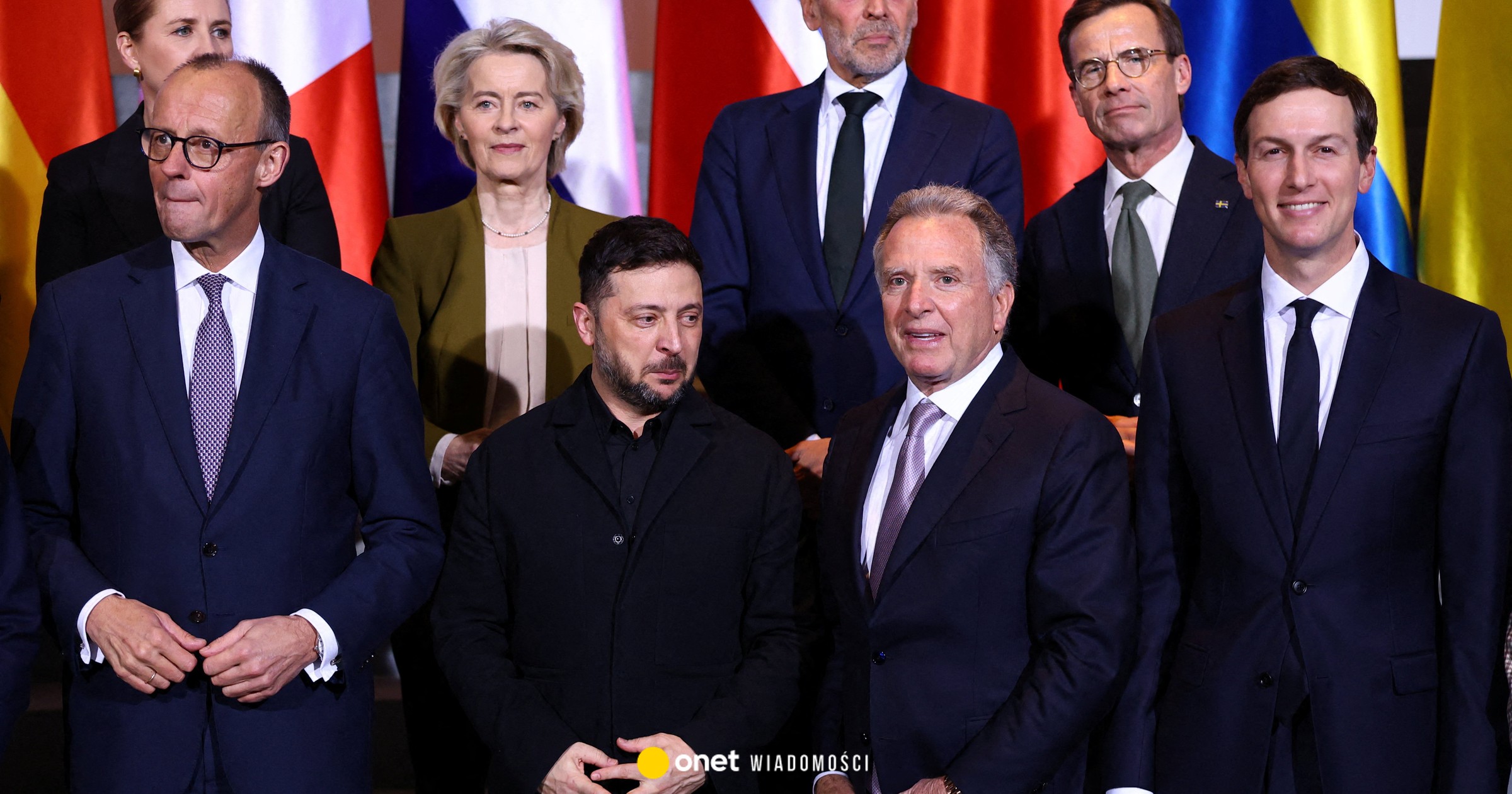
Ukrainian President Volodymyr Zelensky positively assessed the new offer of American officials to provide Ukraine with NATO-style security guarantees.
The proposals look “pretty good,” Zelensky said at the end of two days of talks with Donald Trump's negotiators in Berlin. Trump himself stated that “we are here now closer to peace than ever before“.
However, the President of Ukraine warned that these plans were only a “first draft”. many important issues still remain unresolved. For example, there is still no agreement on what should happen to the disputed territory in the Donbass region of eastern Ukraine, much of which is occupied by Russian troops. There are also no signs that Russian dictator Vladimir Putin will agree to any of these solutions.
German Chancellor Friedrich Merz, who hosted the talks, welcomed the “extraordinary” guarantees of legal and “material” security offered by American negotiators Steve Witkoff and Jared Kushner, Trump's son-in-law.
“For the first time since 2022 You can imagine a ceasefire” Merz said at a press conference with Zelensky. “Now it depends solely on Russia whether a ceasefire will be achieved by Christmas.”
Step forward
Appearance outline of security guarantees represents a potentially key step forward. Ukraine has consistently argued that it cannot consider any solution to the fate of territories occupied by Russian troops until it receives a security guarantee package that would deter Putin from invading again.
Putin refused to allow Ukraine to join NATO, and earlier this year Trump declared that American forces would not take part in any peacekeeping mission.
However, in recent days the mood among negotiators has improved significantly. “This is a really far-reaching and important agreement that we haven't had before, namely that both Europe and the United States are jointly ready – and President Zelensky referred to Article 5 of the NATO treaty – to provide similar security guarantees to Ukraine,” Merz said.
Article 5 is the basis of the collective defense of the alliance: it states that an attack on one member will be treated as an attack on all.
“In my opinion, this is a really big step forward. As I have already mentioned, the American side has also committed itself to this politically and, in the long run, also legally,” Merz added.
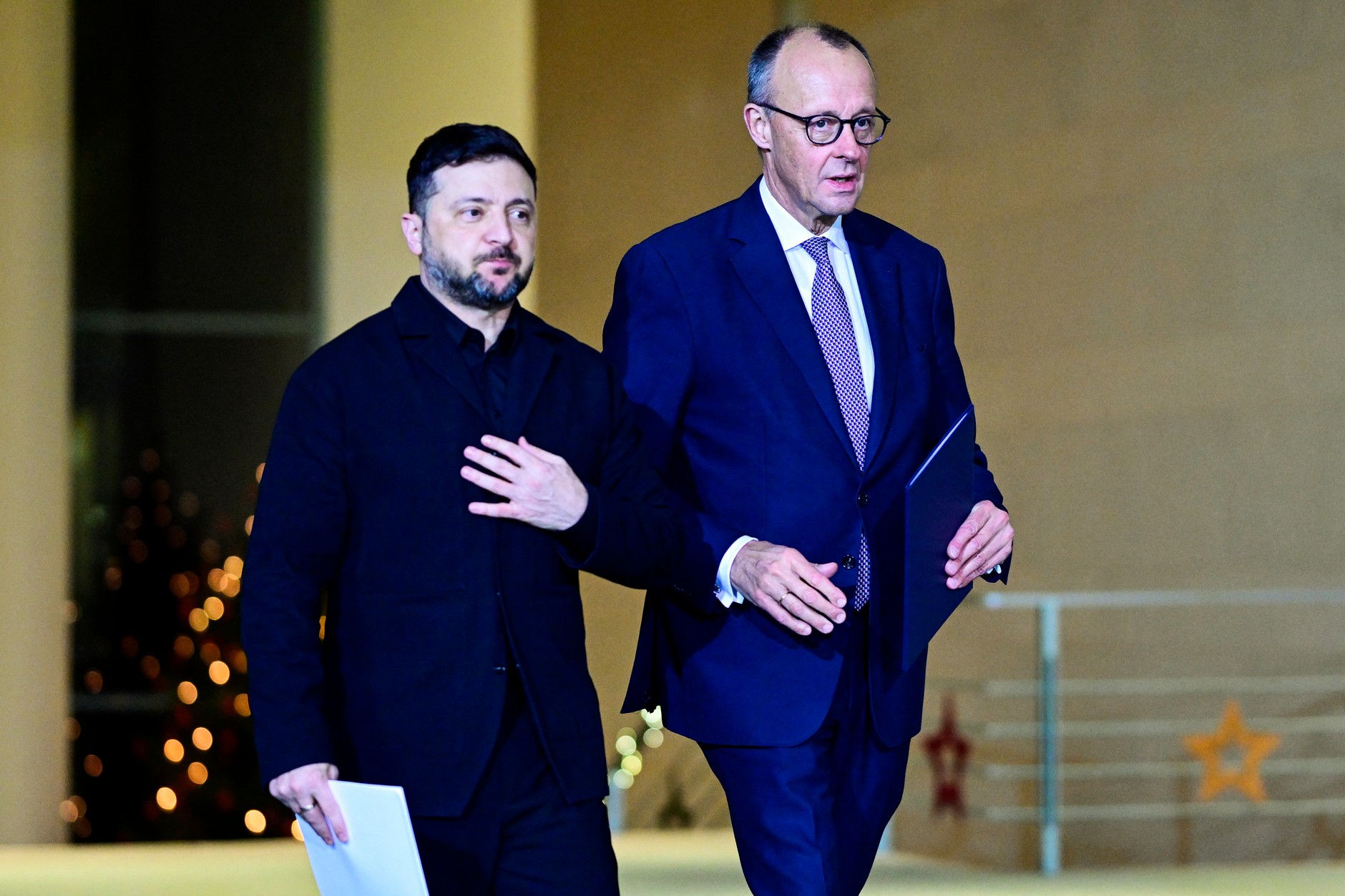
Volodymyr Zelensky and Friedrich Merz in Berlin, December 15, 2025.John Macdougall / AFP
Guarantees for Ukraine
Zelensky also suggested for the first time that a solution may be close. “Before we take any action on the battlefield, we must be very clear about what security guarantees have been put in place,” he said. “It is important that the United States is considering safeguards similar to those contained in Article 5. Progress is being made on this issue.”
In a later joint statement, the leaders of Denmark, Finland, France, Britain, Italy, the Netherlands, Poland, Sweden and Norway joined Merz in welcoming “significant progress” in the talks. The declaration was also signed by European Commission President Ursula von der Leyen and European Council President Antonio Costa, who joined national leaders for dinner with Zelensky in Berlin.
In their statement, they also provided more details on what the new peace plan might include, suggesting that the United States and European leaders “committed” to guaranteeing Ukraine's future security and supporting its economic recovery. As stated in the leaders' statement, this would include commitments to support the Ukrainian army in maintaining a “peacetime” strength of 800,000. soldiers so that it can “contain” and “defend”.
The peace would be enforced in part by a European “international Ukrainian force” composed of volunteer countries and “backed by the United States.” These forces would ensure the security of Ukraine's airspace, support maritime security and build the Ukrainian military, “including through operations in Ukraine.” The statement does not explain exactly what role the US would play in supporting these forces.
The United States would be responsible for a mechanism to monitor the ceasefire and give early warning of any future attacks. There would also be a legally binding obligation to take action to restore peace if Russia attacked again, potentially including “military forces, intelligence and logistical assistance.”
The problem is with the US
Further points of the proposal include joint efforts to rebuild Ukraine and invest in its future prosperity, and continue Ukraine's path to EU accession.
On the issue of ceding territory, European leaders said the decision rests with Zelensky — if necessary, after consulting the Ukrainian public. On land, Zelensky said, “to be honest, we still have different positions.”
The developments represent significant progress weeks later deadlock. However, there have been suggestions from the US side that the offer may be time-limited as the White House aims to get the warring parties to reach a peace deal before Christmas.
“The basis of this agreement is essentially to provide really strong safeguards, similar to those in Article 5,” says a senior US official. – These guarantees they won't last forever. These guarantees are currently available if the talks reach a positive conclusion.
Some European diplomats are reluctant to put their trust in the White House, which has shown its attitude in recent days a new level of hostility towards their continent. Others are not convinced that the security guarantee will be effective without granting Ukraine membership in NATO.
-Where is the credibility? – asked one European diplomat. — Article 5 without membership will only encourage Russia to try and test it.
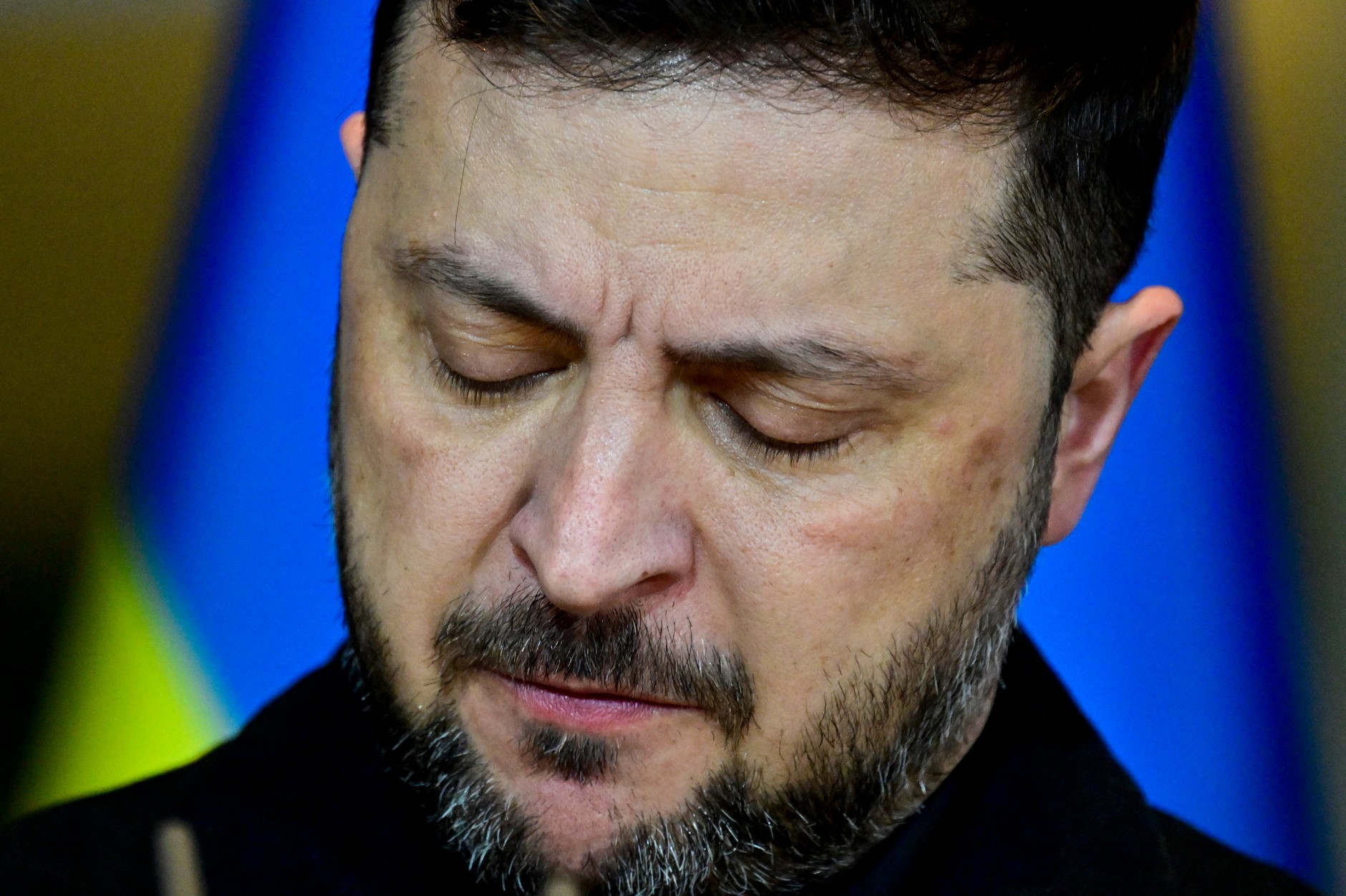
Volodymyr Zelensky in Berlin, December 15, 2025.John Macdougall / AFP
At a standstill
The latest US national security strategy, published earlier this month and declaring Europe a declining civilization threatened by migration, shocked EU officials. Trump's interview with POLITICO deepened concerns as the US president called European leaders “weak.”
“There is a disinformation war going on here,” says one EU diplomat. — The worst thing is that it does not come only from the Russians, Chinese or Iranians. It also comes from the United States.
Meanwhile, in Brussels, EU countries are still engaged in tense negotiations over how they can use more than 200 billion euros (844 billion zlotys) of frozen Russian state assets to send a much-needed loan to Ukraine. If Europe does not provide any new financial resources, Kiev will probably run out of money already in the first half of next year.
The talks have stalled over Belgium's fears that if it agrees to a proposal for a “reparations loan” using funds held in the Brussels Financial Depository, it could face retaliation. retaliation from Russia. In recent days, prospects for an agreement that EU leaders wanted to sign at Thursday's summit have become less realistic as other countries, including Italy, have joined Belgium in voicing their concerns.
Late on Monday evening, EU envoys continued to analyze new draft proposals to calm Belgium.
The Onet editorial team presents various points of view regarding the possible development of the situation in Ukraine and Russia's aggressive actions towards NATO countries. The above material is one of them.
We would like to point out that it cannot be predicted that there will be a military attack by Russia on Poland or another NATO country. The war in Ukraine is a challenge for the Russian army and economy. It is unlikely that while fighting the Ukrainians, Vladimir Putin would also decide to confront NATO, which would be incomparably more costly for Moscow – militarily, financially and politically. It should also be remembered that neither Russia nor the Soviet Union ever directly attacked a NATO country.
Below are some analytical texts by our expert Witold Jurasz, devoted to Poland's security: