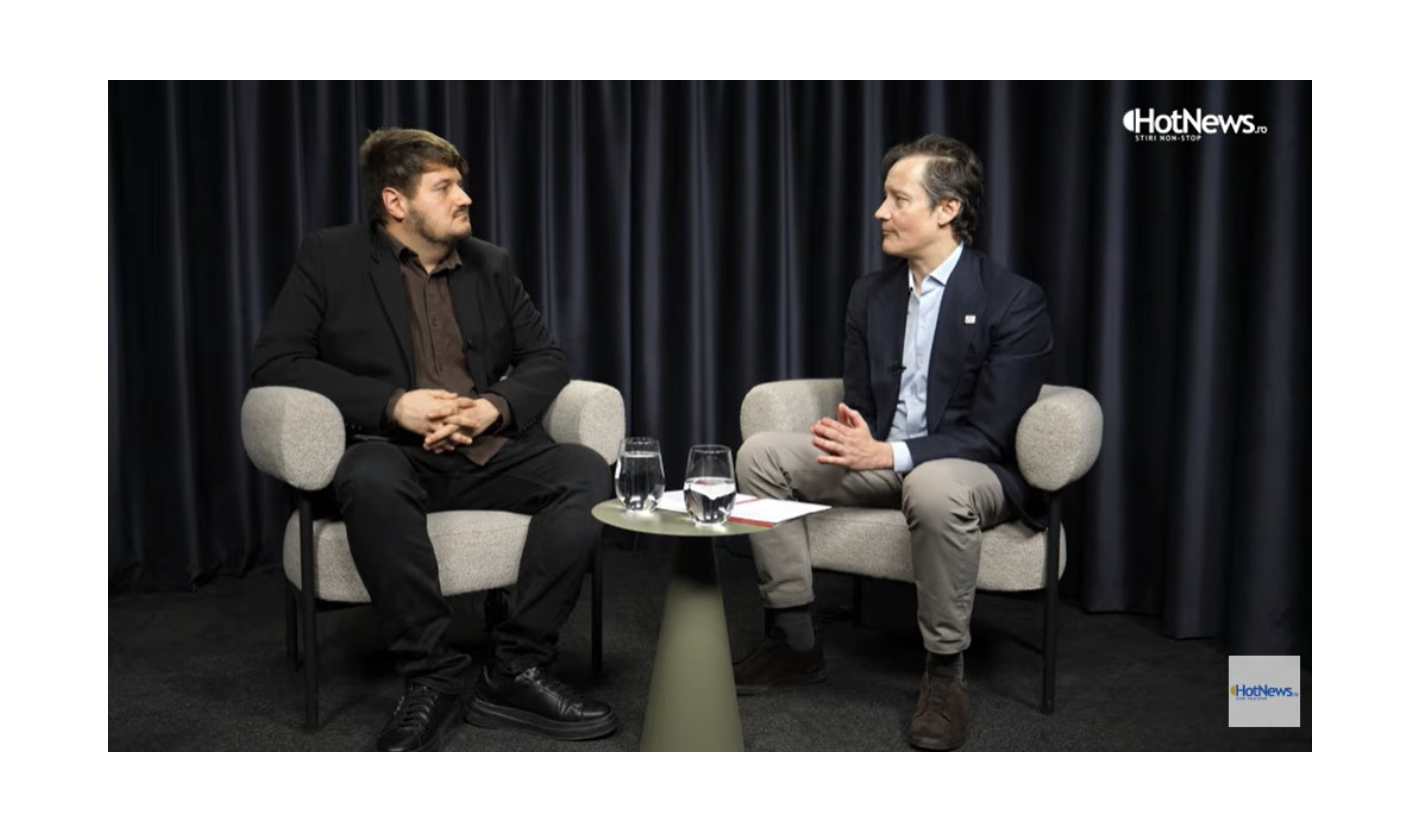
Expert Forum: What are the emergencies in the judicial system / Warning regarding the retirement requests of magistrates


The non-governmental organization Expert Forum (EFOR) launched, on Monday, a report in which it explains what are the emergencies “that can be solved tomorrow” in the justice system in Romania. The justice laws of 2018 and 2022 are reasons why Romania has reached the “deep crisis of the judicial system”, claims the organization specialized in public policies and administration reform.
The current laws of justice were adopted by the Parliament at the end of 2022, to combat the changes to the laws of 2018, promoted by the former Minister of Justice Tudorel Toader, according to the report, signed by the anti-corruption expert Laura Ștefan and the expert in justice Cezara Grama.
“In reality, the justice laws of 2022 (…) generated new problems. They led to the concentration of power in the justice system and the impairment of its independence,” Expert Forum notes. They also accuse that at that time there were no public debates and consultations with civil society regarding the amendment of the laws.
 Reaction of the DNA after the protests in the judiciary: Voineag claims that Kovesi also gave an order “similar” to his, the one accused by the DNA prosecutors in the film Recorder. What the documents contain
What are the emergencies?
The first urgency invoked by EFOR is that judicial corruption investigations must return to the National Anticorruption Directorate.
“Any serious reform effort must begin with the return of the competence to investigate judicial corruption to the DNA as a first step to reduce the impunity enjoyed by magistrates today”, note Laura Ștefan and Cezara Grama.
In 2018, the competence to investigate judicial corruption was taken from the DNA through the creation of the Special Section for the Investigation of Judicial Crimes (SIIJ) on the initiative of the Minister of Justice at the time, Tudorel Toader: “From the very beginning, the SIIJ was a prosecution structure that did not benefit from the necessary guarantees and resources to really investigate corruption crimes”.
In 2019, the SIIJ was abolished and replaced in 2022 with a new structure, with prosecutors appointed by the plenary of the Superior Council of the Magistracy, without other selection criteria.
“From the decisions of the SCM in recent years regarding the appointment of these prosecutors, it is not clear what are the criteria used to accept or reject the candidacies of prosecutors. In 2024, although the General Prosecutor's Office complained about the fact that it has difficulties in filling these positions, the SCM rejected three of the General Prosecutor's proposals for specifically appointed prosecutors”, says Expert Forum.
Expert Forum calls for the return to written tests for promotion to the ICCJ
“Unlike other higher court promotion procedures, the promotion of judges at the ICCJ no longer includes a written test as of 2018,” the report said.
The promotion competition at the ICCJ consists of an interview in front of the Section for Judges of the SCM, as well as an evaluation of the documents drawn up by the candidate.
“The current mechanism gives discretionary power to the section of judges in the SCM both at the interview stage and at the stage of analyzing the judges' previous activity. Thus, in recent years, the way in which the promotion contests at the ICCJ have been conducted has made it possible to promote only judges loyal to the current majority in the SCM and the leadership of the ICCJ”, accuse the experts.
From 2022, the heads of courts directly appoint the vice-presidents and heads of departments, eliminating competitive trials. The effect, accuse Ștefan and Grama, is the return to institutional “feudalism”. The two also point to the crisis of “promotion on the spot” which led to a blockage at the level of human resources in the system.
The impact of retirement decisions after 25 years of service
Because the justice laws did not include a condition regarding the retirement age for magistrates, the practice in the judicial system was that upon fulfilling the seniority conditions, prosecutors and judges obtained their retirement decisions by which they secured their pension value.
For example, at the moment approximately 80% of judges of the supreme court (ICCJ) have pending decisions, according to the data cited in the report. The decision to request the payment of the retirement decision belongs exclusively to the judge and the prosecutor in question, subject to a deadline for informing the management of the institution.
Legal experts warn that, due to the tensions between the judiciary, the Government and the Parliament, “it is not excluded that overnight we will find ourselves in a situation where a significant number of judges and prosecutors with more than 25 years of experience request the payment of the retirement decisions already obtained”. That is, to retire from the day another.
“The laws of justice made the Judicial Inspection even more dependent on the CSM”
Expert Forum also criticizes “the practice of the Judicial Inspection to open disciplinary actions in cascade against judges and prosecutors”.
“The justice laws have made the Judicial Inspection even more dependent on the SCM regarding the budget and the procedure for appointing the management and judicial inspectors. Moreover, there are magistrates in the system who have been accusing for years that those who dare to criticize the decisions made regarding the justice system are then subject to disciplinary actions. It is worrying the practice of the SCM that sanctions magistrates when they speak about the irregularities in the system,” it is also stated in the cited document.
The last point in the Expert Forum report is about the need for an independent audit of the random assignment mechanism, after several magistrates spoke about problems in assignment or changing the court panels.
“These practices undermine the public trust in a judicial system that is facing credibility problems at the moment anyway. There is a need to conduct an independent audit regarding the system of random distribution of files and their subsequent management, to clarify where and what vulnerabilities exist in the system”, conclude Laura Ștefan and Cezara Grama.
Protests against justice laws
Recorder published a documentary on Tuesday evening about the state of the Romanian justice system, the phenomenon of statutes of limitations, but also the effects of the centralization of power at the level of “some magistrates who coexist with politicians”.
In the Recorder documentary, the military prosecutor Liviu Lascu, Crin Bologa, the former chief prosecutor of the DNA between the periods of Laura Codruța Kovesi and Marius Voineag, but also a prosecutor from the DNA and a judge from the Court of Appeal, who spoke anonymously, were interviewed.
The documentary highlighted concrete cases in which defendants politically connected or very powerful in terms of business, such as Marian Vanghelie, Cristian Burci or Puiu Popoviciu, benefited from trials extended until the statute of limitations.
Since Wednesday evening, protests have taken place in the country every day. Thousands of people protested on Saturday evening in the Capital, in Piața Victoriei, where the demonstrators chanted, among other things, “Resignation, Savonea!”, “Justice, not corruption!” and “You change complete, like socks.”
 The first cinema in the country where the Recorder documentary “Captured Justice” is playing