The European Union is at a critical juncture, trying to prove that it is more than a secondary actor on the geopolitical stage. In the coming days, European leaders face two major tests: finding a solution for financing Ukraine without the support of the United States and finalizing an important trade agreement with South America, designed to reduce Europe's economic dependence on major global powers, Bloomberg and The Times write.
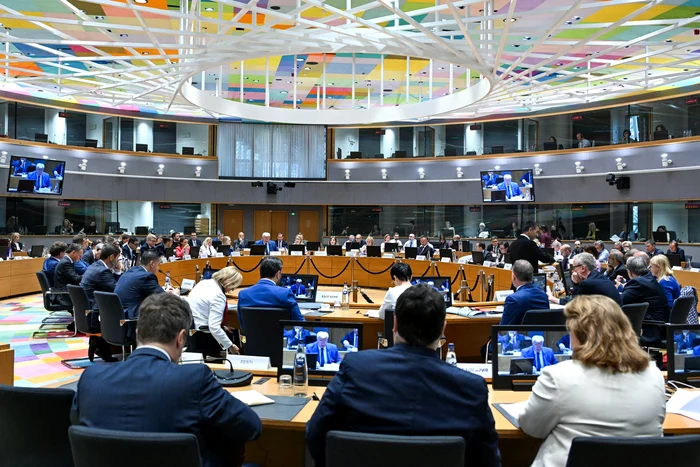
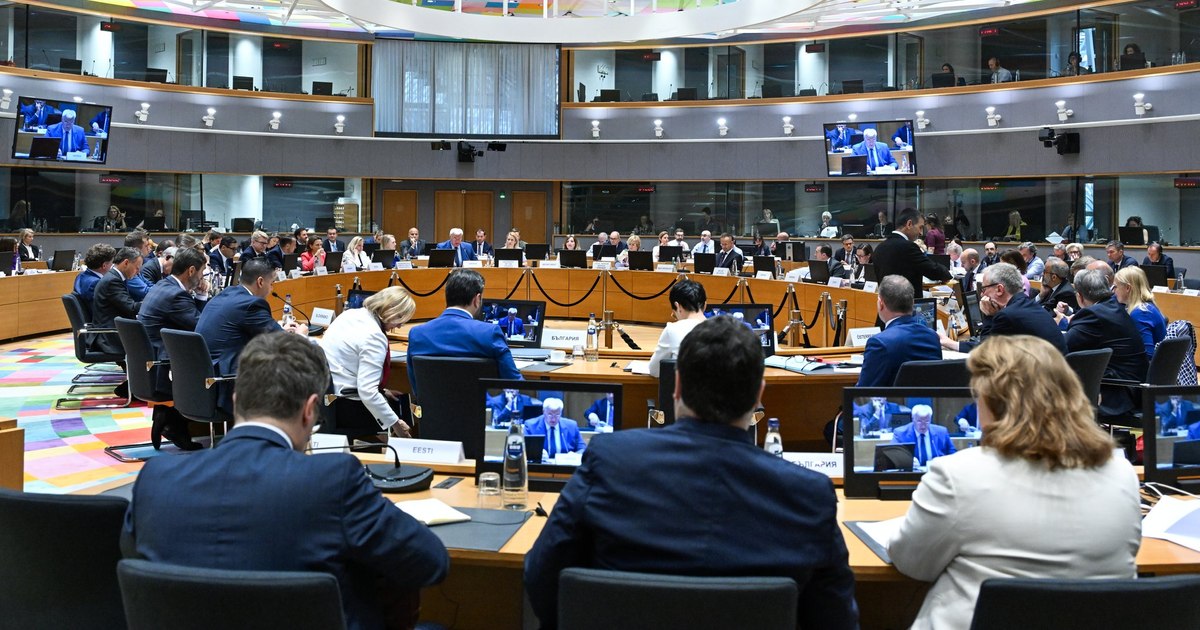
Meeting of EU leaders in Brussels / PHOTO: EPA/EFE
The stakes are high. A failure on any of these fronts could damage the Union's credibility at a time of global uncertainty and reinforce criticism from US President Donald Trump, who has repeatedly described Europe as “weak”.
According to some European officials, recent warnings from NATO's secretary general, who said the risk of major conflict is back on the global agenda, have not yet been fully understood. “Too many don't realize the gravity of the situation”one of them declared.
Ukraine and trade, the test of European leadership
Both support for Ukraine and trade relations with South America are seen as key indicators of the EU's ability to act as a global leader.
After the Trump administration suspended aid to Kiev, pressure on Europe increased. European leaders must now decide whether they can prevent the imposition of a peace deal unfavorable to Ukraine or even the risk of a new Russian offensive.
In parallel, the trade agreement with the South American bloc MERCOSUR is seen as a test of the EU's ambition to diversify its supply chains and reduce its dependence on the United States and China.
Deadline decisions
Ukraine's financing issue comes to a head on Thursday, December 18, when EU leaders meet in Brussels to discuss a possible loan to Kiev secured by frozen Russian assets. By Friday, the Union should also complete trade negotiations with MERCOSUR, the signing ceremony being scheduled, in principle, for Saturday, December 20.
Any further delay could jeopardize both initiatives.
These developments are taking place against the background of profound changes in the international order. Donald Trump is openly challenging the post-war architecture that underpinned Europe's security and prosperity for decades, while China appears less and less willing to treat the Union as a strategic partner.
“If Europe wants to be a real geopolitical actor, it must back up strong words with strong actions,” said Estonian Foreign Minister Margus Tsahkna. “It is a moment of decision. Europe's credibility, security and leadership are at stake.”
Financing Ukraine: a race against time
The EU's preferred plan involves using billions of euros from Russian assets frozen in the Union to provide Ukraine with a loan of around 90 billion euros over two years. Reimbursement would only be required if Russia would compensate Ukraine for war damage.
However, the initiative is controversial. Belgium, where most of the frozen funds are located, fears it could remain financially liable in the event of lawsuits brought by Russia. France supports the use of assets in Belgium, but opposes the use of funds blocked in its own banks. At the same time, Washington is quietly pushing to keep these assets as a bargaining chip in an eventual peace process.
Time is limited. According to European officials, Ukraine could run out of financial resources by spring.
“Europe must respond to the inevitable: continued support for Ukraine”said the Portuguese Minister of Finance, Joaquim Miranda Sarmento, pointing out that the amount required represents only 0.5% of the EU's GDP. “It's a large amount, but manageable and absolutely necessary.”
Financial autonomy for the defense of Europe
The idea of confiscating Russian assets has turned from “irresponsible” to one of the few realistic options left, writes The Times.
In recent months, hopes for the development of Russia's war against Ukraine have often been misguided. However, this week, Europe could finally take a step that could really change the course of the conflict, notes The Times.
European leaders will meet in Brussels to discuss the possibility of using the 210 billion euros of Russian assets frozen in Europe to finance the defense of Ukraine.
If an agreement on the use of these reserves is reached on Thursday, December 18, the step could mark a turning point in the war and possibly in the security of Europe itself.
These frozen funds are Russian foreign reserves held in banks in Belgium, Luxembourg, France, Great Britain and Switzerland, and have remained frozen since the beginning of the Russian invasion. If they were used to support Kiev, the impact would be considerable.
First, the measure would allow Ukraine and its European allies, including Britain, to resist Putin's pressure without depending on US funding, which has declined significantly under the Trump administration. A self-sustaining Europe would change the strategic balance completely. Putin would thus face an adversary capable of sustaining a protracted war — the only condition for serious negotiations.
Second, it would demonstrate what critics say Europe lacks: the will to act.
Initially, the reaction of Western governments to the idea of confiscating Russian assets was unanimous: “Impossible. Illegal. We don't do that.” Qbut these funds belong to a state that started a war of destruction against another sovereign country. But Russia itself has removed the legal guarantees it is now trying to rely on.
One of the main fears, especially for Belgium, which holds €180 billion of these reserves in the Euroclear depository, is the risk of legal suits from the Kremlin. Russia is an expert in “legal warfare” and has already filed a lawsuit in a Moscow court against Euroclear on December 12. To solve this problem, EU states are discussing a collective guarantee to protect Belgium from possible losses. However, the likelihood of Russia winning in court is slim.
Other Western officials warn that seizing Russian reserves could make Europe less attractive to other governments. But the answer is clear: Europe will no longer be a safe place for investment if Russia continues to act unchecked. The next targets of Russian aggression could be Estonia, Latvia, Lithuania or Poland, which would lead directly to a conflict between NATO and Russia.
A historic opportunity for Europe
In February 2022, the West only managed to freeze Russian assets, allowing the profits to be used later to rebuild Ukraine. No one anticipated a four-year war with more than $500 billion in losses for Ukraine, which continues to need constant support to survive.
In this context, the confiscation of Russian assets has turned from a “disreputable” idea into one of the only realistic solutions. The United States' decision to cut military aid to Ukraine will cut funding by 40% after the current package ends, with Europe providing the rest. At the beginning of next year, Ukraine could again find itself in the situation of the first day of the war: weeks of insufficient resources.
A US-brokered peace plan essentially involves ceding territory to Ukraine, limiting the military and opening up the possibility of a new attack by Russia — a grotesque proposition for any European leader.
If Europe uses Russia's frozen assets, financially supported Ukraine could refuse a disadvantageous deal. The Russian army is exhausted; losses are catastrophic, and Putin is counting on Western fatigue and Ukraine's lack of ammunition. Using Russian resources would throw off that calculation and allow Ukraine to maintain its positions for at least three more years—enough for real negotiations, not political manipulation.
Europe is facing a historic choice. Turning these stockpiles into weapons, drones, anti-aircraft systems and ammunition would not only help Ukraine survive, but also prevent a much bloodier future for all Europeans.
Even if the EU leaders will not agree immediately, the logic remains clear: there is no alternative to guarantee Europe's security. Europe must act, urges The Times.
The agreement with MERCOSUR: more than trade
The trade deal between the EU and MERCOSUR — which includes Argentina, Bolivia, Brazil, Paraguay and Uruguay — has major symbolic value. If signed, it would become the largest trade agreement in the history of the European Union.
For Brussels, the deal would also be a political signal to Washington, at a time when the Trump administration is openly asserting US priority in Latin America and resorting to punitive trade tariffs.
“It is the right time to show that Europe can open markets without sacrificing its domestic production”said MEP Gabriel Mato, who coordinated the negotiations in the European Parliament.
However, French opposition, fueled by farmers' fears of South American competition, threatens to delay the signing of the deal. Some European diplomats believe the delay could eventually lead to the deal being abandoned altogether.
“If we fail to sign by the end of the year, the message will be that Europe is not serious about relations with South America,” warned a senior diplomat. “The EU's credibility would suffer globally.”
A test of political maturity
The new US National Security Strategy criticizes EU policies, accusing them of contributing to Europe's “civilizational decline” and questioning the role of European countries in NATO.
For many European officials, these claims symbolize the unraveling of a transatlantic partnership built over decades. In its place, a world dominated by competition between great powers is taking shape.
This week's decisions — on Ukraine and trade — will show whether the European Union is able to define its own direction or whether it is entering a period of controlled decline, Bloomberg points out.