Banning access to social media for minors under 16 does not really protect children, it only makes them more vulnerable

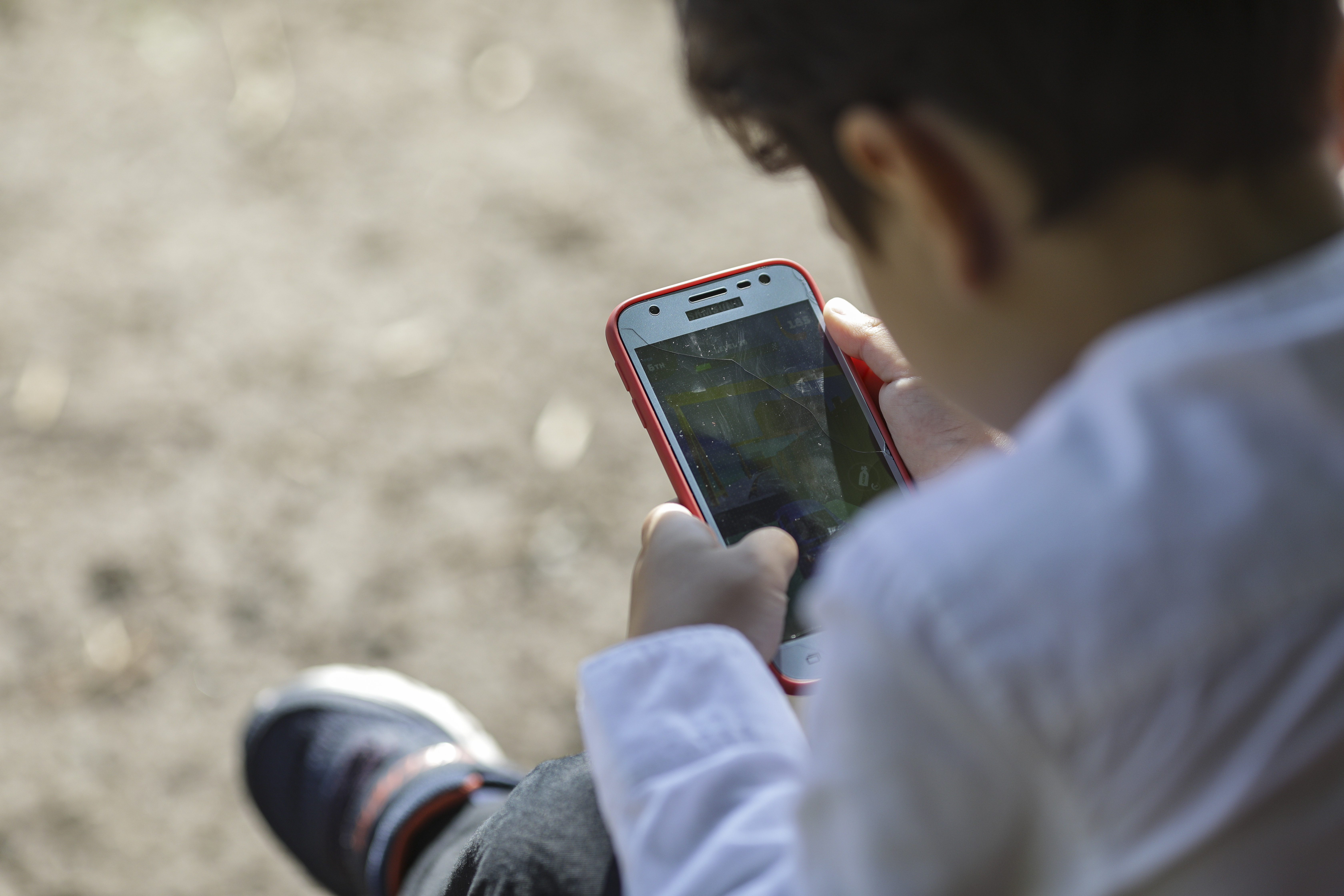
The increasingly common proposal in the world, including in Romania where we have a draft law in this sense that passed the Senate, to prohibit the access of minors under the age of 16 to social networks starts from a legitimate concern, but ends up with the wrong solution. Age verification mechanisms are almost impossible to implement without violating the right to privacy, and these bans do not really protect children. On the contrary.
One of the most prevalent discourses in recent years claims that social media and phone addiction are “damaging” teenage brains, causing depression and anxiety. Influential voices such as psychologist Jonathan Haidt popularized the idea that digital platforms would biologically reshape youth development. It sounds compelling, but it is not supported by solid data.
In fact, research over the past decade suggests otherwise. The relationship between social media and mental health is much more nuanced, and the evidence for direct causality is weak. Psychologist Candice Odgers, who has been studying adolescent well-being for over 20 years, is clear: there is no evidence that digital technology is a major factor in depression or other disorders.
The same conclusion was recently formulated by the US National Academies of Sciences, Engineering, and Medicine: the effects identified so far are small, often negligible, and may combine both positive and negative influences. In other words, the cultural narrative that social media is fundamentally harmful to teenagers does not reflect the scientific reality, which is much more complex.
However, this week Australia completely banned the access of minors under the age of 16 to social media. The law states that ten of the biggest platforms (TikTok, Instagram, Facebook, YouTube, etc.) must block their access, otherwise they will pay considerable fines.
The measure, officially presented as a way to protect young people's mental health and reduce their exposure to potentially harmful content, forces platforms to implement age verification systems (from AI-assisted estimations to document-based verifications). Several organizations, including UNICEF, have been vocal in their criticism of the new legislation, arguing, among other things, that it will come with significant privacy costs.
In Romania, the legislative initiative to regulate the online access of minors does not exactly go as far as a total ban on the Australian model, but proposes the “digital majority” at 16 years old. Under this bill, minors under that age would only be able to access online services and social networks with verifiable parental consent, and parents would have tools to request the suspension or blocking of their children's accounts and limit access to harmful content.
And at the level of the European Union, intense discussions are held about similar rules. The European Parliament recently voted in favor of setting a minimum age of 16 for access to social networks and other digital services without parental consent, accompanied by proposals to restrict certain features deemed “addictive”. Although the proposed text is not yet law, it reflects the tendency of the authorities on the continent to harmonize the standards regarding the protection of children in the digital environment.
The idea of limiting minors' access to the Internet through bans or mandatory parental consent starts from an old reflex, applied to a completely changed reality. The Internet is no longer a place where children just “waste time”, but has become a fundamental social infrastructure, where we learn, communicate, form and express opinions and come into contact with the wider world.
To condition access to all these experiences to a “verifiable parental consent” as is wanted in Romania, for example, means to treat the Internet as a dangerous space that must be controlled at the entrance, not as an essential public good.
Some have compared this measure to banning minors from entering strip clubs or bars. But the comparison is wrong. In fact, it's like banning minors from downtown just because there are bars and strip clubs there too.
Instead of putting the onus on the platforms and trying to make them provide a safer environment for all of us, we choose to make their lives easier and tell them they should just ban a large swath of people and then expect the problem to miraculously be solved.
Children do not disappear from the digital environment just because a law blocks their access to large platforms; they will migrate to spaces that are harder to monitor, more opaque, more dangerous. The internet is not a city where you close a street and that's it, you've solved the problem. It's a vast, ever-changing ecosystem where prohibitions have always been made only to be broken.
Realistically speaking, it is a measure that severely limits everyone's personal freedoms. Yes, even of children, who are treated in these debates as entities without any kind of autonomy, unable to make choices or learn to navigate the digital space responsibly.
Children's Rights International Network, an international organization campaigning for children's rights, warns that widespread restrictions on their access to the Internet “can not only trigger, but also perpetuate, discrimination” by blocking young people's access to information essential to their education, health and safety. For many children, especially those from vulnerable backgrounds or abusive families, the internet is not a dangerous space to be removed from, but the only source of support, advice and community.
This dimension is completely ignored by legislation that treats the Internet as a toxic substance to be kept away from minors. In reality, for many teens, social media is often where they learn about mental health, identity, career guidance, sex education, or healthy relationships, information that many don't get at home or at school.
The reality is that any social environment involves risks, and maturing involves precisely learning how to navigate those risks.
Crossing the street is risky. For a two-year-old child, approaching the curb is a real danger. Parents hold their breath until their children gradually learn to stop, look left and right, pay attention to traffic lights. Then come the next stages: walking alone on the sidewalk, learning the unwritten rules of the city, even the “art” of crossing forbidden places without putting your life in danger. And when that child becomes a teenager, he can wander around the city on his own, with headphones in his ears, playing with these rules without realizing how much experience he has accumulated.
The same goes for the internet. Yes, social media can be risky for young people. Just like school, friendships or even your own family can be risky. And yes, platforms can be designed better with more care for user safety. But no design solution, no technical barrier, no ban can completely eliminate risk. And sometimes very strict regulations can even backfire.
Blocking children's access doesn't suddenly make them digitally literate at 16, the very day they first “legally” create an Instagram account. There is no magic age at which digital skills appear overnight. Telling your kids “you're not allowed online until you're 16, but from tomorrow you have to be able to fend for yourself” is the equivalent of never letting them cross the street and suddenly, out of nowhere, making them cross the busiest intersection in Tokyo.