Moving away from coal is getting closer. The Minister of Energy announces changes to the strategy

2025-12-12 17:06
publication
2025-12-12 17:06
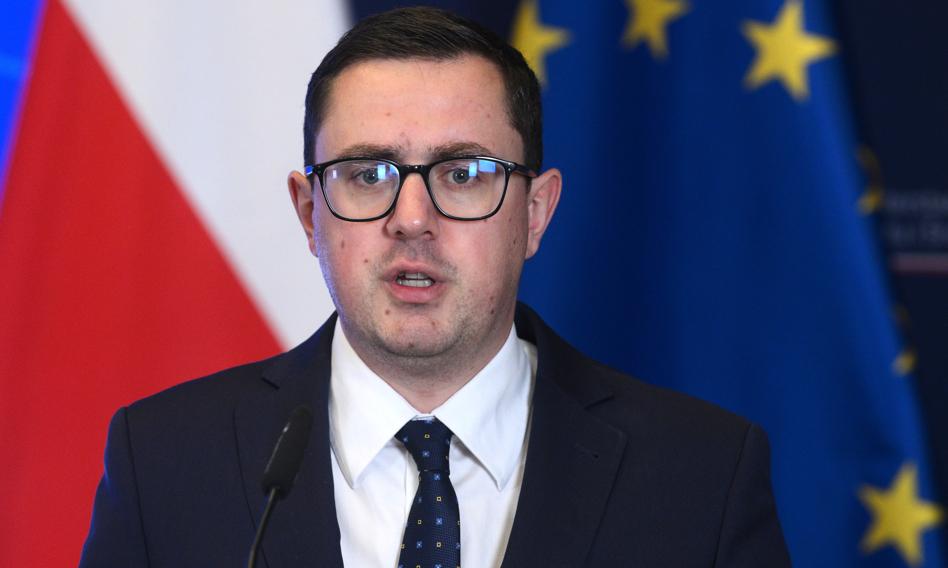
The Ministry of Energy wants to present an updated National Energy and Climate Plan next week, said the head of this ministry, Miłosz Motyka, on Friday in Katowice. Next year, work on Poland's Energy Policy until 2050 is scheduled to begin.
At the Friday briefing after the meeting of the parties signatories to the social agreement for the hard coal mining industry in Katowice, the Minister of Energy announced, among others: implementation of the government's commitment regarding the strategic document: National Energy and Climate Plan (NECP).
Next week, the National Energy and Climate Plan will be updated by the Ministry of Energy: we want to present both WEM and WAM scenarios (baseline and ambitious scenario – PAP). I think that the WEM base scenario will meet the demands agreed upon by the social side – as part of the social contract. We are implementing what we agreed on, declared the head of the Ministry of Energy.
– The state energy policy strategy is our next commitment and I would like us to start working on the state energy policy until 2050 in the new year, also with the participation of the social side. Our strategy will be balanced – bold, but also prudent, pursuing the interests of a just transformation – announced the Minister of Energy.
What about the industry? energy-intensive?
Motyka also informed that at the meeting in Katowice they talked about the energy-intensive industry, “about enterprises that need cheaper energy to guarantee competitiveness for themselves and the economy, and ultimately for citizens.”
The head of the ME emphasized that the first step in this direction would be to change the so-called tariff regulation. He added that he wants this to happen “in the coming weeks.” The draft amendment to the regulation published a month ago provides that the largest electricity consumers will pay lower rates, the so-called quality fee to cover the costs of maintaining stable energy supplies.
The government has not yet – despite a number of declarations – updated the current Polish Energy Policy until 2040 (PEP2040). The work has not been completed and the new version of the NECP has not been submitted to the European Commission, which Poland was obliged to do by the end of June 2024 (Poland is the only Member State that has not done so yet).
Therefore, in November last year, the European Commission initiated proceedings against Poland, and in October this year. submitted a complaint against Poland to the Court of Justice of the EU. The Minister of Energy commented then that Poland would not face penalties in connection with the proceedings before the CJEU regarding the NECP.
Motyka declared in October that by the end of this year the document would be submitted to government committees and agreed upon, and then a binding resolution of the Council of Ministers would be adopted and the NECP would be sent to Brussels. – For us, the National Energy and Climate Plan is not a simple document to be sent, but a strategic compass regarding the road map of the energy transformation that Poland is implementing – argued the head of the Ministry of Energy.
NECP project in two scenarios
The draft NECP in two scenarios was prepared by the Ministry of Climate, but after its creation in the summer of this year. Ministry of Energy was transferred to this ministry, which coordinates further work.
The National Energy and Climate Plan is a document developed on the basis of the 2018 Regulation (EU) of the European Parliament and of the Council. It indicates how a member country will develop while implementing the EU's climate goals. The European Commission called on the Polish government to send an updated document twice, the last time on March 12 this year.
The draft NECP prepared by the Ministry of Environmental Protection to update the NECP until 2030 with a perspective until 2040 takes into account two scenarios: the so-called ambitious transformation scenario (WAM), assuming, among others, that in 2030 22% of energy is to come from coal. electricity, compared to 60 percent in 2023, as well as the market and technical scenario (WEM).
The WAM scenario predicts, among others, that in 2030 the installed capacity of electricity sources will reach 96 GW, of which up to 59 percent will be renewable sources (today 43%). The costs of electricity generation are expected to drop by 11% by 2030. and by 31 percent by 2040, mainly thanks to cheaper renewable energy technologies and a drop in emissions by almost 54%, which will translate into a lower cost burden for the EU-ETS system.
The ambitious scenario envisages doubling energy production from renewable energy sources by 2030 and almost 80%. by 2040. According to it, coal as a source of individual heating will disappear by 2035, and after 2040, there will be a small contribution of coal in the entire energy sector: hard coal and lignite.
In September this year The government's plenipotentiary for strategic energy infrastructure, Wojciech Wrochna, said that the NECP will be modified in the ME in a “painfully” pragmatic way. – We need to take a pragmatic look at how to decarbonize, ensuring competitive energy prices today, not in 2040 – Wrochna pointed out then. (PAP)
mtb/drag/