According to Russian and Ukrainian sources analyzed by Kyiv Post, during the night almost 300 drones of various types, along with cruise missiles, attacked targets in western and central Russia, including Moscow. In keeping with the Ukrainian Air Force's increasingly effective bombing campaign against the heart of Putin's war machine that Kiev launched in July, Ukraine's main actions that night focused primarily on five Russian fuel plants. In the second stage, Ukraine hit four military airfields.
About one-fifth of the Ukrainian kamikaze planes, possibly as a distraction tactic, flew to Moscow and circled over the Russian capital, triggering a frantic, overnight attempt by local air defense forces to shoot them down. Authorities issued a rare general warning to Moscow residents to go to air raid shelters and ordered the city's four airports to close, stranding thousands of passengers.
The largest-scale attack hit an offshore oil production platform in the Caspian Seaabout 1,500 km from the nearest likely Ukrainian drone launch sites, hitting at least four times and setting fire to a platform owned by Lukoil that was extracting crude oil from 20 wells on the seabed.
The attack was carried out using long-range Lutyj drones, propeller-driven machines produced in Ukraine, usually armed with explosive warheads weighing 120-350 kg. At noon on Thursday, firefighters were still fighting the blaze, and production was suspended. No injuries were reported. It was the first time in the war that Ukrainian forces hit a target in the Caspian Sea.
Kyiv has not issued any official comment on these attacks. Just before midnight on Wednesday and Thursday, Russian airspace monitoring news platforms were the first to report an unusually large number of Ukrainian drones, most of them powered by propellers but also powered by jet engines, heading towards Russia.
Ukrainian civilian air defense monitoring platforms tracking the raid on Russian airspace showed that kamikaze planes powered by jet engines accounted for about 20 percent. all aircraft launched.
Independent Russian media, including Astra news agency and The Moscow Times, confirmed the scale of the attack and most of the targets hit. Reports by Ukrainian military bloggers citing military intelligence sources and Russian social media from the regions that were attacked also confirmed the image of a series of massive airstrikes carried out on a scale that Kyiv had not tried before during the war. According to these combined reports, drones and missiles also attacked four other fuel infrastructure targets in Russia:
- oil refinery in Samara Oblast, 800 km from the border with Ukraine
- Afipski oil refinery in Krasnodar Krai, 400 km away
- oil refinery in Saratov Oblast, 600 km away
- fuel depot in Uryupinsk, Volgograd Oblast, 700 km away
According to the Ukrainian authorities, the number of fuel infrastructure targets hit in one night is a new record for the Ukrainian armed forces. In previous raids on Russian energy infrastructure, Ukrainian drones typically hit only two or three targets per night.
The Russian sky is full of gaps
In the morning after the Ukrainian attacks, the Russian Ministry of Defense issued a statement saying that air defense forces shot down 287 Ukrainian drones or missiles across Russia, and that damage was minimal in all locations.
However, Ukrainian news platforms denied the Kremlin's narrative of mass shootings and minimal damage, citing a wave of panic on Russian social media – supported by photos and videos – that showed Ukrainian drones flying unhindered through Russian airspace towards targets hundreds or even thousands of kilometers away and detonating in a fiery explosion on the ground.
Kyiv Post was unable to independently confirm either the Russian Defense Ministry's claims or reports of specific Ukrainian attacks on Russian refineries and offshore platforms or the damage they caused. According to a Kyiv Post review, Russian social media posts from cities that were targeted by Ukrainian drones were mostly skeptical of Kremlin officials' positive portrayal of the strikes.
In Syzran, residents reported hearing or seeing 15-20 propeller-driven drones flying overhead, apparently evading non-existent air defenses, and then exploding within the city's oil refinery. Local media reported fires and smoke. One of the videos reportedly recorded during the attack shows a Lutyj drone flying over trees.
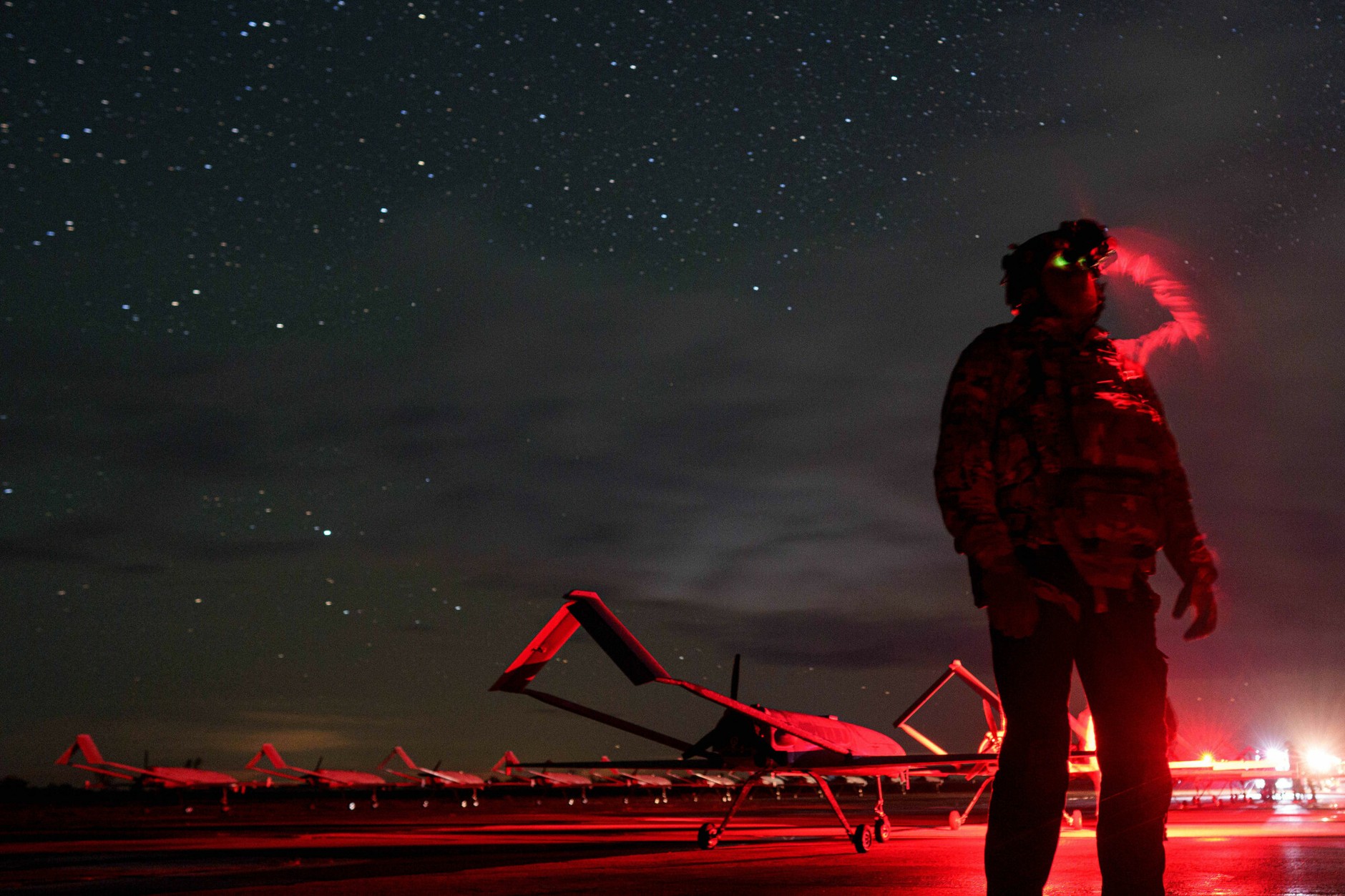
A Ukrainian commander looks through night vision goggles before launching long-range Lutyj drones toward Russia at an undisclosed location in Ukraine, October 14, 2025.AP Photo/Evgeniy Maloletka/East News
Thursday's attack was the third time since August that Ukrainian drones hit an oil refinery in Syzran and caused a fire, according to Kyiv Post data on Ukraine's ongoing bombing of Russian energy infrastructure.
A similar-sized attack on the Afipski refinery caused a fire in fuel tanks and, according to international media monitoring the energy industry, reduced production by 20-30 percent. According to the Kyiv Post, this was the sixth time since late July, when Ukraine launched a campaign to curb Russian oil production, in which Ukrainian drones burned down the facility.
Ukraine's latest attacks also represented a departure from its long-standing strategy of focusing nighttime raids on either Russia's energy sector or its military infrastructure, but rarely both. Additional waves of drones attacked four military airfields in Russia's central regions – Ivanovo, Ryazan and Voronezh – and in the Arctic Murmansk Oblast.
According to unconfirmed reports from Ukraine and independent platforms monitoring military activities, the attack on Ivanovo hit three hangars and damaged two Su-34 attack aircraft; the attack in Ryazan caused explosions and secondary explosions in the airport fuel depot; air defense positions were attacked in Voronezh, and a bomber runway was destroyed at the Olenia base in the Murmansk Oblast.
Moscow, a rare target for Ukrainian strikes, was attacked by over a hundred drones, co may be the largest hostile violation of airspace over the Russian capital since World War II.
Local air defense claimed to have shot down dozens of drones and reported no significant damage on the ground, and photos of debris posted on social media appeared to be consistent with Ukrainian decoy drones. Civilian air traffic tracking platforms confirmed reports of airport closures.
The nighttime dogfights caused the cancellation of 130-200 flights and the closure of all four Moscow airports for eight to 10 hours. Local media showed hundreds of travelers sleeping on benches or gym mats on the floor of Sheremetyevo airport.